

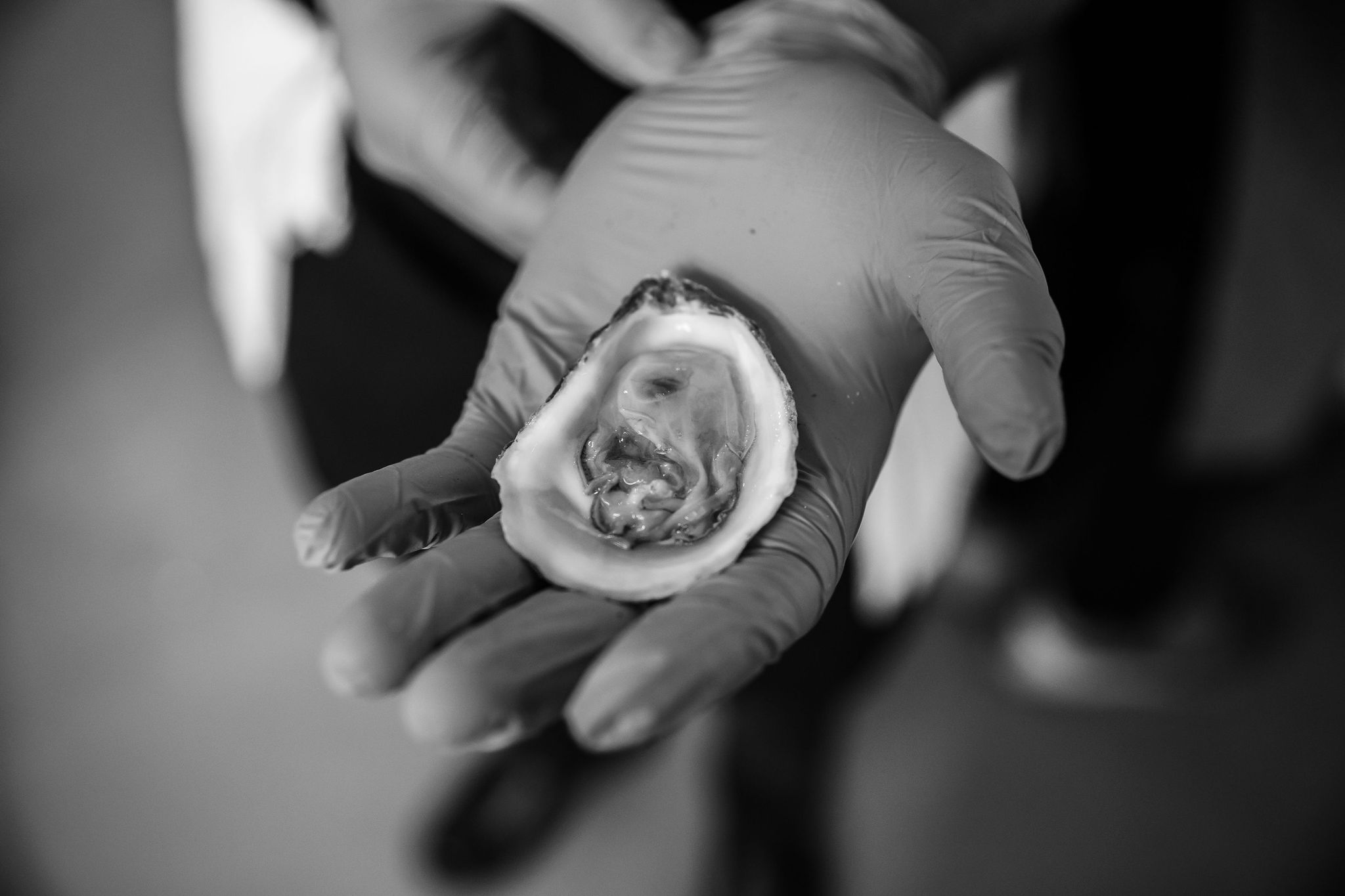
Any Table, No Matter the Chef: Murder Points and the New Southern Oyster
As the story goes, these oysters are worth killing for.
Food as a verb thanks
for sponsoring this series

To reach Murder Point Oysters, where millions of bivalve oysters open-close in cages suspended in the nutrient-rich gumbo of Mobile Bay before being shipped to some of the finest tables in North America, you drive south as far as I-65 will go, then into Bayou La Batre, Alabama, pop. 2,054, past Kain's Mexican Grill and Freewater Baptist as Spanish moss drapes over country roads like shawls off the shoulders of huge oak trees.
It is the heart of lower Alabama. The local chamber declares it the state's Seafood Capital. Bubba Blue, Forrest Gump's best friend, was a Bayou La Batre native.
Keep driving. Past the nail salon, you turn onto an unpaved road, seven miles of dirt as straight as a Sunday pew, with swamp-woods on either side.
Alligators. Turkeys. Cottonmouths. If you stepped out of the truck, walked a few feet, you would begin to sink. It is wetlands.
And soaked full of nutrients.
At the end of seven miles, the horizon opens up: Sandy Bay.
And one of the nation's most influential, revolutionary oyster farms.
Welcome to Murder Point Oysters, the capital of Southern oyster farming.
As the story goes, oysters here are worth killing for.
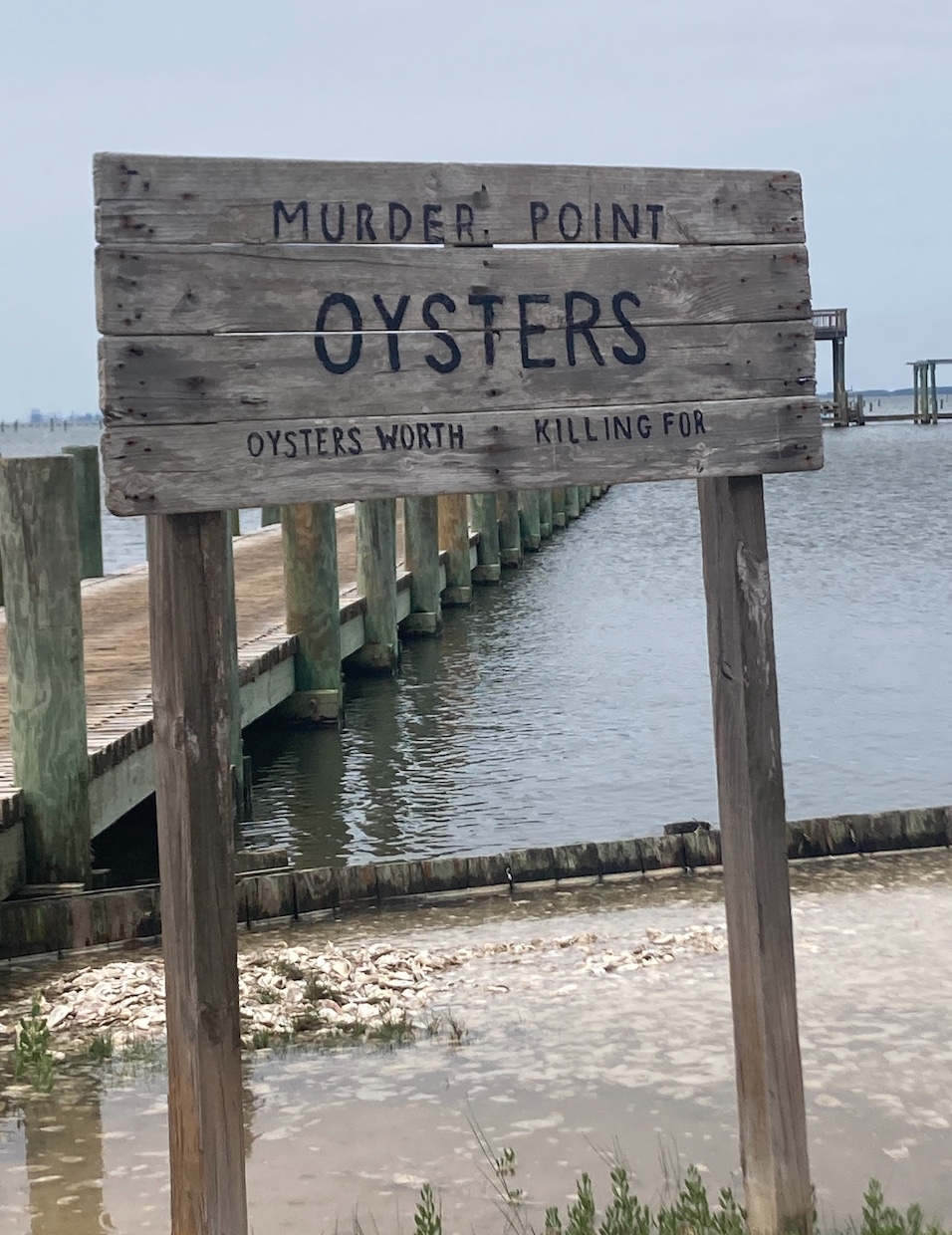
Murder Point Oysters sits on a dozen acres of bay water once known as Myrtle Point.
The old legend: a 1927 land-water dispute over deed rights involved a baseball bat, rocking chair and lethal shotgun blast. Hence, Murder Point.
"I've got 10 million oysters out there," said Lane Zirlott, standing on the edge of the pier, overlooking his leased bay waters.
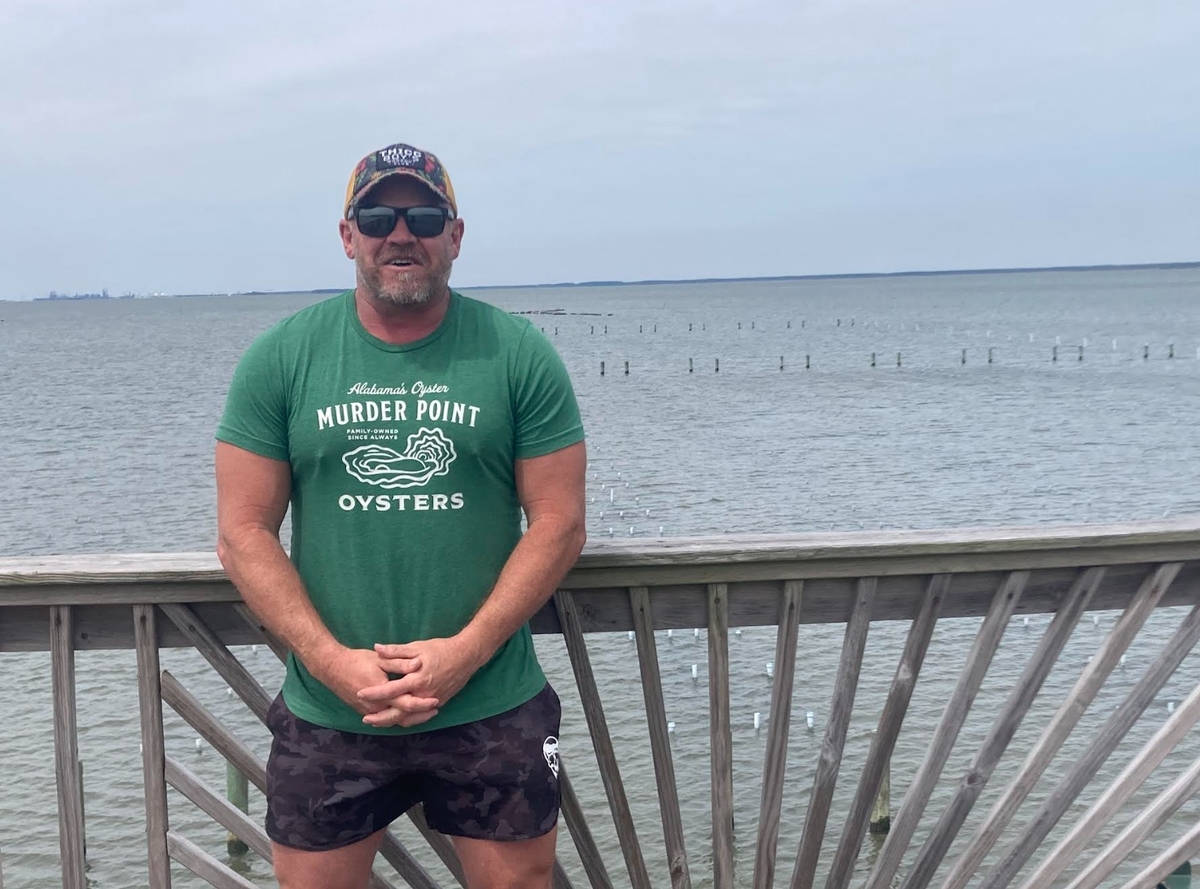
Lane, 49, is one of the nation's most respected and game-changing oyster farmers. A fifth-generation fisherman, he's the owner and founder of Murder Point Oysters. He's shucked at James Beard parties, on yacht trips with his bud Guy Fieri and Wine & Food in Miami.
Each week, he's shipping oysters to some of the finest tables in North America, from California to Miami to NYC to Canada to Chattanooga, where they're sold at the top of the raw bar menu at Easy Bistro.
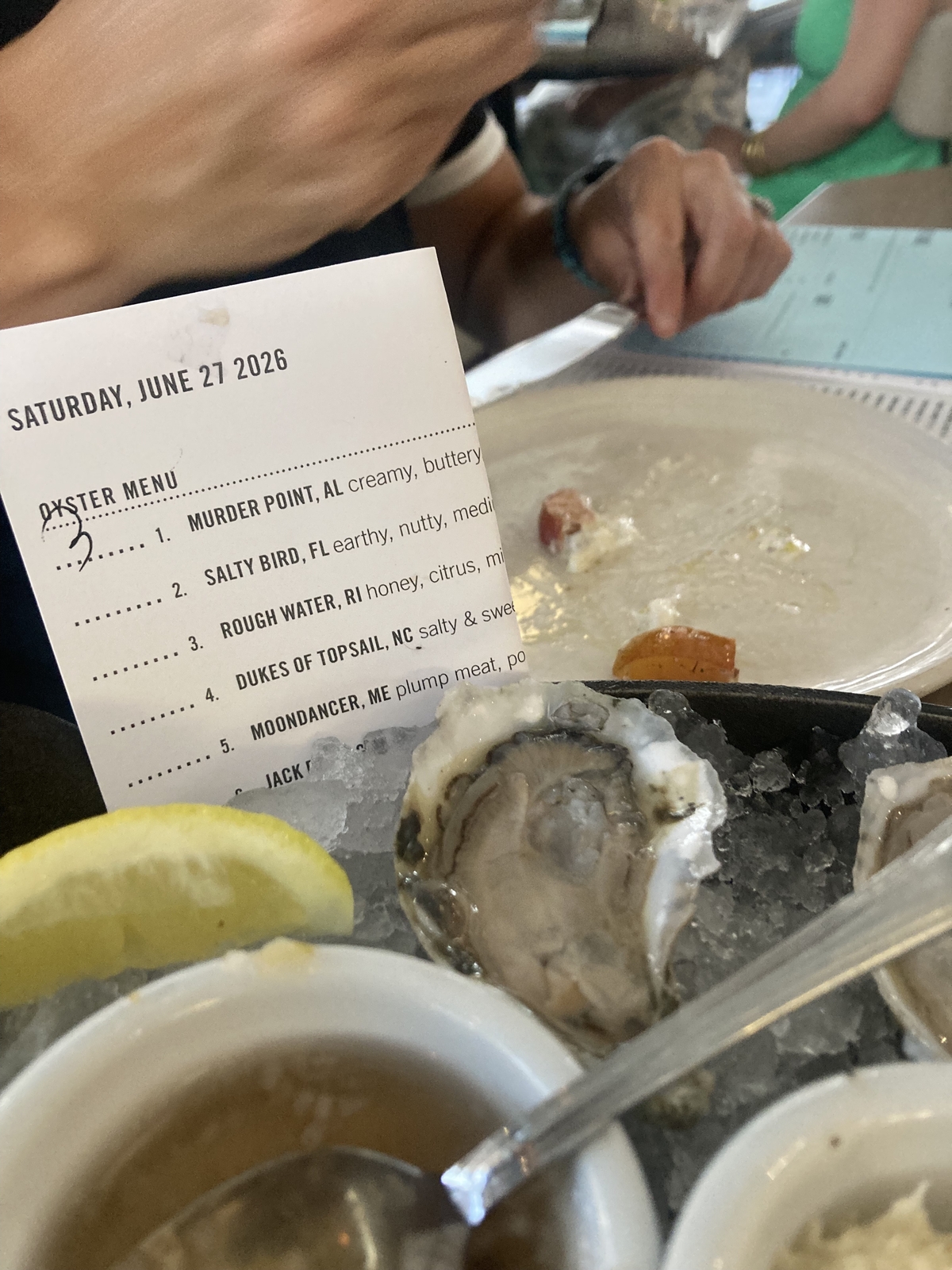
"We've really shown everybody that even a Southern oyster has a place at the table," said Lane. "Any table, no matter the chef."
But to truly understand Murder Point Oysters, you need to understand rural Alabama. This ain't Maine or Prince Edward Island.
"The thing I love about Alabama?" said Lane. "It's underestimated. It's more than college football.
"I think Alabama can do anything it wants. The people that make up Alabama are the most resourceful and self-driven."
Like the heart, the oyster is a muscle.
And any muscle must be worked.
Murder Point is harvesting millions of oysters seed-to-plate in under 12 months and putting them on tables across the US and Canada.
"It's made these big boys up North sit up and look and recognize what's going on down here in the South," said Lane.
But this is a bivalve story: life opens into triumph, but also closes into struggle, loss and death. Oyster comes from the Greek ostrea, meaning: to leave out.
Lane knows this in his bones.
"The sacrifice, the personal sacrifice," said Lane.
"The story that never gets told is the story of the struggle it took to get here."
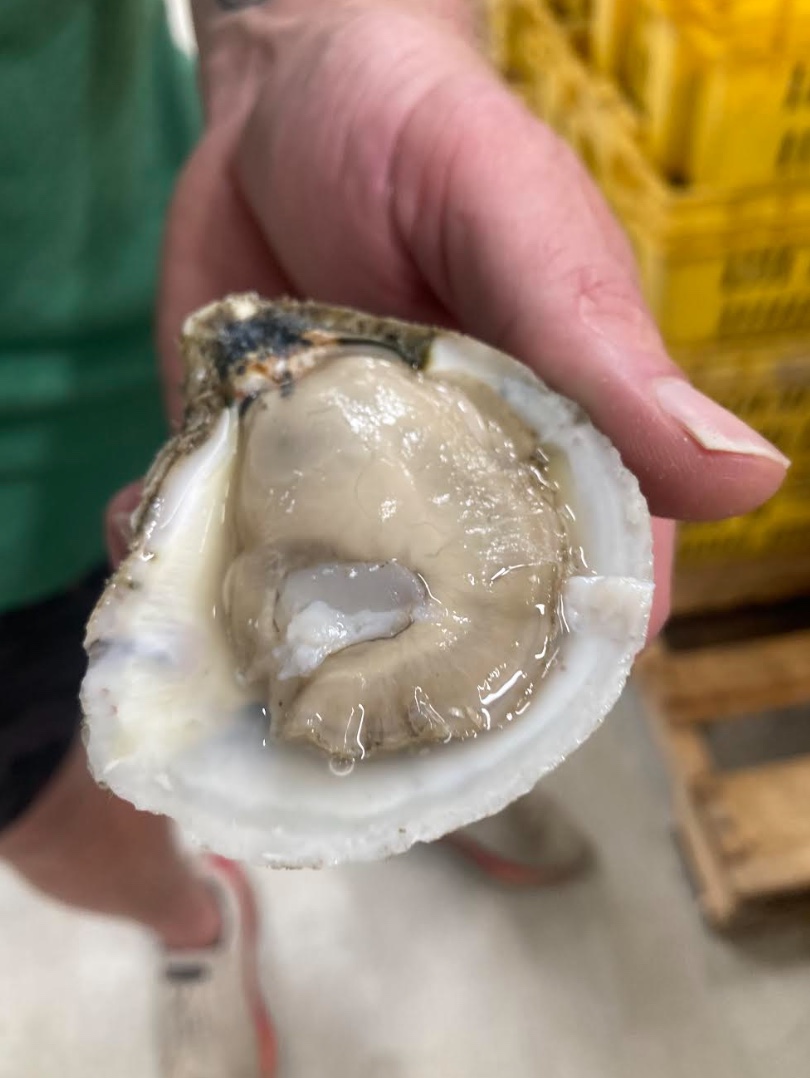
The history of the oyster threads through all of humanity: class, power, environment, immigration, trade, pleasure and nutrition.
They are eaten steamed, boiled, fried and, of course, raw. Oysters aren't really sushi, at least, psychologically they feel different, with a sort of workingman's feel and subtle danger. What other food carries its own caution: only eat in months ending in "R"?
In true working-class fashion, the oyster even makes its own shell, the way we grow teeth and fingernails.
"This oyster is a muscle," said Lane. "It's a living, breathing animal."
"He's a hard-working animal. You got something that's going to work hard. It makes you want to work just as hard."
In the past, oysters were farmed from off-the-bottom of the bay, hoisted up to harvest.
Murder Point uses a long-line system: PVC poles are sunk into the bay bottom, with 16 oyster baskets suspended on lines between set of sunken poles. There are rows and rows and rows, like a vegetable farm. In total: 50,000 baskets, each full of hundreds of oysters.
Lane expects to harvest more than five million in 2026.
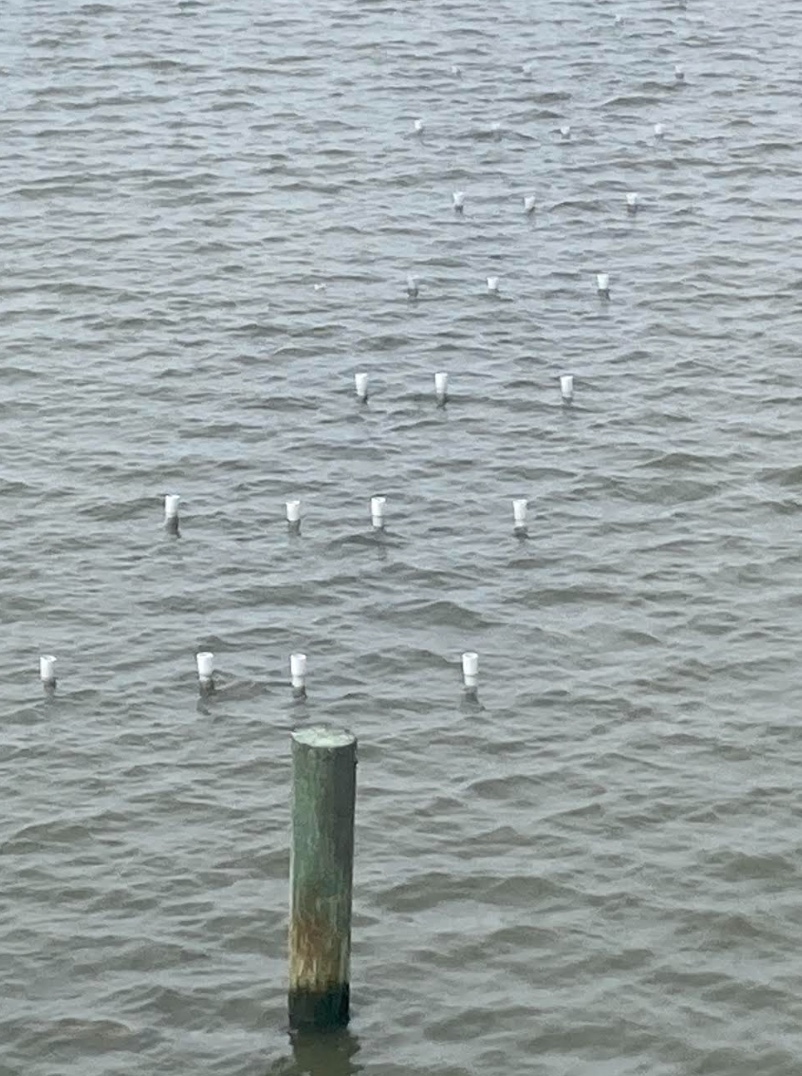
When the tide comes in?
The oyster laps up drinks up soaks up all the rich salty briny nutrients.
But when the tide goes out? The oyster is left high and dry.
"It conditions him to close up and stay closed," said Lane. "All he is is a muscle. And like any muscle, you've got to work it and develop it. So if he never comes out, he never has to work. He never develops that muscle."
And a good-muscled oyster?
"You're going to get a piece of meat that's going to be closer to steak fat. It's going to have something that you can chew. And that is the muscle in him," he said.
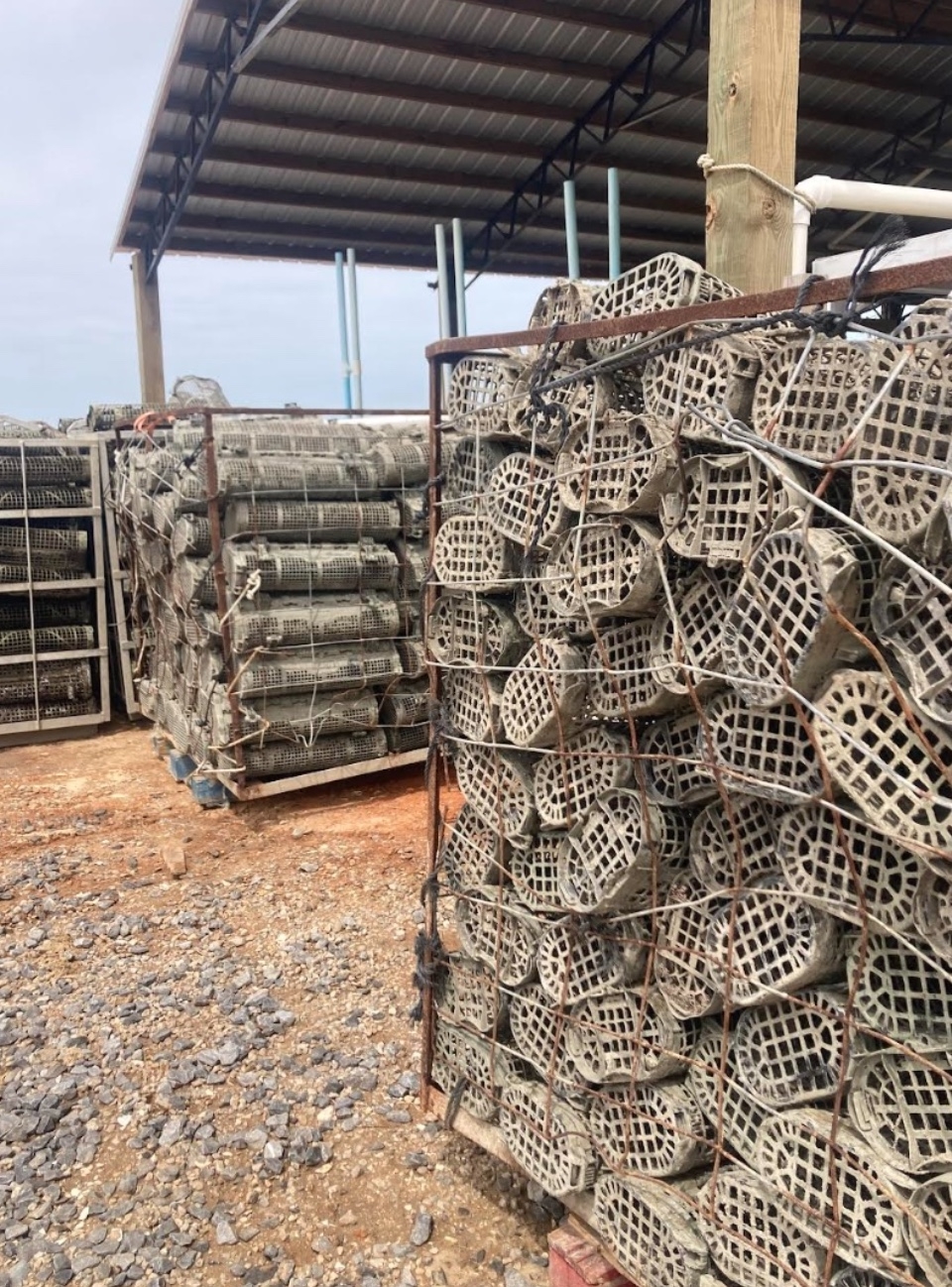
Out in the bay, divers in wet suits were harvesting oysters, pulled in from the bay that mixes a cocktail of fresh-and-saltwater together. Murder Point tags this as ButterLove.
"That's what gives us that creamy, buttery aftertaste," said Lane.
And the love?
"When you start hand-raising things, you can't hide nothing. And what you put in is what you get out on the other end," he said.
"These guys, they all have different personalities. Some of them grow faster. Some of them want to be a little rowdy and get out of shape. They all need individual attention.
"And that's the love."
The oysters are unloaded onto a forklift at the end of a 450' pier, then hauled back to inspect by hand.
"I want a sexy oyster," he said. "It's got to be appealing to the eye. If it don't look good, it's not good."
For years, the culinary world expected small oysters from Alabama, not sexy ones. That's what makes Murder Points — fat, buttery, steaky — so ... revolutionary.
"Our mission and our goal is to change the perception of the Southern oyster," he said.
For years, the Zirlotts were shrimpers, so good that the distributors would send the truck to follow them. Lane would run 100' boats through the Gulf, gone weeks at a time. He'd never tonged, shucked or farmed an oyster. Like you, he just ate them.
"A little lemon," he said.
Then, an invitation. Auburn University's Dr. Bill Walton and the Dauphin Island Sea Lab offered a new program for Alabama: come learn how to farm oysters.
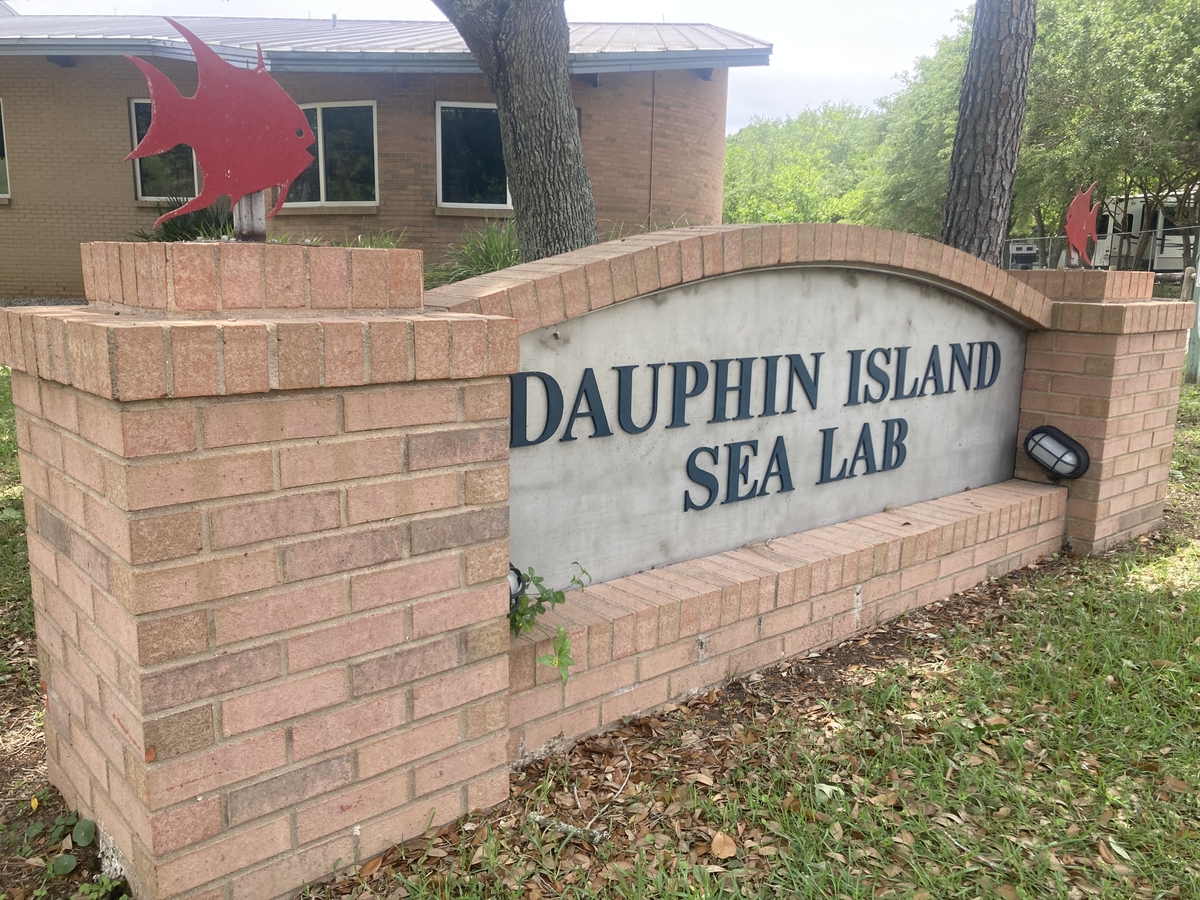
Lane's mom signed up. At the end of the course, like a little experiment, she was given a lease on bay water acres, and 20,000 oysters to farm.
Oystering's hard, but easier than shrimping in one significant way: you don't travel.
So, Lane and his parents made the shift.
"What I'm the proudest of is the way we've been able to come in here and scale it and do it and show even Auburn that, you know, it could be a full time job, it could be a livelihood," Lane said.
Today, Murder Point sells across the continent. Ask him where he's selling and ...
"It's easier to tell you where I'm not," he said.
First came the hustle. One story: he and his brother would drive to New Orleans carrying sacks of oysters into every restaurant they could find.
"All you do is walk to the back door because I guarantee you, somebody on that cooking staff ... smokes and they've got that back door propped open with a dish towel," he said.
Their rule: keep shucking until somebody stops us.
They'd walk and smooth-talk through the kitchen, looking for a chef or sous, shucking oysters and handing them out: try this, here, Murder Point, taste this.
Often, chefs would taste and fall in love.
"It would blow him away," Lane said. "'How do I get this?'"
Once, they walked in on a white tablecloth lunch service. The manager scolded: this is so unprofessional. Get out.
Near the bar, Lane made a stand. He slammed down a bag of Murder Points. Then, a little extra for emphasis.
"We had just beat Clemson for the second time so I hollered 'Roll Tide' and walked out," Lane remembers.
His brother had the sense to leave behind a business card.
At the bar? Someone from Blackberry Farms, who knew the Zirlotts and Murder Point. The Blackberry guy looks at the manager and says: buddy, the best thing you can do take that oyster and that card straight to your chef. Nobody does oysters better.
Later, Lane's at the Wine & Food Festival in Miami. The white table cloth guy walks up. Do you remember me?
I made a mistake that day.
We want your Murder Points.
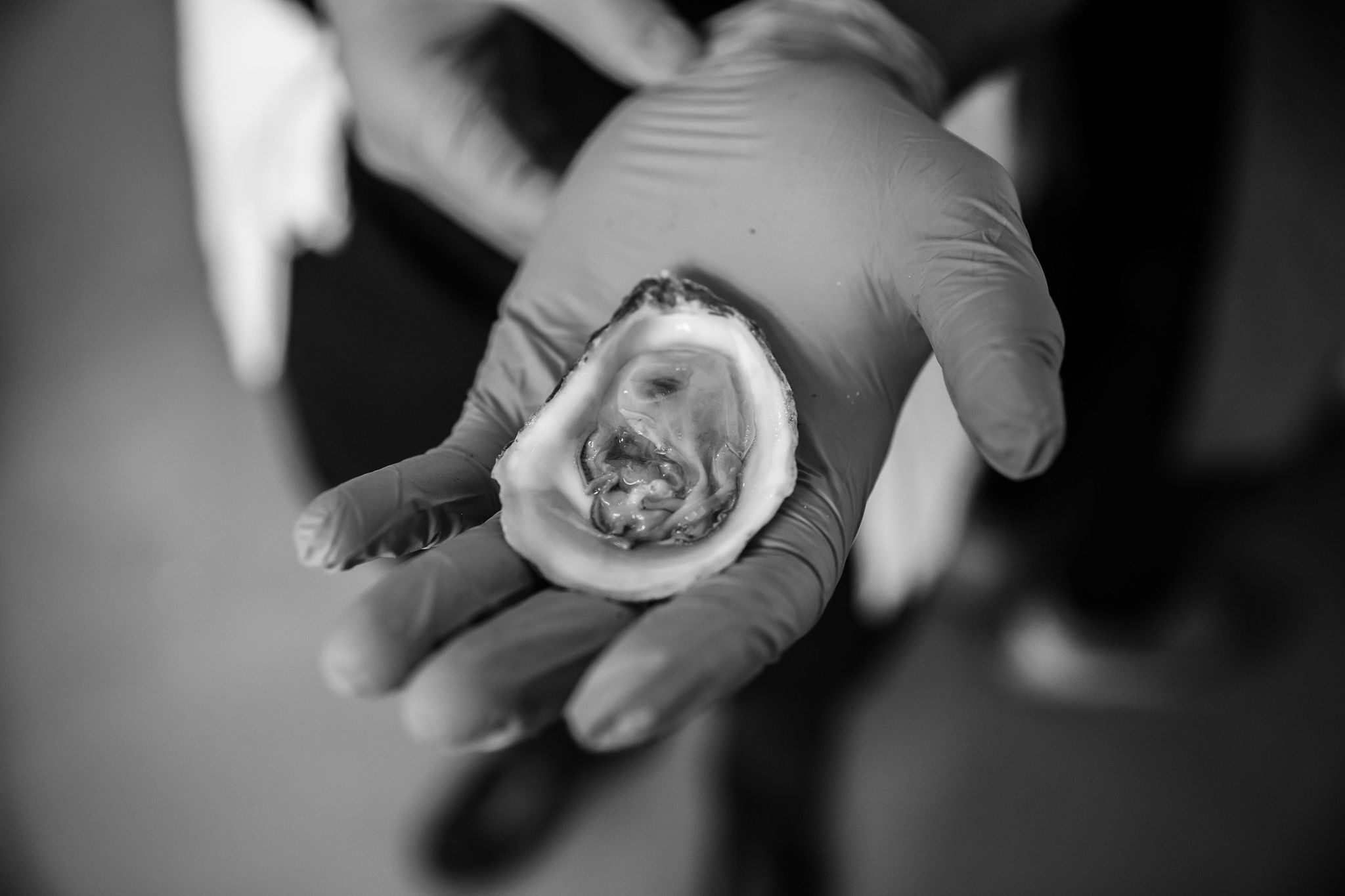
Near the pier, Lane walks us to the hatchery. The oyster spawn begins at a microscopic level.
"Twenty-day larvae," he said.
To see them, I have to squint into a microscope. The earliest Murder Points are naked to the human eye.
"Three hundred microns. About 1/500th of a millimeter," he said.
"Our first spawn of the year."
Hatchery manager Eric Stewart oversees a process that goes like this: the tiniest of oyster spawn are seen and measured under a microscope.
As these larvae grow, they screen-filter them out. When they reach 20 micron-size, they are poured into a container with ground-up oyster shells, all about the size of grains of sand.
Sort of like a slow oyster rain falling, the larvae will sink to the bottom, searching to land on the one tiniest grain of oyster-shell-sand that will become its forever home. They call this the "cultch."
"The little blob will carry around that piece of cultch and set like an anchor," Lane said.
The oysters grows abductor muscles and gills, which pull in the water around it.
"That's the juice inside the oyster," said Lane. (Like pot likker, but oyster likker.)
The oyster learns to grow its own shell.
"There's something in him that will produce that," Lane said.
Yeah. There's something in lower Alabama that will produce this, too.
Currently, Murder Point's got a contract to supply 800 million larvae from its hatchery to help rebuild reefs in Louisiana.
And Murder Point can go from microscopic larvae to raw bar in less than a year. That's why he's sending a few hundred sacks each week to Canada.
"It takes them four years to get an oyster to market," he said.
Come again?
"They don't have the nutrients. They don't have the food in the water," he said.
We leave the hatchery and farm, heading back down the seven miles of cottonmouth dirt road to the processing facility.
Inside: oysters fresh from the bay, stacked in yellow crates. The room is covered in oysters.
Lane asks the question I've been waiting for: want this one?
I think back to my first oyster. I think of Easy Bistro. Of all the folks I know in Alabama and these millions of oysters, hard-working, living, breathing animals straight from the Alabama waters.
Then, Lane hands me a second one.
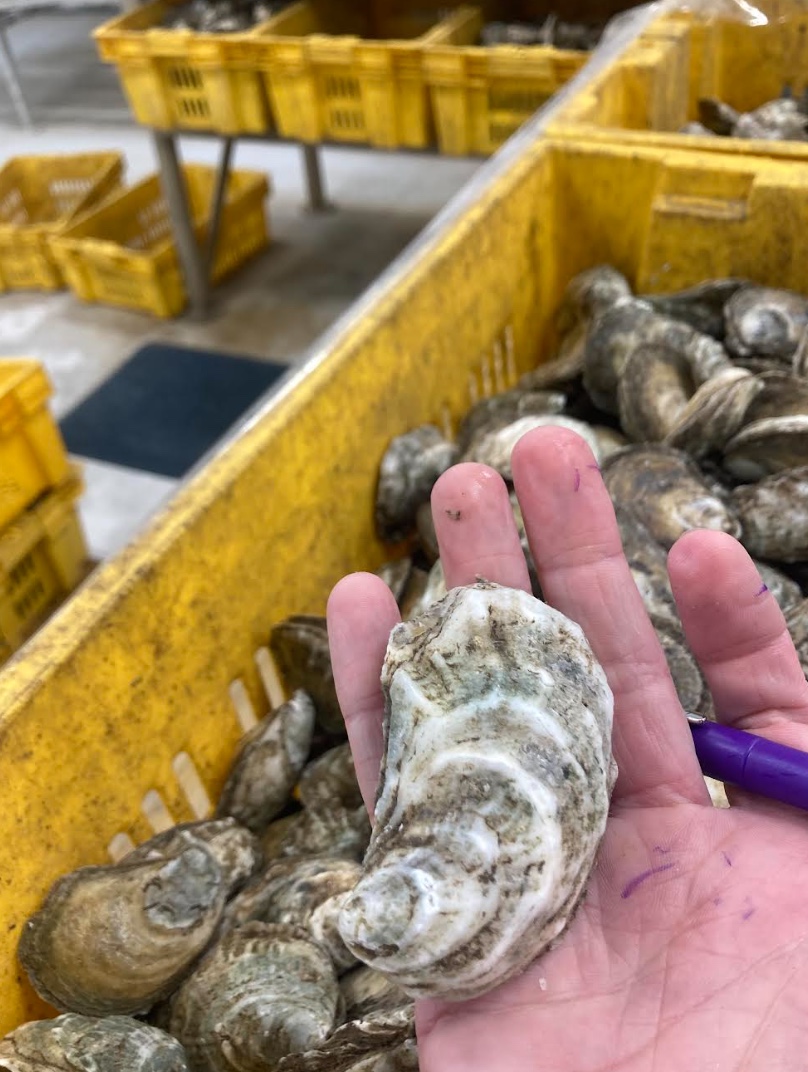
I taste it more slowly: the salt, the butter kick, the perfect Alabama experience to share with the world.
"A one-shot oyster. You hit it: rich, creamy, buttery taste with a blast of salt," he said.
Earlier that day, I'd asked Lane a question that, apparently, no one ever had.
What's the part of your story nobody ever asks about?
He'd paused. Waited. Said he wanted more time to think. Maybe, it was more time to get a sense of me.
"That's good question, man. Let me sit on that. Let me come back to you," he said.
As we ate Murder Points, he began to answer.
"The struggle," he said. "They don't ask about the struggle."
Eight years ago, Lane lost his son in an accident. He was 12. His name was Lane.
Two years ago, Murder Point lost 80% of its crop.
At one point, a red tide caused more than a year of lost revenue and harvest.
Nobody knows this.
"The story that never gets told is the struggle it took to get here," he said. "The sacrifice, the personal sacrifice, to really when it comes to growing food."
"It's not just my small business. It's all small businesses, all farmers, anybody that gets up every day and goes to bed and this is all they think about."
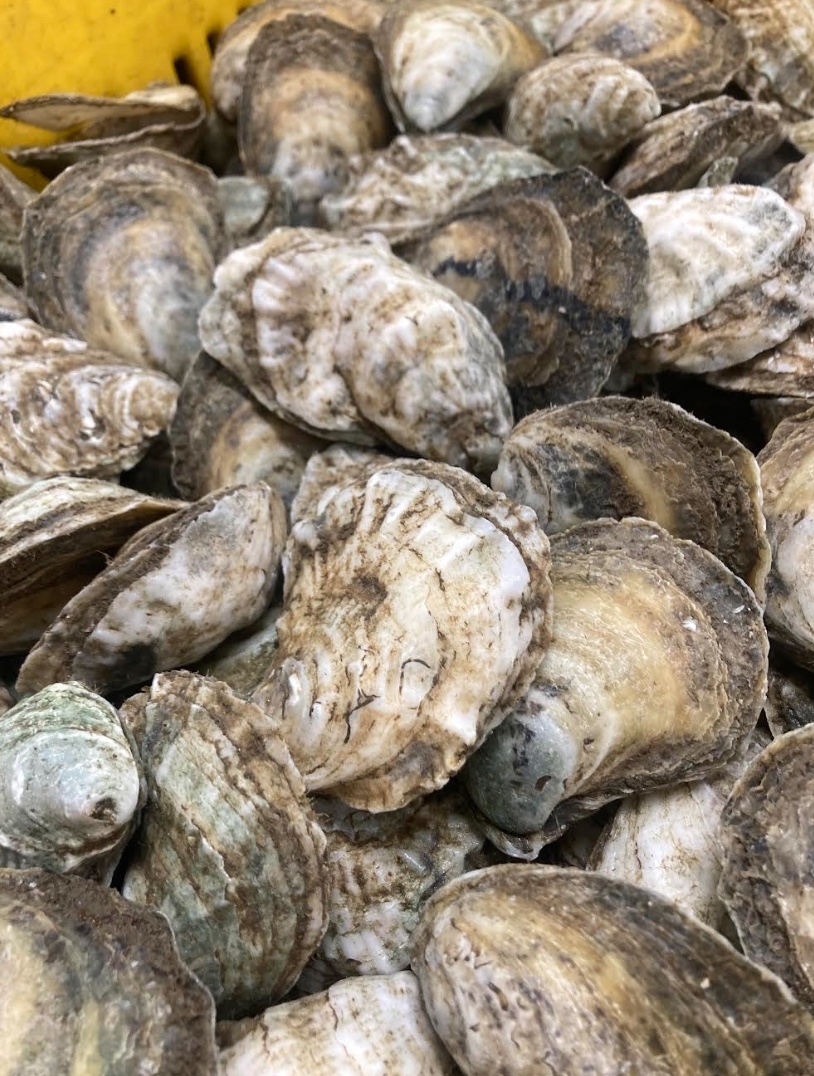
This bivalve oyster kept working, so Lane, regardless of the heartache, did too.
"That's what really an oyster means to me. It's always a reminder that, hey, if you do what you're supposed to do, yeah, it's going to work out."
"Keep pushing," he said. "Don't quit.
"Don't lay down."
Now, Murder Point is positioned to sell more oysters than ever before.
"By the grace of God," he said.
To reach Murder Point Oysters, you have to go through the valley, forests and dark, alligator swamps, where moss hangs heavy from the trees like memories. The water is a brine mix of sweet and suffering. You reach the end of the road ... then, you keep going. This is where the heart muscle grows strong, able to build its own shell, made out of true Alabama grit.
"We are redefining the Southern oyster," he said.
Story ideas, questions, feedback? Interested in partnering with us? Email: david@foodasaverb.com
This story is 100% human generated; no AI chatbot was used in the creation of this content
food as a verb thanks our sustaining partner:
food as a verb thanks our story sponsor:
Easy Bistro & Bar
To reach Murder Point Oysters, where millions of bivalve oysters open-close in cages suspended in the nutrient-rich gumbo of Mobile Bay before being shipped to some of the finest tables in North America, you drive south as far as I-65 will go, then into Bayou La Batre, Alabama, pop. 2,054, past Kain's Mexican Grill and Freewater Baptist as Spanish moss drapes over country roads like shawls off the shoulders of huge oak trees.
It is the heart of lower Alabama. The local chamber declares it the state's Seafood Capital. Bubba Blue, Forrest Gump's best friend, was a Bayou La Batre native.
Keep driving. Past the nail salon, you turn onto an unpaved road, seven miles of dirt as straight as a Sunday pew, with swamp-woods on either side.
Alligators. Turkeys. Cottonmouths. If you stepped out of the truck, walked a few feet, you would begin to sink. It is wetlands.
And soaked full of nutrients.
At the end of seven miles, the horizon opens up: Sandy Bay.
And one of the nation's most influential, revolutionary oyster farms.
Welcome to Murder Point Oysters, the capital of Southern oyster farming.
As the story goes, oysters here are worth killing for.
Murder Point Oysters sits on a dozen acres of bay water once known as Myrtle Point.
The old legend: a 1927 land-water dispute over deed rights involved a baseball bat, rocking chair and lethal shotgun blast. Hence, Murder Point.
"I've got 10 million oysters out there," said Lane Zirlott, standing on the edge of the pier, overlooking his leased bay waters.
Lane, 49, is one of the nation's most respected and game-changing oyster farmers. A fifth-generation fisherman, he's the owner and founder of Murder Point Oysters. He's shucked at James Beard parties, on yacht trips with his bud Guy Fieri and Wine & Food in Miami.
Each week, he's shipping oysters to some of the finest tables in North America, from California to Miami to NYC to Canada to Chattanooga, where they're sold at the top of the raw bar menu at Easy Bistro.
"We've really shown everybody that even a Southern oyster has a place at the table," said Lane. "Any table, no matter the chef."
But to truly understand Murder Point Oysters, you need to understand rural Alabama. This ain't Maine or Prince Edward Island.
"The thing I love about Alabama?" said Lane. "It's underestimated. It's more than college football.
"I think Alabama can do anything it wants. The people that make up Alabama are the most resourceful and self-driven."
Like the heart, the oyster is a muscle.
And any muscle must be worked.
Murder Point is harvesting millions of oysters seed-to-plate in under 12 months and putting them on tables across the US and Canada.
"It's made these big boys up North sit up and look and recognize what's going on down here in the South," said Lane.
But this is a bivalve story: life opens into triumph, but also closes into struggle, loss and death. Oyster comes from the Greek ostrea, meaning: to leave out.
Lane knows this in his bones.
"The sacrifice, the personal sacrifice," said Lane.
"The story that never gets told is the story of the struggle it took to get here."
The history of the oyster threads through all of humanity: class, power, environment, immigration, trade, pleasure and nutrition.
They are eaten steamed, boiled, fried and, of course, raw. Oysters aren't really sushi, at least, psychologically they feel different, with a sort of workingman's feel and subtle danger. What other food carries its own caution: only eat in months ending in "R"?
In true working-class fashion, the oyster even makes its own shell, the way we grow teeth and fingernails.
"This oyster is a muscle," said Lane. "It's a living, breathing animal."
"He's a hard-working animal. You got something that's going to work hard. It makes you want to work just as hard."
In the past, oysters were farmed from off-the-bottom of the bay, hoisted up to harvest.
Murder Point uses a long-line system: PVC poles are sunk into the bay bottom, with 16 oyster baskets suspended on lines between set of sunken poles. There are rows and rows and rows, like a vegetable farm. In total: 50,000 baskets, each full of hundreds of oysters.
Lane expects to harvest more than five million in 2026.
When the tide comes in?
The oyster laps up drinks up soaks up all the rich salty briny nutrients.
But when the tide goes out? The oyster is left high and dry.
"It conditions him to close up and stay closed," said Lane. "All he is is a muscle. And like any muscle, you've got to work it and develop it. So if he never comes out, he never has to work. He never develops that muscle."
And a good-muscled oyster?
"You're going to get a piece of meat that's going to be closer to steak fat. It's going to have something that you can chew. And that is the muscle in him," he said.
Out in the bay, divers in wet suits were harvesting oysters, pulled in from the bay that mixes a cocktail of fresh-and-saltwater together. Murder Point tags this as ButterLove.
"That's what gives us that creamy, buttery aftertaste," said Lane.
And the love?
"When you start hand-raising things, you can't hide nothing. And what you put in is what you get out on the other end," he said.
"These guys, they all have different personalities. Some of them grow faster. Some of them want to be a little rowdy and get out of shape. They all need individual attention.
"And that's the love."
The oysters are unloaded onto a forklift at the end of a 450' pier, then hauled back to inspect by hand.
"I want a sexy oyster," he said. "It's got to be appealing to the eye. If it don't look good, it's not good."
For years, the culinary world expected small oysters from Alabama, not sexy ones. That's what makes Murder Points — fat, buttery, steaky — so ... revolutionary.
"Our mission and our goal is to change the perception of the Southern oyster," he said.
For years, the Zirlotts were shrimpers, so good that the distributors would send the truck to follow them. Lane would run 100' boats through the Gulf, gone weeks at a time. He'd never tonged, shucked or farmed an oyster. Like you, he just ate them.
"A little lemon," he said.
Then, an invitation. Auburn University's Dr. Bill Walton and the Dauphin Island Sea Lab offered a new program for Alabama: come learn how to farm oysters.
Lane's mom signed up. At the end of the course, like a little experiment, she was given a lease on bay water acres, and 20,000 oysters to farm.
Oystering's hard, but easier than shrimping in one significant way: you don't travel.
So, Lane and his parents made the shift.
"What I'm the proudest of is the way we've been able to come in here and scale it and do it and show even Auburn that, you know, it could be a full time job, it could be a livelihood," Lane said.
Today, Murder Point sells across the continent. Ask him where he's selling and ...
"It's easier to tell you where I'm not," he said.
First came the hustle. One story: he and his brother would drive to New Orleans carrying sacks of oysters into every restaurant they could find.
"All you do is walk to the back door because I guarantee you, somebody on that cooking staff ... smokes and they've got that back door propped open with a dish towel," he said.
Their rule: keep shucking until somebody stops us.
They'd walk and smooth-talk through the kitchen, looking for a chef or sous, shucking oysters and handing them out: try this, here, Murder Point, taste this.
Often, chefs would taste and fall in love.
"It would blow him away," Lane said. "'How do I get this?'"
Once, they walked in on a white tablecloth lunch service. The manager scolded: this is so unprofessional. Get out.
Near the bar, Lane made a stand. He slammed down a bag of Murder Points. Then, a little extra for emphasis.
"We had just beat Clemson for the second time so I hollered 'Roll Tide' and walked out," Lane remembers.
His brother had the sense to leave behind a business card.
At the bar? Someone from Blackberry Farms, who knew the Zirlotts and Murder Point. The Blackberry guy looks at the manager and says: buddy, the best thing you can do take that oyster and that card straight to your chef. Nobody does oysters better.
Later, Lane's at the Wine & Food Festival in Miami. The white table cloth guy walks up. Do you remember me?
I made a mistake that day.
We want your Murder Points.
Near the pier, Lane walks us to the hatchery. The oyster spawn begins at a microscopic level.
"Twenty-day larvae," he said.
To see them, I have to squint into a microscope. The earliest Murder Points are naked to the human eye.
"Three hundred microns. About 1/500th of a millimeter," he said.
"Our first spawn of the year."
Hatchery manager Eric Stewart oversees a process that goes like this: the tiniest of oyster spawn are seen and measured under a microscope.
As these larvae grow, they screen-filter them out. When they reach 20 micron-size, they are poured into a container with ground-up oyster shells, all about the size of grains of sand.
Sort of like a slow oyster rain falling, the larvae will sink to the bottom, searching to land on the one tiniest grain of oyster-shell-sand that will become its forever home. They call this the "cultch."
"The little blob will carry around that piece of cultch and set like an anchor," Lane said.
The oysters grows abductor muscles and gills, which pull in the water around it.
"That's the juice inside the oyster," said Lane. (Like pot likker, but oyster likker.)
The oyster learns to grow its own shell.
"There's something in him that will produce that," Lane said.
Yeah. There's something in lower Alabama that will produce this, too.
Currently, Murder Point's got a contract to supply 800 million larvae from its hatchery to help rebuild reefs in Louisiana.
And Murder Point can go from microscopic larvae to raw bar in less than a year. That's why he's sending a few hundred sacks each week to Canada.
"It takes them four years to get an oyster to market," he said.
Come again?
"They don't have the nutrients. They don't have the food in the water," he said.
We leave the hatchery and farm, heading back down the seven miles of cottonmouth dirt road to the processing facility.
Inside: oysters fresh from the bay, stacked in yellow crates. The room is covered in oysters.
Lane asks the question I've been waiting for: want this one?
I think back to my first oyster. I think of Easy Bistro. Of all the folks I know in Alabama and these millions of oysters, hard-working, living, breathing animals straight from the Alabama waters.
Then, Lane hands me a second one.
I taste it more slowly: the salt, the butter kick, the perfect Alabama experience to share with the world.
"A one-shot oyster. You hit it: rich, creamy, buttery taste with a blast of salt," he said.
Earlier that day, I'd asked Lane a question that, apparently, no one ever had.
What's the part of your story nobody ever asks about?
He'd paused. Waited. Said he wanted more time to think. Maybe, it was more time to get a sense of me.
"That's good question, man. Let me sit on that. Let me come back to you," he said.
As we ate Murder Points, he began to answer.
"The struggle," he said. "They don't ask about the struggle."
Eight years ago, Lane lost his son in an accident. He was 12. His name was Lane.
Two years ago, Murder Point lost 80% of its crop.
At one point, a red tide caused more than a year of lost revenue and harvest.
Nobody knows this.
"The story that never gets told is the struggle it took to get here," he said. "The sacrifice, the personal sacrifice, to really when it comes to growing food."
"It's not just my small business. It's all small businesses, all farmers, anybody that gets up every day and goes to bed and this is all they think about."
This bivalve oyster kept working, so Lane, regardless of the heartache, did too.
"That's what really an oyster means to me. It's always a reminder that, hey, if you do what you're supposed to do, yeah, it's going to work out."
"Keep pushing," he said. "Don't quit.
"Don't lay down."
Now, Murder Point is positioned to sell more oysters than ever before.
"By the grace of God," he said.
To reach Murder Point Oysters, you have to go through the valley, forests and dark, alligator swamps, where moss hangs heavy from the trees like memories. The water is a brine mix of sweet and suffering. You reach the end of the road ... then, you keep going. This is where the heart muscle grows strong, able to build its own shell, made out of true Alabama grit.
"We are redefining the Southern oyster," he said.
Story ideas, questions, feedback? Interested in partnering with us? Email: david@foodasaverb.com
This story is 100% human generated; no AI chatbot was used in the creation of this content
Food as a verb thanks our story sponsor:
Food as a Verb Thanks our sustaining partner:
Food as a verb thanks our story sponsor:
Join our table

keep reading









.png)
