

Food Bank Declares: One-in-Four Regional Children Hungry
"This should be a call to action," said Corker.
Food as a verb thanks
for sponsoring this series

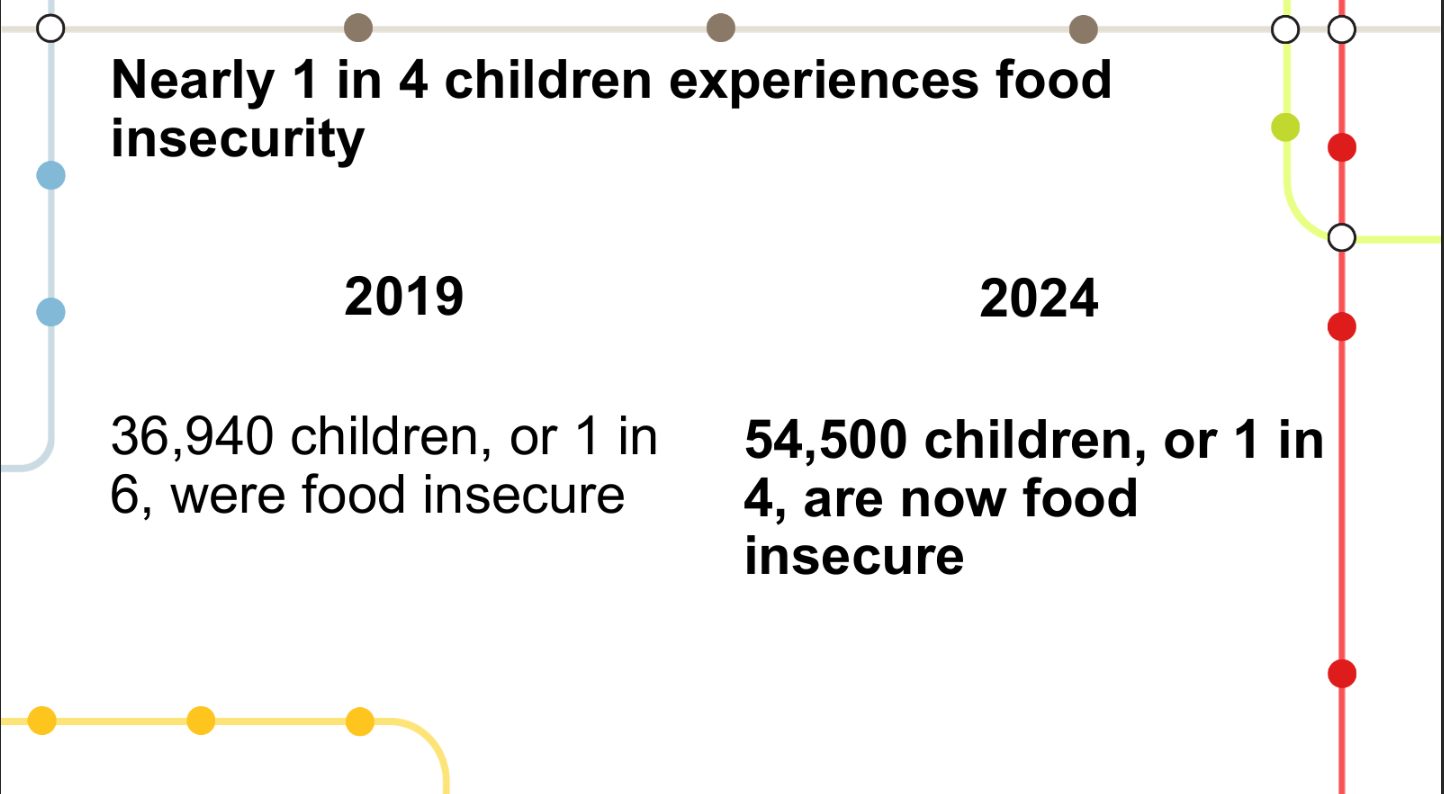
One out of every four regional children suffer from chronic hunger and food insecurity, according to the Chattanooga Area Food Bank.
Seven years ago, some 37,000 regional children — or one-in-six — were considered food insecure.
Now, in 2026, hunger has grown.
The news is jarring: 54,500 are now food insecure.
"This should be a call to action for all of us," former US Senator Bob Corker.
The image above was projected onto a screen at Chattanooga Whiskey two Wednesdays ago, as the Chattanooga Area Food Bank welcomed a full house to its State of Hunger luncheon.
In attendance: Rep. Greg Martin, Rep. Michele Reneau, Rep. Yusuf Hakeem, and on stage, Corker, who led a "conversation" with the Food Bank's CEO Melissa Blevins.
Both agreed: it's time to start thinking of this issue not as charity.
"More as an investment," said Blevins.
Seated around circular tables of eight, with dark tablecloths and turkey, bacon and rye bread sandwiches, dessert trays and cut fruit, were education leaders, nonprofit heads, business leaders.
Ghyrn Wakefield, CAFB's Chief Development Officer, offered a blessing.
"As we enjoy this meal, we remember our neighbors who are facing hunger," he prayed.
For the following 90 minutes, we learned why.
"Potential is everywhere," said Shannon Moore, Food Bank's Chief Communications Officer. "Opportunity is not."
After introducing the lunch, Shannon welcomed Mandy Spears to the stage, where the executive vice-president of Tennessee's Sycamore Institute presented the impact of a certain metric for measuring need and poverty: ALICE.
According to the United Way, ALICE-households are:
Asset-limited.
Income-constrained.
And employed.
The marker is reportedly more accurate and comprehensive than the federal government's poverty level.
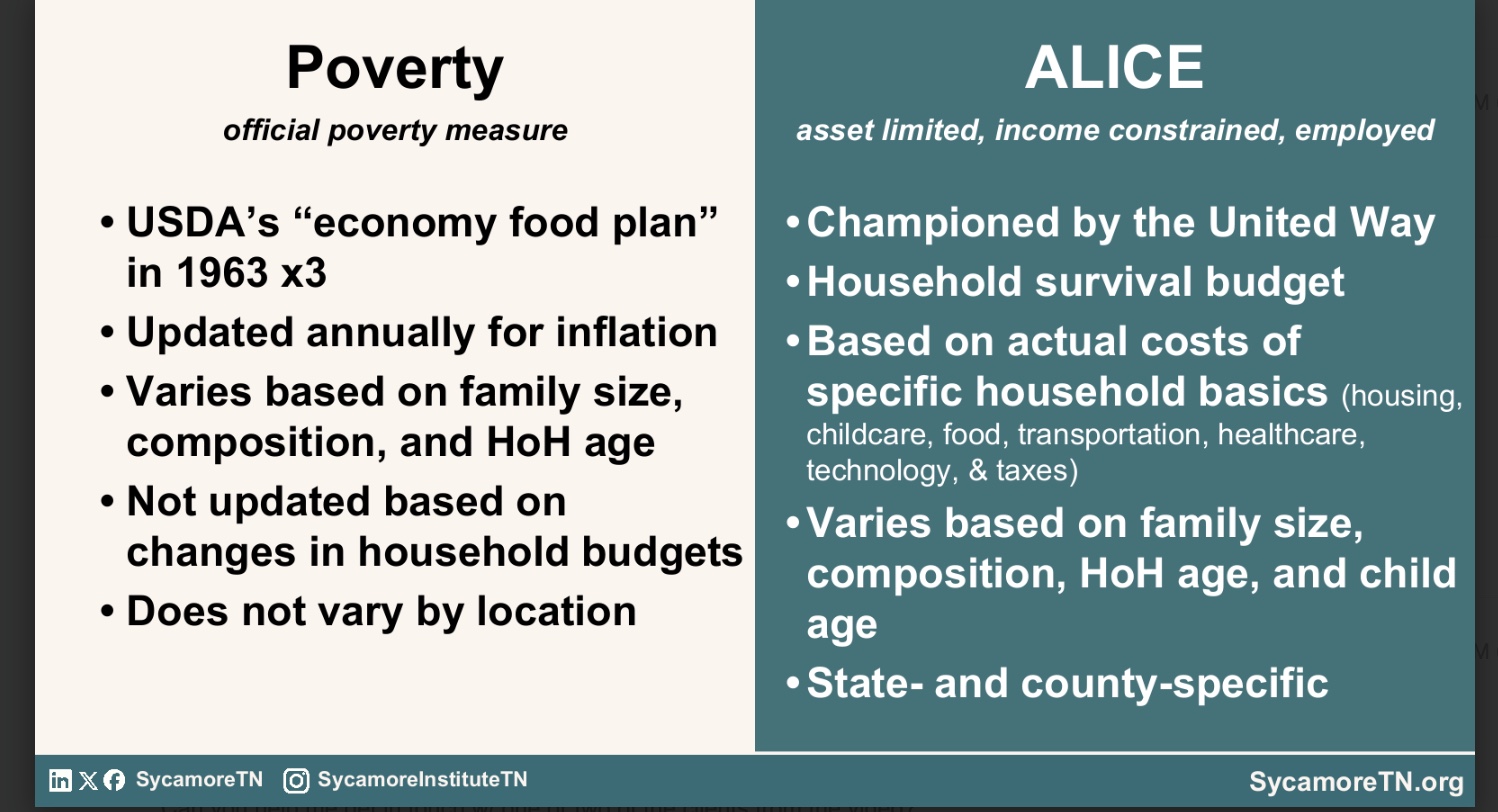
ALICE workers wouldn't qualify as living below the poverty line, yet, functionally, their daily lives — child care, groceries, rent — are defined by scarcity and not-enough.
It's a better mirror. The despair is legitimized more accurately.
Hunger feels like shame and inadequacy.
I feel bad I can't provide.
Food insecurity isn't caused by a lack of trying.
You may not see it, but it's there.

These are the voices of some food bank clients, whose testimonies — shown in a sort of video medley — comprised the most powerful part of the luncheon.
Over the years, we've published story after story on these issues:
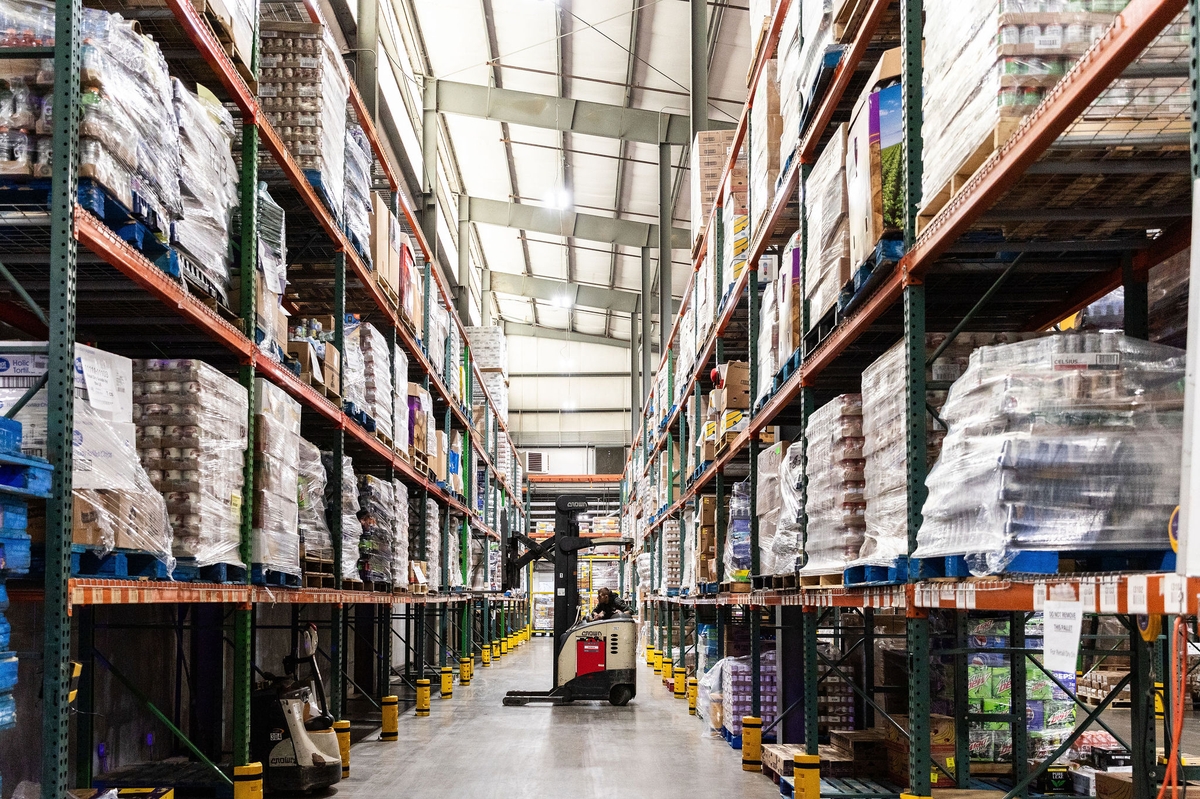
The Food Bank's logistical team.
The increasing needs of this region.
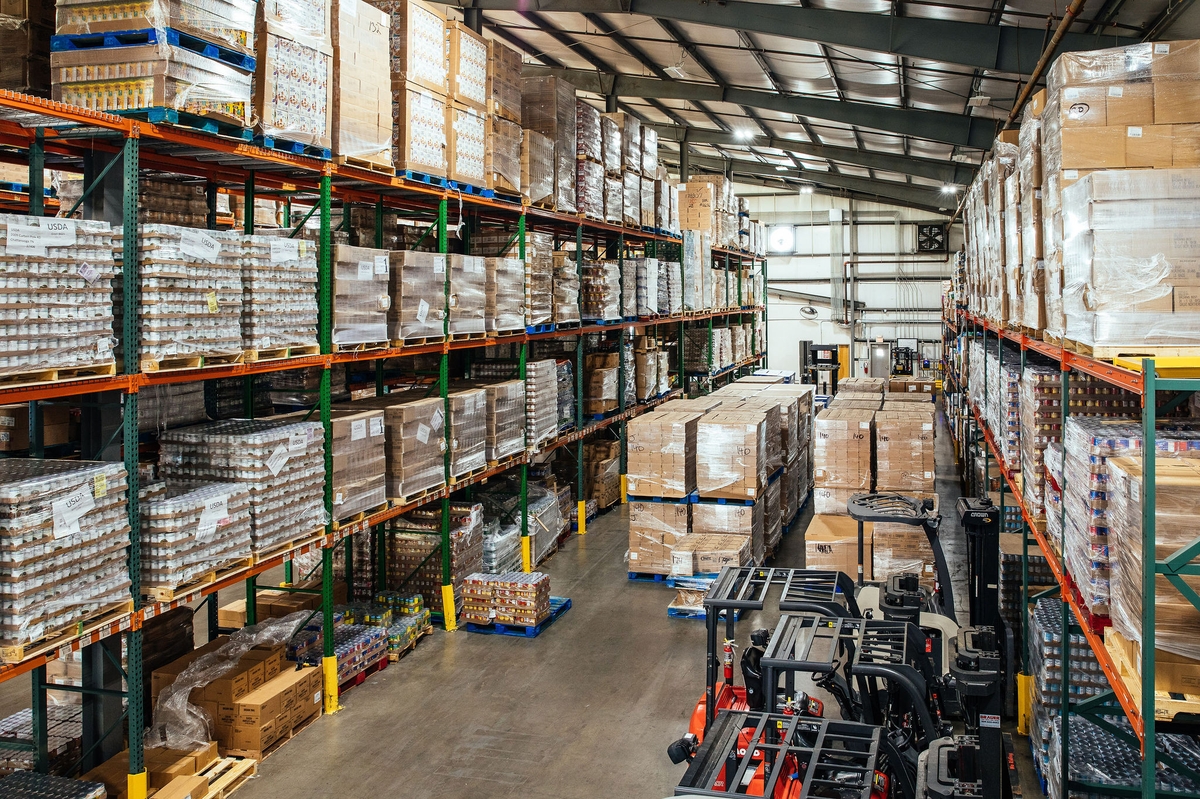
Food deserts and food insecurity
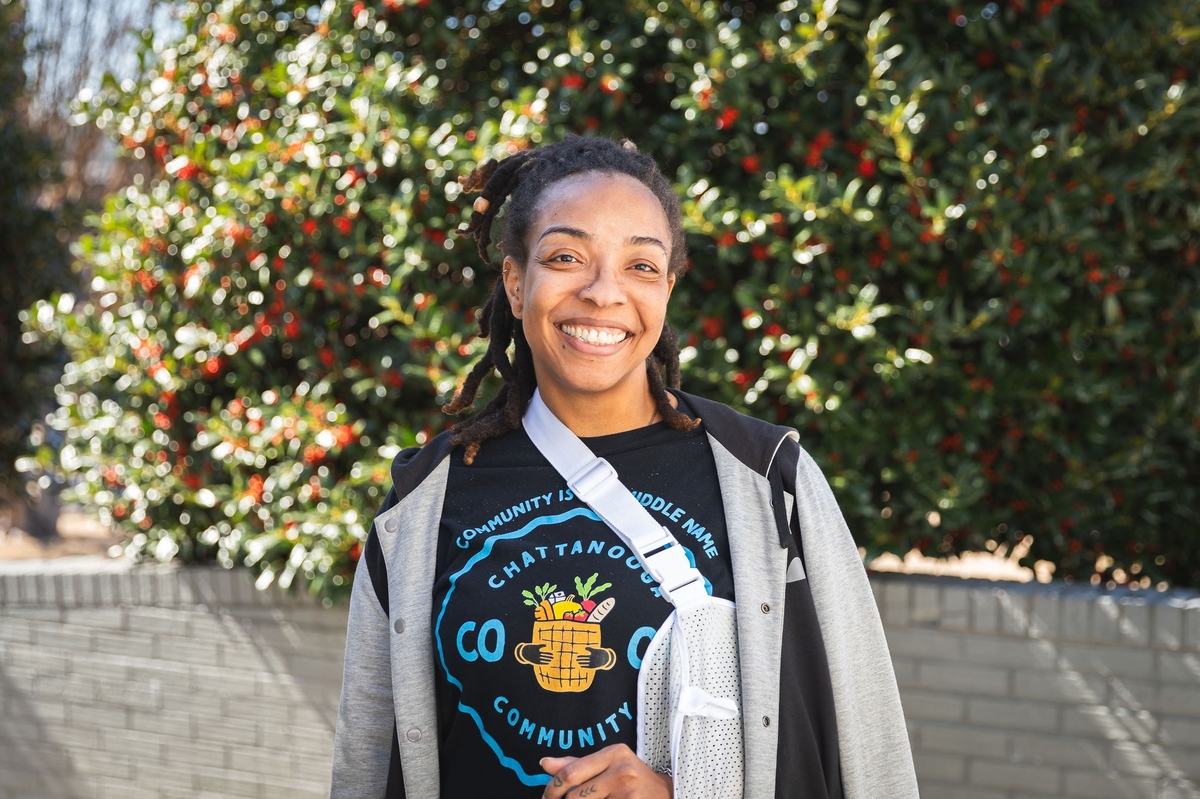
The ALICE worker measurement puts this into clearer perspective.
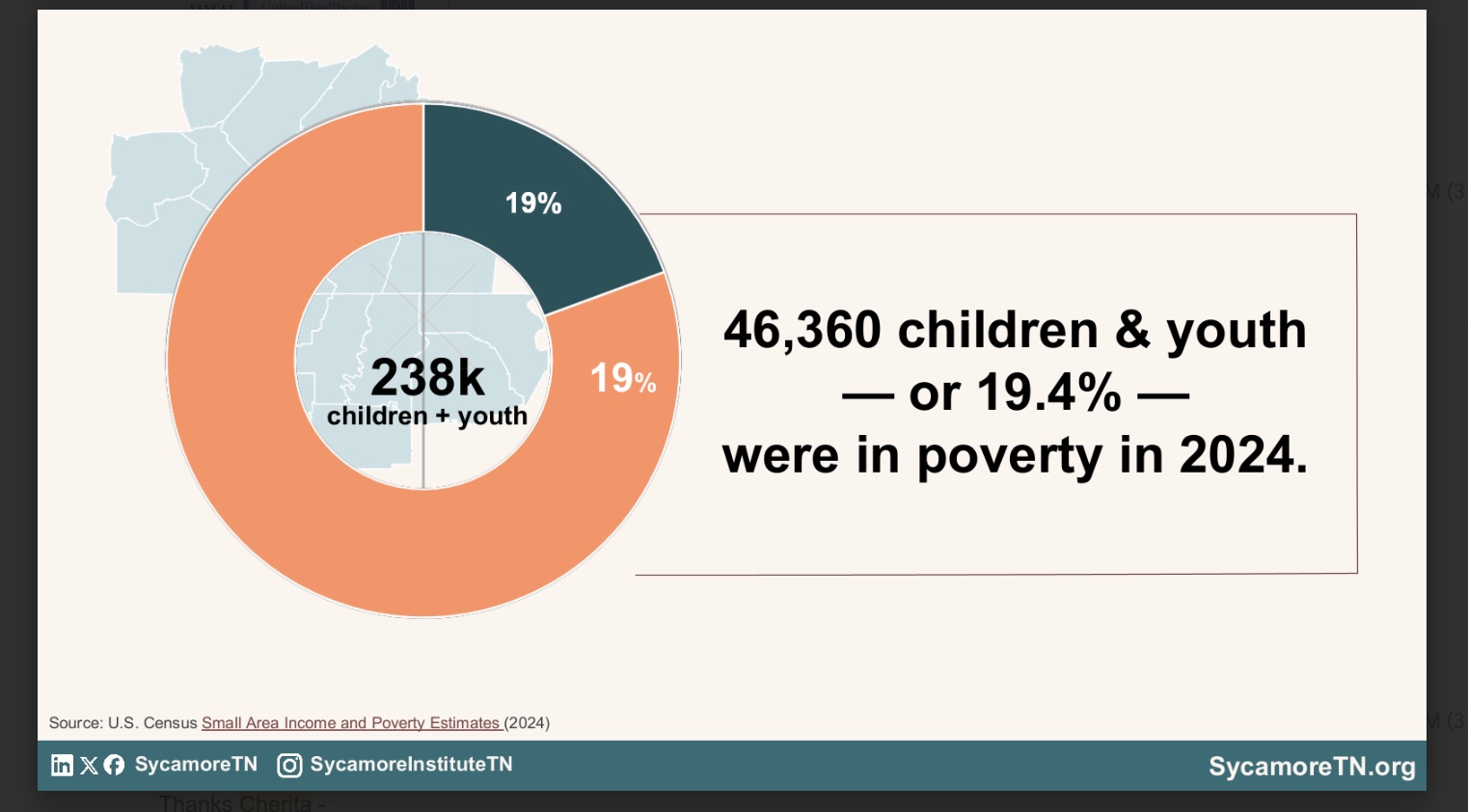
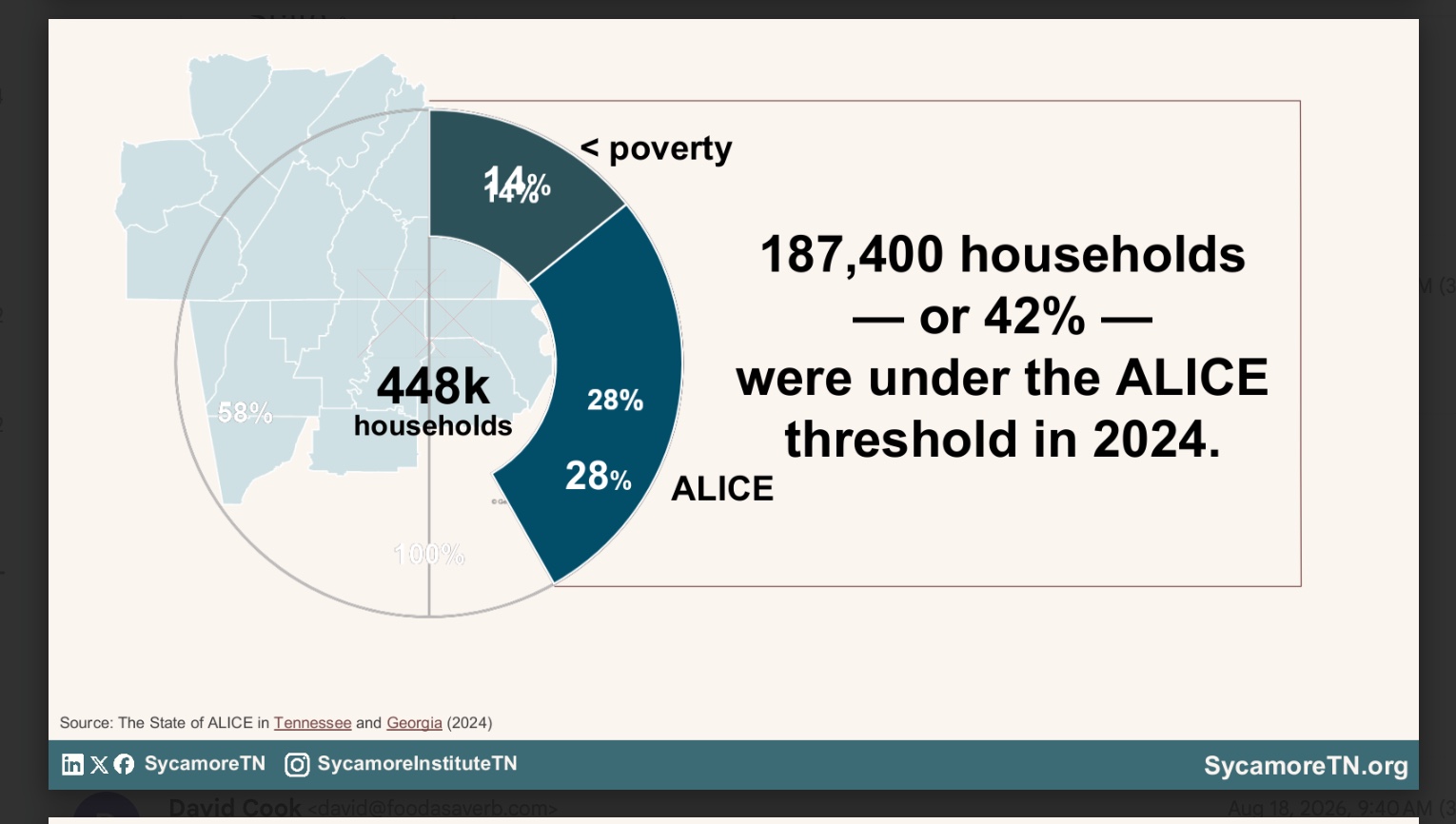
More than 40 percent of regional households fall under the shadow of ALICE life.
There's a reason why. This isn't happening accidentally or mysteriously.
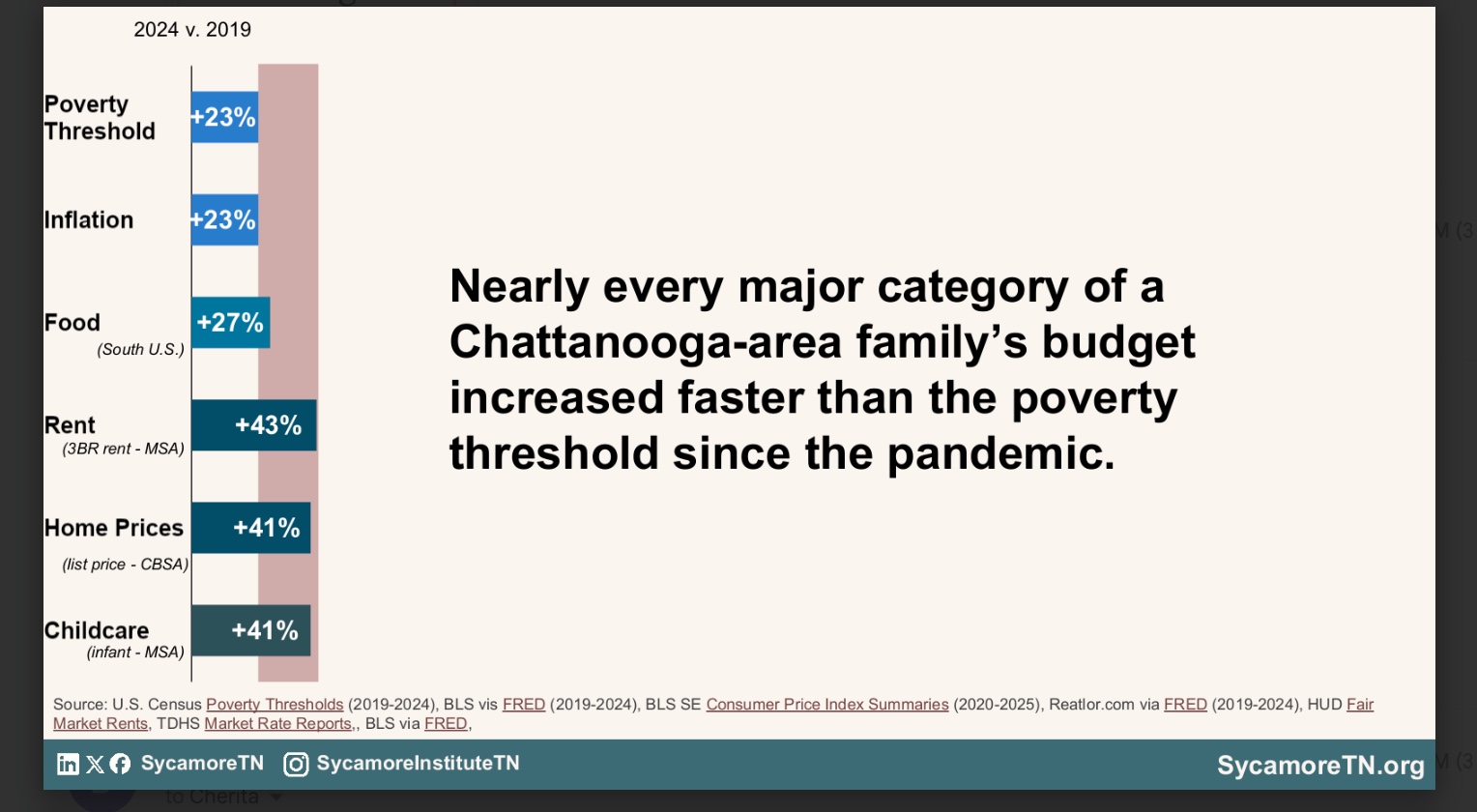
Costs have risen.
Income hasn't.
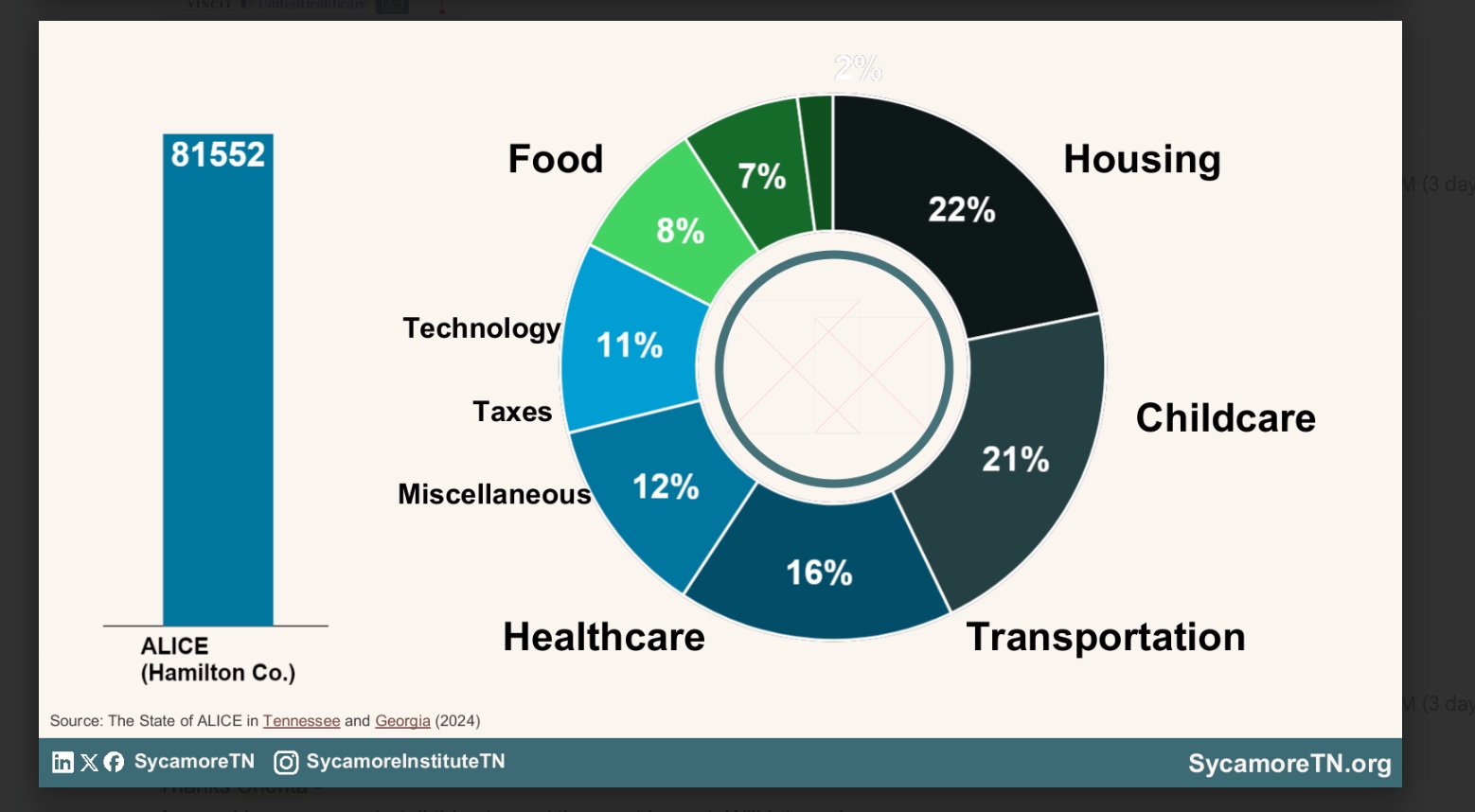
"When we stop thinking about this as a charity and more as an investment, it changes the way we think about strategy to meet the needs in our community," Blevins said.
"I hope the one thing you don't stop thinking about when you leave today is choosing kindness and valuing humanity first," she continued.
"We are all human."
Next to her on the stage, the former Senator agreed.
"This should be a call to action for all of us," said Corker.
So true. However ... there was also something missing from the luncheon: the larger context.
Outside Chattanooga Whiskey, the mechanisms of development were pumping at perhaps their highest level yet.
For the last 30 years, Chattanooga has been held within a non-stop cycle of renovation, re-imagination, rebuilding. It hasn't stopped. It just moves from one part of town to the next.
We've built a new baseball stadium while tearing down the old stadium in less time than it takes a pumpkin to grow from seed to full gourd.
With such city-wide milk and honey, shouldn't hunger be decreasing?

We are saturated with sophistication: swank hotel rooms blanket downtown. We saturated with condos. Saturated with new development. (Yet, affordable, attainable housing remains a crisis.)
Why doesn't this translate to less hunger, less need, less want? It's as though there is a glitch in the system somewhere, a wire that's been tripped so that the currents of middle-class ease aren't being delivered.
On Saturday, I sat with Chef Rick Wright at his Blue Chair Tavern in Sewanee. Rick's an old friend; we hadn't seen each other in years.
He's been serving food for decades: schools, restaurants, community kitchens, even the World Central Kitchen. He's even spent time collecting unused restaurant and cafeteria leftovers and repurposing them into meals.
"It's getting worse," he said of hunger. "It's not getting better."
Things That Are Getting Better here do not include working class families.
In rural communities, where there are no aquariums or baseball stadiums, things are even worse.
"Walk away with curiosity," Blevins told the room.
Curious, yes. I think we need to really burn with curiosity, though. The curiosity needs to be a yearning, a form of social gravity that doesn't rest until we keep moving closer towards a series of answers, from charity to investment, where more companies understand why some of their hard-working employees may also go home to ALICE-households.
Is it possible for things to get better?
The more we see this as an investment, the less hunger exists as a problem to be donated towards. If the future of the region can begin to weave food as foundational policy into its work — education, policing, healthcare, religion, employment — then perhaps we can unkink the system enough so that more families go to bed at night satisfied and content.
Breakfast will be there in the morning. And the morning after that.
And the morning after that.
Story ideas, questions, feedback? Interested in partnering with us? Email: david@foodasaverb.com
This story is 100% human generated; no AI chatbot was used in the creation of this content.
One out of every four regional children suffer from chronic hunger and food insecurity, according to the Chattanooga Area Food Bank.
Seven years ago, some 37,000 regional children — or one-in-six — were considered food insecure.
Now, in 2026, hunger has grown.
The news is jarring: 54,500 are now food insecure.
"This should be a call to action for all of us," former US Senator Bob Corker.
The image above was projected onto a screen at Chattanooga Whiskey two Wednesdays ago, as the Chattanooga Area Food Bank welcomed a full house to its State of Hunger luncheon.
In attendance: Rep. Greg Martin, Rep. Michele Reneau, Rep. Yusuf Hakeem, and on stage, Corker, who led a "conversation" with the Food Bank's CEO Melissa Blevins.
Both agreed: it's time to start thinking of this issue not as charity.
"More as an investment," said Blevins.
Seated around circular tables of eight, with dark tablecloths and turkey, bacon and rye bread sandwiches, dessert trays and cut fruit, were education leaders, nonprofit heads, business leaders.
Ghyrn Wakefield, CAFB's Chief Development Officer, offered a blessing.
"As we enjoy this meal, we remember our neighbors who are facing hunger," he prayed.
For the following 90 minutes, we learned why.
"Potential is everywhere," said Shannon Moore, Food Bank's Chief Communications Officer. "Opportunity is not."
After introducing the lunch, Shannon welcomed Mandy Spears to the stage, where the executive vice-president of Tennessee's Sycamore Institute presented the impact of a certain metric for measuring need and poverty: ALICE.
According to the United Way, ALICE-households are:
Asset-limited.
Income-constrained.
And employed.
The marker is reportedly more accurate and comprehensive than the federal government's poverty level.
ALICE workers wouldn't qualify as living below the poverty line, yet, functionally, their daily lives — child care, groceries, rent — are defined by scarcity and not-enough.
It's a better mirror. The despair is legitimized more accurately.
Hunger feels like shame and inadequacy.
I feel bad I can't provide.
Food insecurity isn't caused by a lack of trying.
You may not see it, but it's there.
These are the voices of some food bank clients, whose testimonies — shown in a sort of video medley — comprised the most powerful part of the luncheon.
Over the years, we've published story after story on these issues:
The Food Bank's logistical team.
The increasing needs of this region.
Food deserts and food insecurity
The ALICE worker measurement puts this into clearer perspective.
More than 40 percent of regional households fall under the shadow of ALICE life.
There's a reason why. This isn't happening accidentally or mysteriously.
Costs have risen.
Income hasn't.
"When we stop thinking about this as a charity and more as an investment, it changes the way we think about strategy to meet the needs in our community," Blevins said.
"I hope the one thing you don't stop thinking about when you leave today is choosing kindness and valuing humanity first," she continued.
"We are all human."
Next to her on the stage, the former Senator agreed.
"This should be a call to action for all of us," said Corker.
So true. However ... there was also something missing from the luncheon: the larger context.
Outside Chattanooga Whiskey, the mechanisms of development were pumping at perhaps their highest level yet.
For the last 30 years, Chattanooga has been held within a non-stop cycle of renovation, re-imagination, rebuilding. It hasn't stopped. It just moves from one part of town to the next.
We've built a new baseball stadium while tearing down the old stadium in less time than it takes a pumpkin to grow from seed to full gourd.
With such city-wide milk and honey, shouldn't hunger be decreasing?
We are saturated with sophistication: swank hotel rooms blanket downtown. We saturated with condos. Saturated with new development. (Yet, affordable, attainable housing remains a crisis.)
Why doesn't this translate to less hunger, less need, less want? It's as though there is a glitch in the system somewhere, a wire that's been tripped so that the currents of middle-class ease aren't being delivered.
On Saturday, I sat with Chef Rick Wright at his Blue Chair Tavern in Sewanee. Rick's an old friend; we hadn't seen each other in years.
He's been serving food for decades: schools, restaurants, community kitchens, even the World Central Kitchen. He's even spent time collecting unused restaurant and cafeteria leftovers and repurposing them into meals.
"It's getting worse," he said of hunger. "It's not getting better."
Things That Are Getting Better here do not include working class families.
In rural communities, where there are no aquariums or baseball stadiums, things are even worse.
"Walk away with curiosity," Blevins told the room.
Curious, yes. I think we need to really burn with curiosity, though. The curiosity needs to be a yearning, a form of social gravity that doesn't rest until we keep moving closer towards a series of answers, from charity to investment, where more companies understand why some of their hard-working employees may also go home to ALICE-households.
Is it possible for things to get better?
The more we see this as an investment, the less hunger exists as a problem to be donated towards. If the future of the region can begin to weave food as foundational policy into its work — education, policing, healthcare, religion, employment — then perhaps we can unkink the system enough so that more families go to bed at night satisfied and content.
Breakfast will be there in the morning. And the morning after that.
And the morning after that.
Story ideas, questions, feedback? Interested in partnering with us? Email: david@foodasaverb.com
This story is 100% human generated; no AI chatbot was used in the creation of this content.
Food as a verb thanks our story sponsor:
Food as a Verb Thanks our sustaining partner:
Food as a verb thanks our story sponsor:
Join our table

keep reading









.png)
