How Quickly Do You Clean the Table? And Other Swirling Energies in the Air
Where did the Lookouts stadium go?
Food as a verb thanks
for sponsoring this series
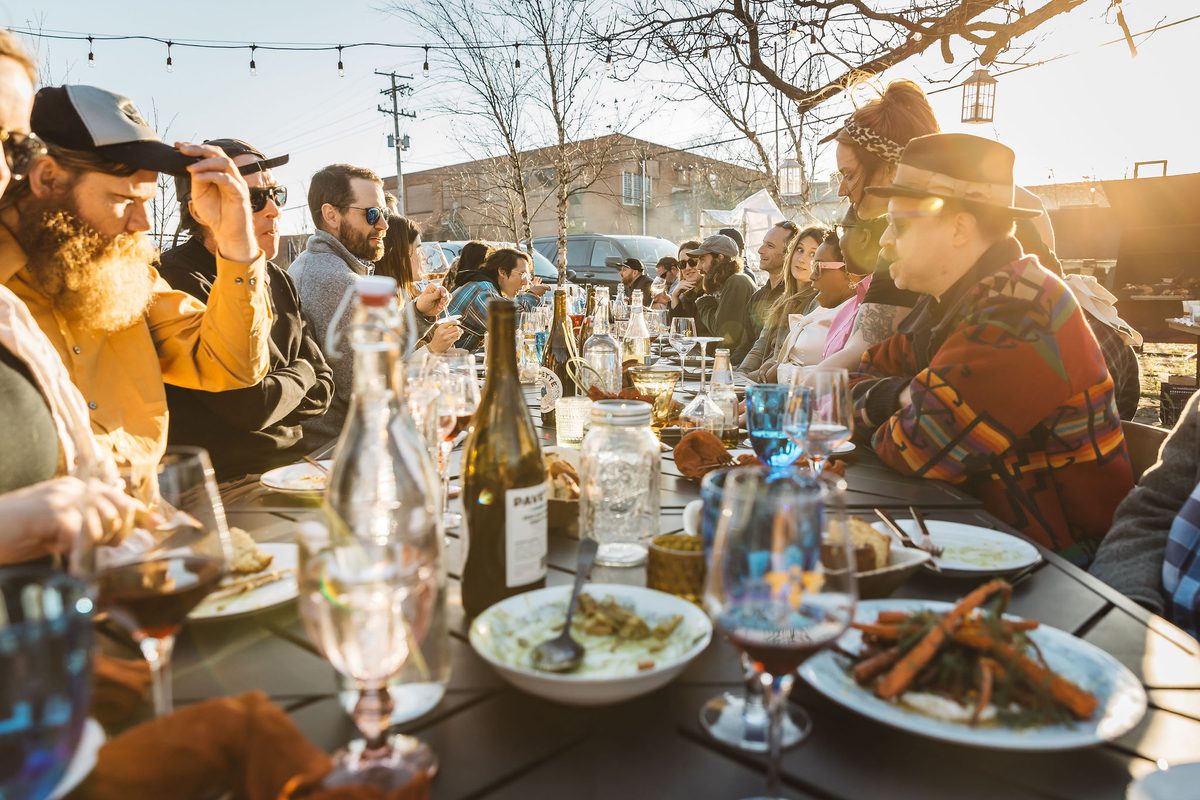
Years ago, when she was still alive and hosting dinners, my grandmother would clean the table just moments after everyone had finished eating. Not five minutes after the last bite off the fork, and she'd get up from her seat and begin carrying the plates and cups to the sink.
The energy was anxious, not settled, as if something bad would happen if our dirty plates lingered too long on the table.
The etiquette felt more about her than guests. And it's contagious and generational. When we have friends over for dinner, I often catch myself doing the same. A nervousness looms off-stage: a rush to take it all down, clean it all up.
I admit, and am not proud: it's not a pleasant nightcap. Digestion gets a little rumbly when the host cleans up too quickly. My wife carries herself with much more ease; I try to follow her lead. (I got away with it once, maybe twice: I'll let you clean up tonight, ok?)
Do you feel this too, when and if you host dinner parties? Have you felt it as a guest?
I felt something similar watching the old Lookouts stadium come down.
There was a part of me — and I'm still not sure how to name it, or locate it — that hurt in a surprisingly deep way as they tore down the stadium.
It wasn't so much that they tore it down, but the sting came from the pace at which they did so.
Driving past the tear-down was part of my morning and afternoon commute. The stadium was there, then gone so suddenly, and the speed and pace at which the destruction happened felt like, well, soft or subtle violence to me.
There was no time to process or distill memory or let it seep in. No time to gracefully reach the end, this truncated goodbye.
My heart wished: let's leave the Lookouts plates a little while longer. Let things settle.
It could have been reconstructed gradually. A little bit here, a little bit there. The bleachers. Then, left field. Along the way, there's space and time for memories to surface, for the stadium and the 10,000 moments of happiness it held to be re-enjoyed and re-experienced. Let everyone come and remember.
(Do you remember the time we caught the foul ball? Do you remember the first time we took our son to the game? When he ate so much soft serve and peanuts he threw up in the breezeway? Or the surprise birthday party there behind home plate?) Or the fireworks? Or ZOOperstars?)
The stadium was part of our collective consciousness. Try and put a number on how many moments of connection, joy and ease we all found there. By tearing it down and hauling it off so quickly, the mind and heart don't have the time they need to say goodbye. This is why we have cemeteries.
Imagine if the aquarium was torn down so quickly. (Even writing that sentence hurts.) The stadium didn't carry the same power, but it's in the same, well, ballpark. There would need to be some slow process that allow for grief and goodbye and remembering.

It reminded me of Covid. So much happened, yet there was never a reckoning, or collective time reserved to process it all. There was so much shifting and wounding, yet without a proper process of reconciliation, or at least honesty, then nothing really gets settled, or put back on the shelf.
I felt something similar on Tuesday night and Wednesday morning with the midterm elections.
Just yesteryear, Trump came to McKenzie Arena. He was stumping. I was there.
I was there for the vast and endless parade of headlines: democracy will die. It is going to die. I was there for the miles and miles of stories, and I wrote a few myself, and now, I'm wondering: what happened?
Consider election denialism, which occupied a massive part of our news cycle and national consciousness (and worry).
It's gone, sort of like the stadium. There was not even a hint of it this week, which is glorious and such a relief, but there's an edge of resentment in me, like the burn that comes from the Boy Who Cried Wolf one too many times. Our Media Cries Wolf, and no one really holds them responsible.
There is so much Pronouncing the Next Big Worry, and for those of us who actually suffer from worry, it feels harmful and leads to two places: we turn away from media, we turn exhausted. Or both.
There is a subconscious pace operating in our culture that loves removal. It loves the build-up and explosive announcements — AI Will Kill Humanity — but doesn't stick around to do the slow work of composting, conversation and cleaning the table ... when the time is right.
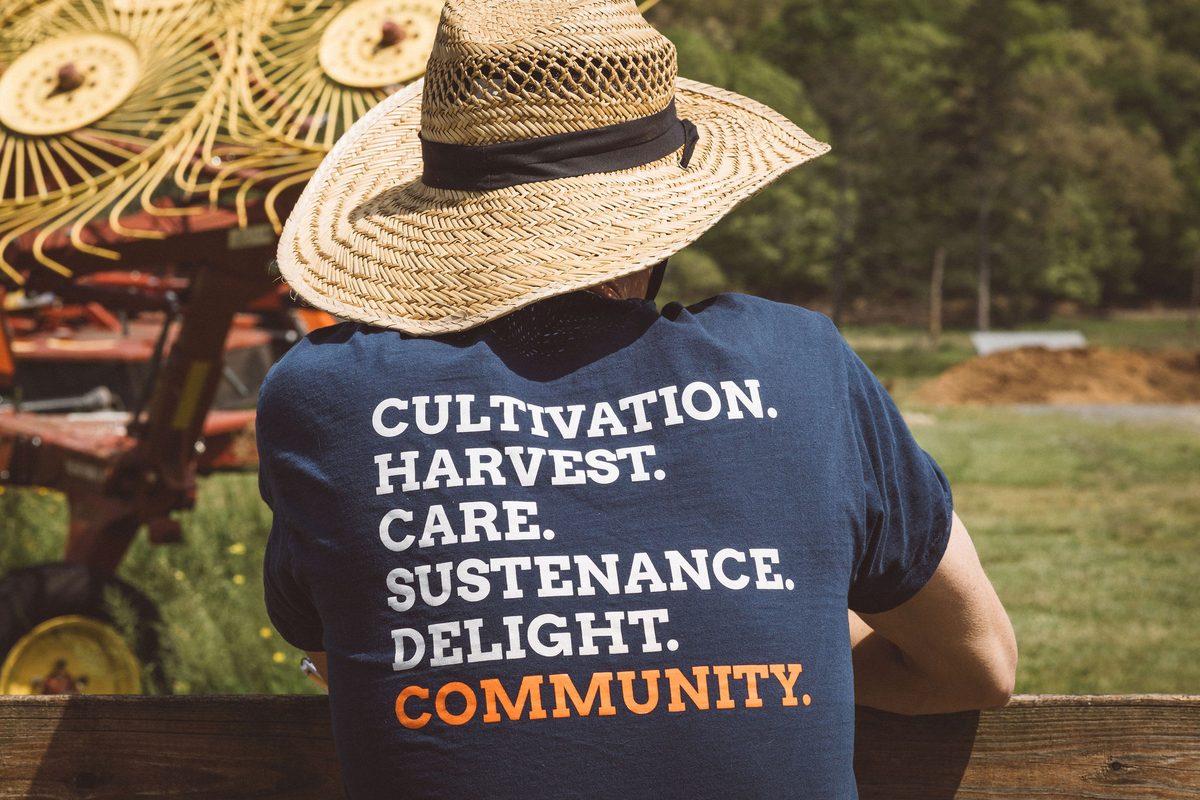
I've tried to practice this in my garden. I let a few plants stay too long, and into their decay, they become reminders to me. There's a darker energy around cleanliness and appearance at work, and when I can let the browns of a wilting sunflower remain alongside the early growth of fall greens, then something in me is being challenged in a good way.
Does any of this resonate with you all?
Next Sunday, we'll return with a heavy hitter on the future of the regional restaurant landscape and why your restaurant bill is probably going to get even more expensive.
Before we say goodbye today, here are four more things we hope you like:
First: not sure if you've noticed, but we've quietly assembled a nice little collection of audio episodes. Other folks call them podcasts.
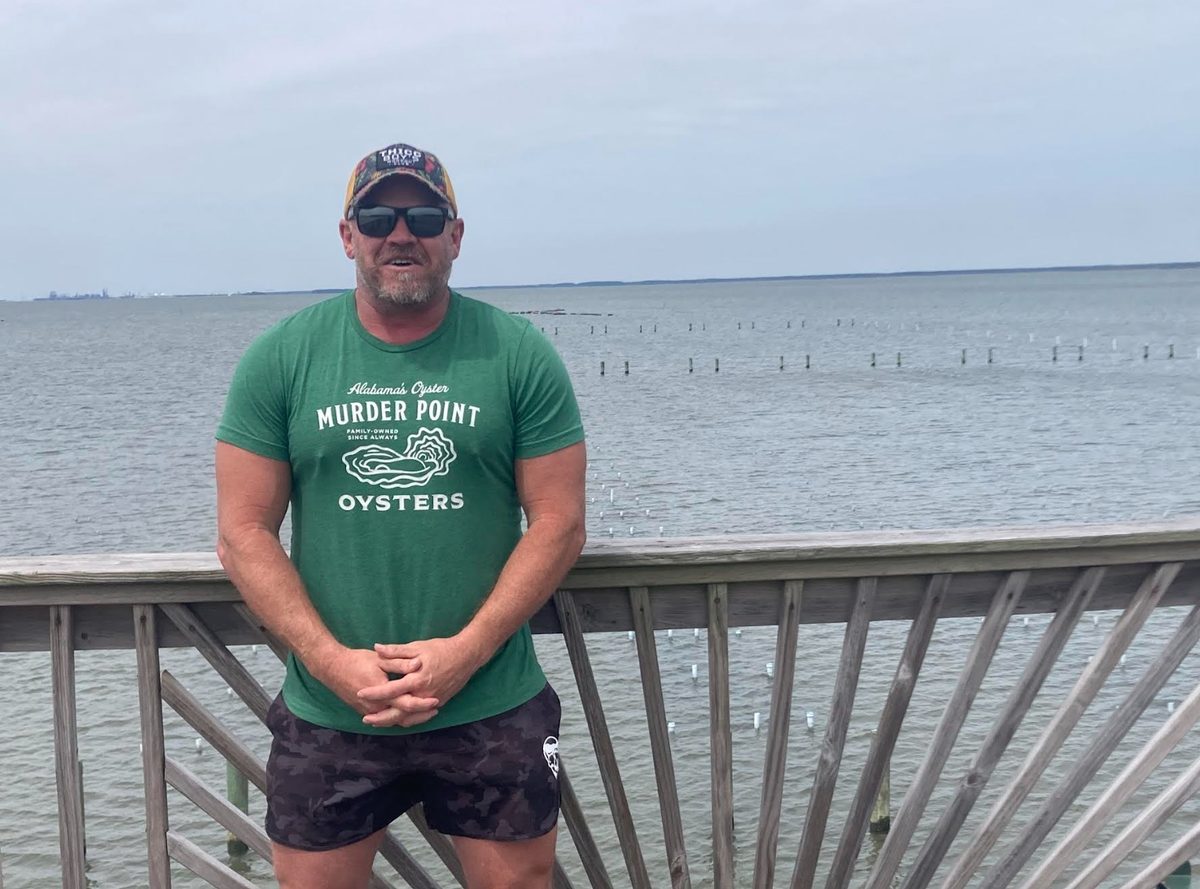
There's a conversation between Amanda Niel and Raven Humphrey. Another with Chef Erik Niel and Dr. Mark Johnson. Our good buddy Lane Zirlott at Murder Point.
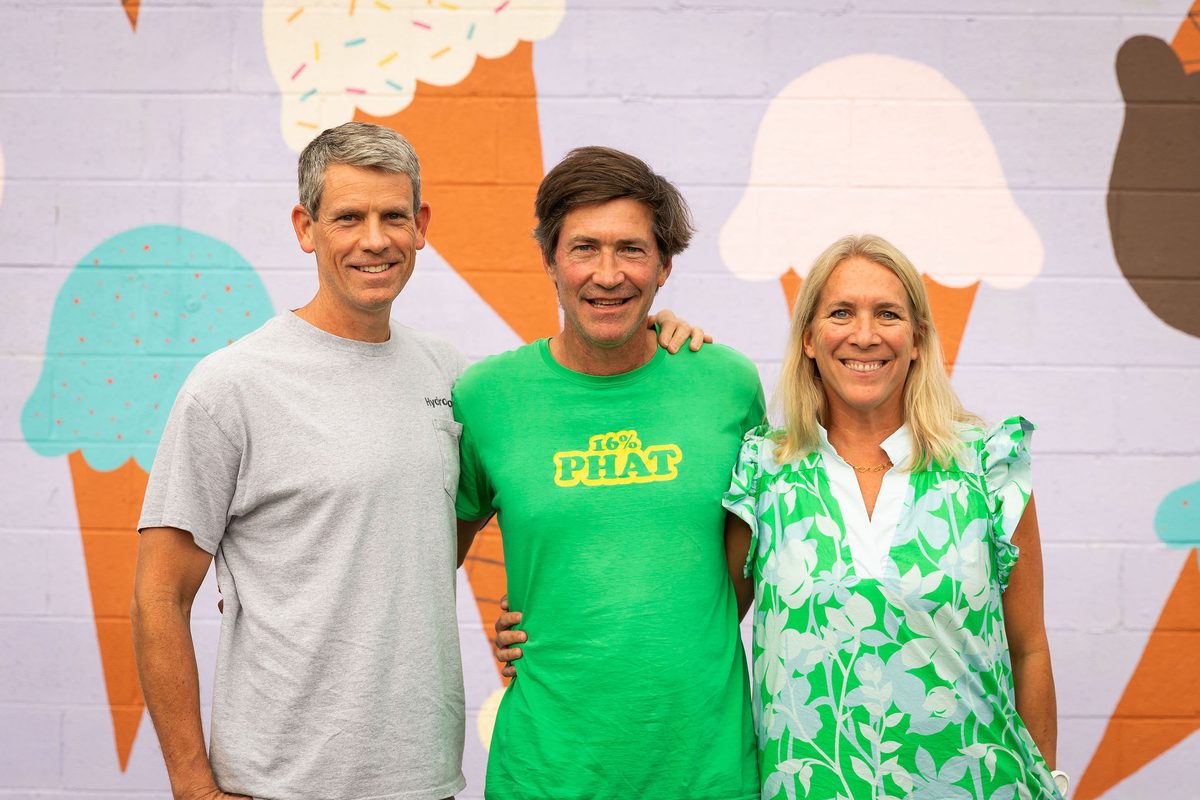
Earlier this morning, we published the audio of the Brocks telling the stories from the early Clumpies days.
On Friday morning, we added a gem:
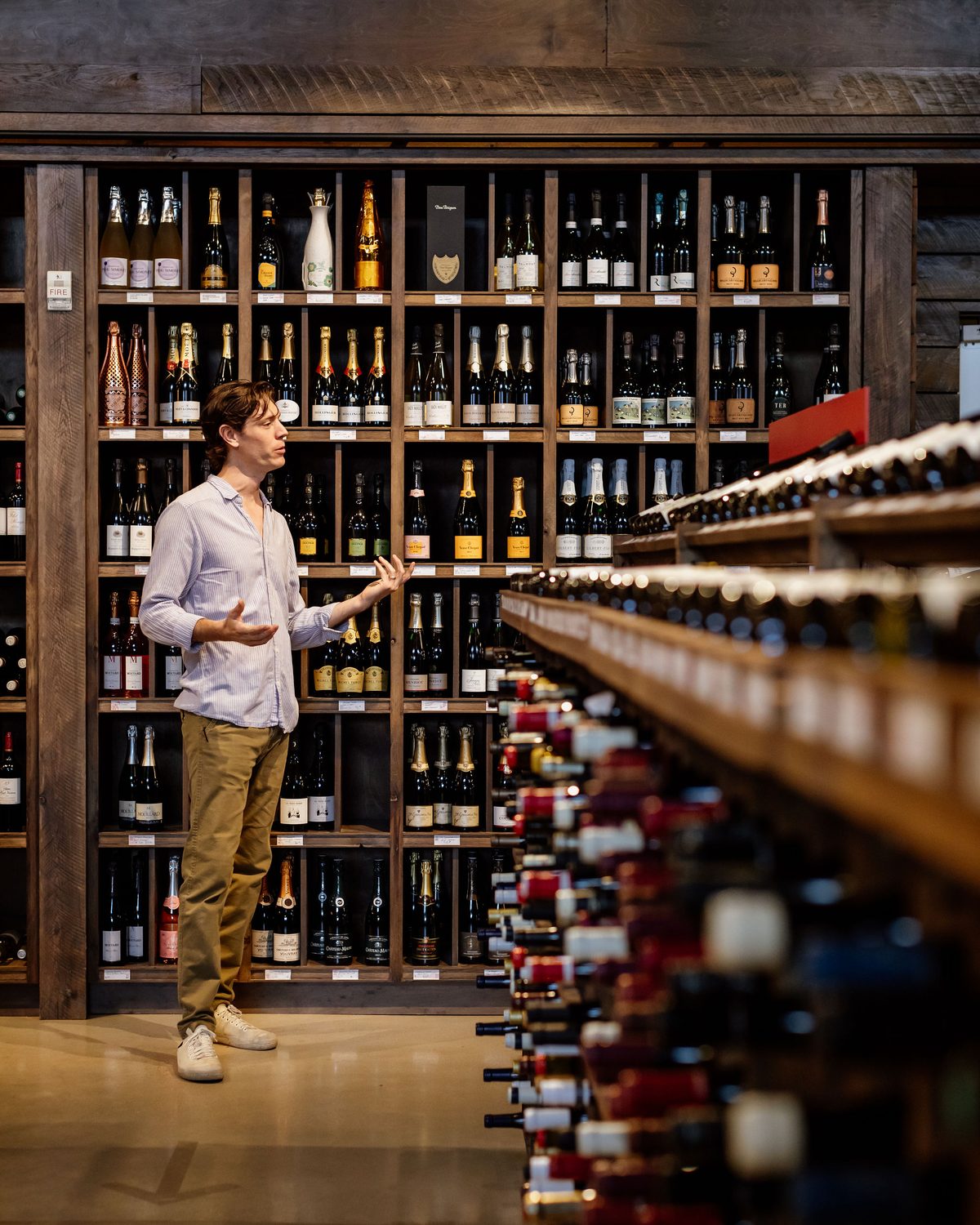
Not too long ago, I sat down with Caleb Kneipp, the wine director at Imbibe, the fabulous spirits store on Broad St. in Chattanooga.
He chose two bottles: a red and white.
Then, we recorded our conversation, as Caleb talked me through all the parts of a good wine tasting.
He’s definitely changed the way I experience wine, but my palate is still like the slowest middle-schooler in the room. Back of the class, way too many questions.
What if we had a Wine Tasting 101?
But we did it for introverts?
You know, those of us whose glass of wine is best served in quiet, low-energy without a lot of talking, crowds or noise?
Now, you can swing by Imbibe, buy these two bottles, and enjoy your own private wine tasting in your PJs with Caleb the guide, and David the dumb-dumb.
He talks about God, rock n' roll and tannins. How to sniff and swirl. How to taste and savor. I ask all the questions you might be afraid to ask in a wine tasting crowd.
It's no-pressure wine tasting for introverts.
You can find it and more at The Table.
Second: Food as a Verb is now part of The Food Section, Hanna Raskin's James Beard award-winning publication on food in the American South.
The Food Section publishes stories and dispatches from several Southern cities, including Asheville, Atlanta and Nashville, and now, we're offering some dispatches from Chattanooga.
This is a big honor; Hanna's doing marvelous work.
Third: Our friend Dr. Peggy Douglas is hosting a free workshop on Nov. 14.
It's called A Pinch of Memory: Recipes, Stories and Family Lore. Here's Peggy:
Every recipe tells a story. Remember the person who made your favorite dish? The kitchen where it all happened? The smells, sayings, and family secrets passed down through generations? Join us for a creative workshop where we'll turn cherished recipes and food memories into handmade zines filled with stories, photographs, and family history.
The two-hour workshop is free, open to the public and begins at 10 am. at the Downtown Public Library.
Bring a recipe, a photo, and a memory. No writing or art experience needed—just a story worth sharing!
Reserve a seat at the table here:
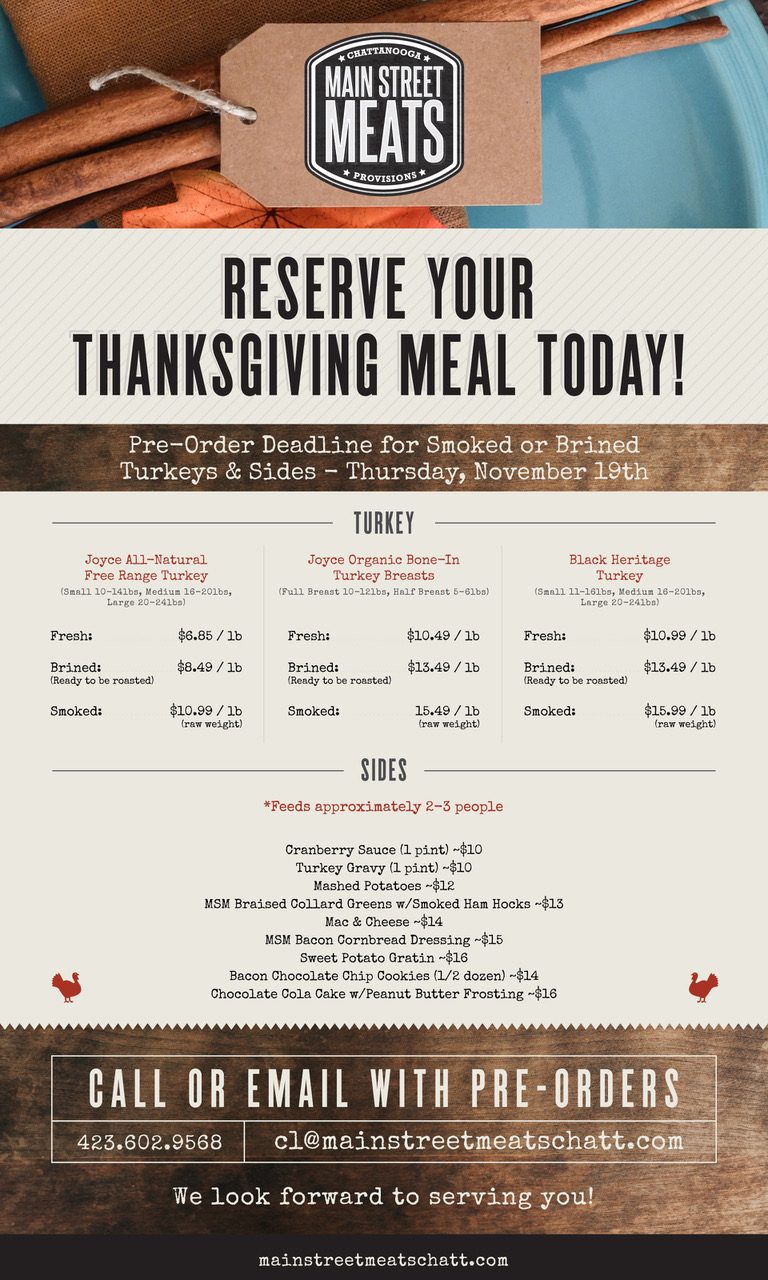
Fourth: Main Street Meats published its Thanksgiving menu, which is available for pre-order.
Fresh, smoked and brined turkeys, plus sides and desserts.
The deadline is Thursday, Nov. 19. Place your order by phone at (423) 602-9568 or email cl@mainstreetmeatschatt.com.
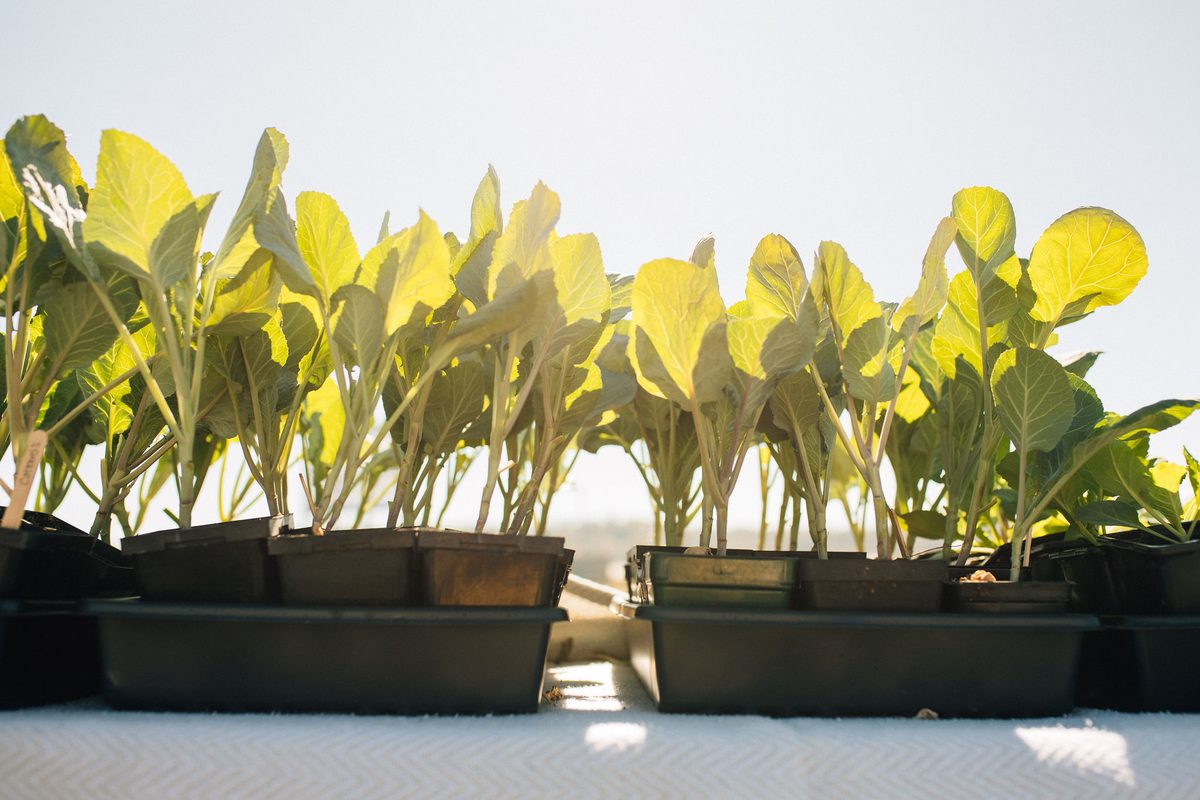
Finally, you're invited to become a master gardener.
Applications for the 2027 Hamilton County Master Gardener Intern Class are now open.
"This program is designed for those who’d like to deepen their gardening knowledge, learn directly from University of Tennessee Extension specialists, connect with fellow plant enthusiasts, and use that knowledge to serve our community through educational volunteer service," writes Haley Richardson-Treadway, who teaches the class and serves as Hamilton County's UT-Ag Extension Agent.
The class costs $250 and meets weekly on Tuesdays beginning in February through May.
"The Tennessee Extension Master Gardener Program is much more than a gardening class. It is a volunteer training program designed to help participants become ambassadors of research-based horticultural information throughout Hamilton County," she said.
Story ideas, questions, feedback? Interested in partnering with us? Email: david@foodasaverb.com
This story is 100% human generated; no AI chatbot was used in the creation of this content.
Years ago, when she was still alive and hosting dinners, my grandmother would clean the table just moments after everyone had finished eating. Not five minutes after the last bite off the fork, and she'd get up from her seat and begin carrying the plates and cups to the sink.
The energy was anxious, not settled, as if something bad would happen if our dirty plates lingered too long on the table.
The etiquette felt more about her than guests. And it's contagious and generational. When we have friends over for dinner, I often catch myself doing the same. A nervousness looms off-stage: a rush to take it all down, clean it all up.
I admit, and am not proud: it's not a pleasant nightcap. Digestion gets a little rumbly when the host cleans up too quickly. My wife carries herself with much more ease; I try to follow her lead. (I got away with it once, maybe twice: I'll let you clean up tonight, ok?)
Do you feel this too, when and if you host dinner parties? Have you felt it as a guest?
I felt something similar watching the old Lookouts stadium come down.
There was a part of me — and I'm still not sure how to name it, or locate it — that hurt in a surprisingly deep way as they tore down the stadium.
It wasn't so much that they tore it down, but the sting came from the pace at which they did so.
Driving past the tear-down was part of my morning and afternoon commute. The stadium was there, then gone so suddenly, and the speed and pace at which the destruction happened felt like, well, soft or subtle violence to me.
There was no time to process or distill memory or let it seep in. No time to gracefully reach the end, this truncated goodbye.
My heart wished: let's leave the Lookouts plates a little while longer. Let things settle.
It could have been reconstructed gradually. A little bit here, a little bit there. The bleachers. Then, left field. Along the way, there's space and time for memories to surface, for the stadium and the 10,000 moments of happiness it held to be re-enjoyed and re-experienced. Let everyone come and remember.
(Do you remember the time we caught the foul ball? Do you remember the first time we took our son to the game? When he ate so much soft serve and peanuts he threw up in the breezeway? Or the surprise birthday party there behind home plate?) Or the fireworks? Or ZOOperstars?)
The stadium was part of our collective consciousness. Try and put a number on how many moments of connection, joy and ease we all found there. By tearing it down and hauling it off so quickly, the mind and heart don't have the time they need to say goodbye. This is why we have cemeteries.
Imagine if the aquarium was torn down so quickly. (Even writing that sentence hurts.) The stadium didn't carry the same power, but it's in the same, well, ballpark. There would need to be some slow process that allow for grief and goodbye and remembering.
It reminded me of Covid. So much happened, yet there was never a reckoning, or collective time reserved to process it all. There was so much shifting and wounding, yet without a proper process of reconciliation, or at least honesty, then nothing really gets settled, or put back on the shelf.
I felt something similar on Tuesday night and Wednesday morning with the midterm elections.
Just yesteryear, Trump came to McKenzie Arena. He was stumping. I was there.
I was there for the vast and endless parade of headlines: democracy will die. It is going to die. I was there for the miles and miles of stories, and I wrote a few myself, and now, I'm wondering: what happened?
Consider election denialism, which occupied a massive part of our news cycle and national consciousness (and worry).
It's gone, sort of like the stadium. There was not even a hint of it this week, which is glorious and such a relief, but there's an edge of resentment in me, like the burn that comes from the Boy Who Cried Wolf one too many times. Our Media Cries Wolf, and no one really holds them responsible.
There is so much Pronouncing the Next Big Worry, and for those of us who actually suffer from worry, it feels harmful and leads to two places: we turn away from media, we turn exhausted. Or both.
There is a subconscious pace operating in our culture that loves removal. It loves the build-up and explosive announcements — AI Will Kill Humanity — but doesn't stick around to do the slow work of composting, conversation and cleaning the table ... when the time is right.
I've tried to practice this in my garden. I let a few plants stay too long, and into their decay, they become reminders to me. There's a darker energy around cleanliness and appearance at work, and when I can let the browns of a wilting sunflower remain alongside the early growth of fall greens, then something in me is being challenged in a good way.
Does any of this resonate with you all?
Next Sunday, we'll return with a heavy hitter on the future of the regional restaurant landscape and why your restaurant bill is probably going to get even more expensive.
Before we say goodbye today, here are four more things we hope you like:
First: not sure if you've noticed, but we've quietly assembled a nice little collection of audio episodes. Other folks call them podcasts.
There's a conversation between Amanda Niel and Raven Humphrey. Another with Chef Erik Niel and Dr. Mark Johnson. Our good buddy Lane Zirlott at Murder Point.
Earlier this morning, we published the audio of the Brocks telling the stories from the early Clumpies days.
On Friday morning, we added a gem:
Not too long ago, I sat down with Caleb Kneipp, the wine director at Imbibe, the fabulous spirits store on Broad St. in Chattanooga.
He chose two bottles: a red and white.
Then, we recorded our conversation, as Caleb talked me through all the parts of a good wine tasting.
He’s definitely changed the way I experience wine, but my palate is still like the slowest middle-schooler in the room. Back of the class, way too many questions.
What if we had a Wine Tasting 101?
But we did it for introverts?
You know, those of us whose glass of wine is best served in quiet, low-energy without a lot of talking, crowds or noise?
Now, you can swing by Imbibe, buy these two bottles, and enjoy your own private wine tasting in your PJs with Caleb the guide, and David the dumb-dumb.
He talks about God, rock n' roll and tannins. How to sniff and swirl. How to taste and savor. I ask all the questions you might be afraid to ask in a wine tasting crowd.
It's no-pressure wine tasting for introverts.
You can find it and more at The Table.
Second: Food as a Verb is now part of The Food Section, Hanna Raskin's James Beard award-winning publication on food in the American South.
The Food Section publishes stories and dispatches from several Southern cities, including Asheville, Atlanta and Nashville, and now, we're offering some dispatches from Chattanooga.
This is a big honor; Hanna's doing marvelous work.
Third: Our friend Dr. Peggy Douglas is hosting a free workshop on Nov. 14.
It's called A Pinch of Memory: Recipes, Stories and Family Lore. Here's Peggy:
Every recipe tells a story. Remember the person who made your favorite dish? The kitchen where it all happened? The smells, sayings, and family secrets passed down through generations? Join us for a creative workshop where we'll turn cherished recipes and food memories into handmade zines filled with stories, photographs, and family history.
The two-hour workshop is free, open to the public and begins at 10 am. at the Downtown Public Library.
Bring a recipe, a photo, and a memory. No writing or art experience needed—just a story worth sharing!
Reserve a seat at the table here:
Fourth: Main Street Meats published its Thanksgiving menu, which is available for pre-order.
Fresh, smoked and brined turkeys, plus sides and desserts.
The deadline is Thursday, Nov. 19. Place your order by phone at (423) 602-9568 or email cl@mainstreetmeatschatt.com.
Finally, you're invited to become a master gardener.
Applications for the 2027 Hamilton County Master Gardener Intern Class are now open.
"This program is designed for those who’d like to deepen their gardening knowledge, learn directly from University of Tennessee Extension specialists, connect with fellow plant enthusiasts, and use that knowledge to serve our community through educational volunteer service," writes Haley Richardson-Treadway, who teaches the class and serves as Hamilton County's UT-Ag Extension Agent.
The class costs $250 and meets weekly on Tuesdays beginning in February through May.
"The Tennessee Extension Master Gardener Program is much more than a gardening class. It is a volunteer training program designed to help participants become ambassadors of research-based horticultural information throughout Hamilton County," she said.
Story ideas, questions, feedback? Interested in partnering with us? Email: david@foodasaverb.com
This story is 100% human generated; no AI chatbot was used in the creation of this content.
Food as a verb thanks our story sponsor:
Food as a Verb Thanks our sustaining partner:
Food as a verb thanks our story sponsor:
Join our table

keep reading