Eight Generations of Farmers: Welcome to Loyd Farms
"We need people to trust their food."
Food as a verb thanks
for sponsoring this series

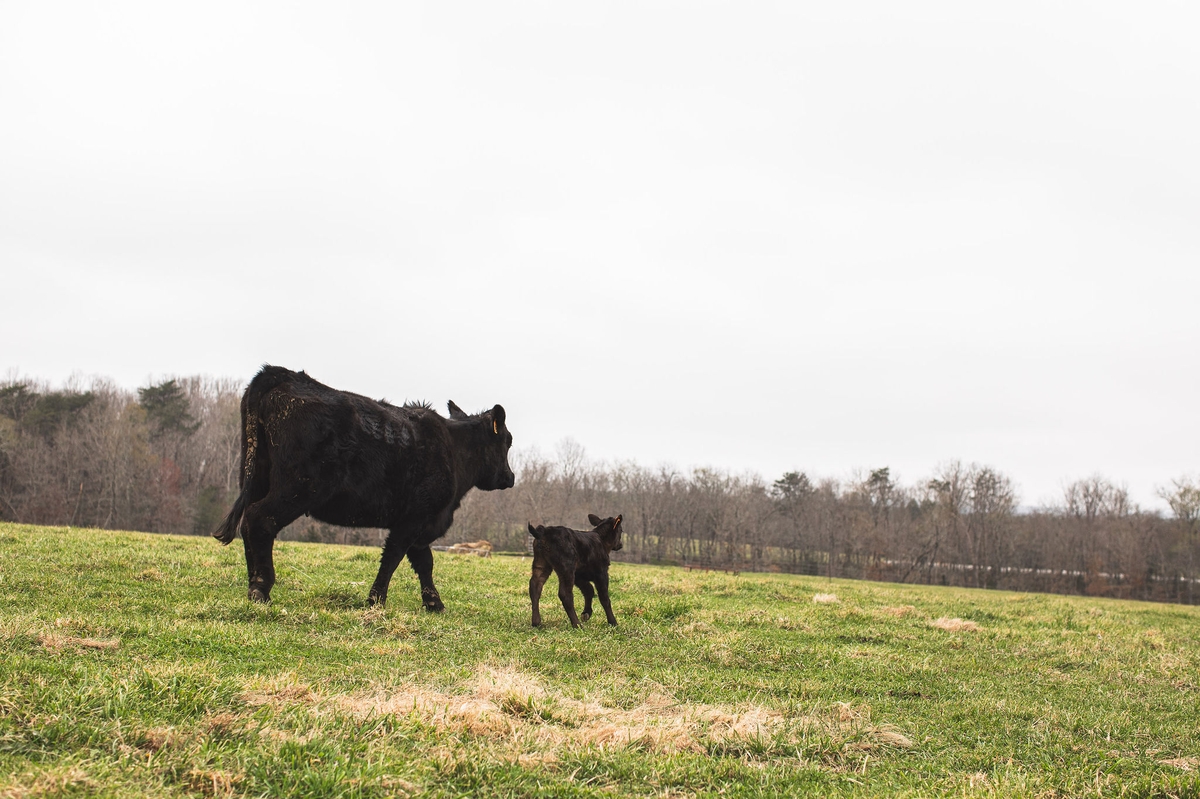
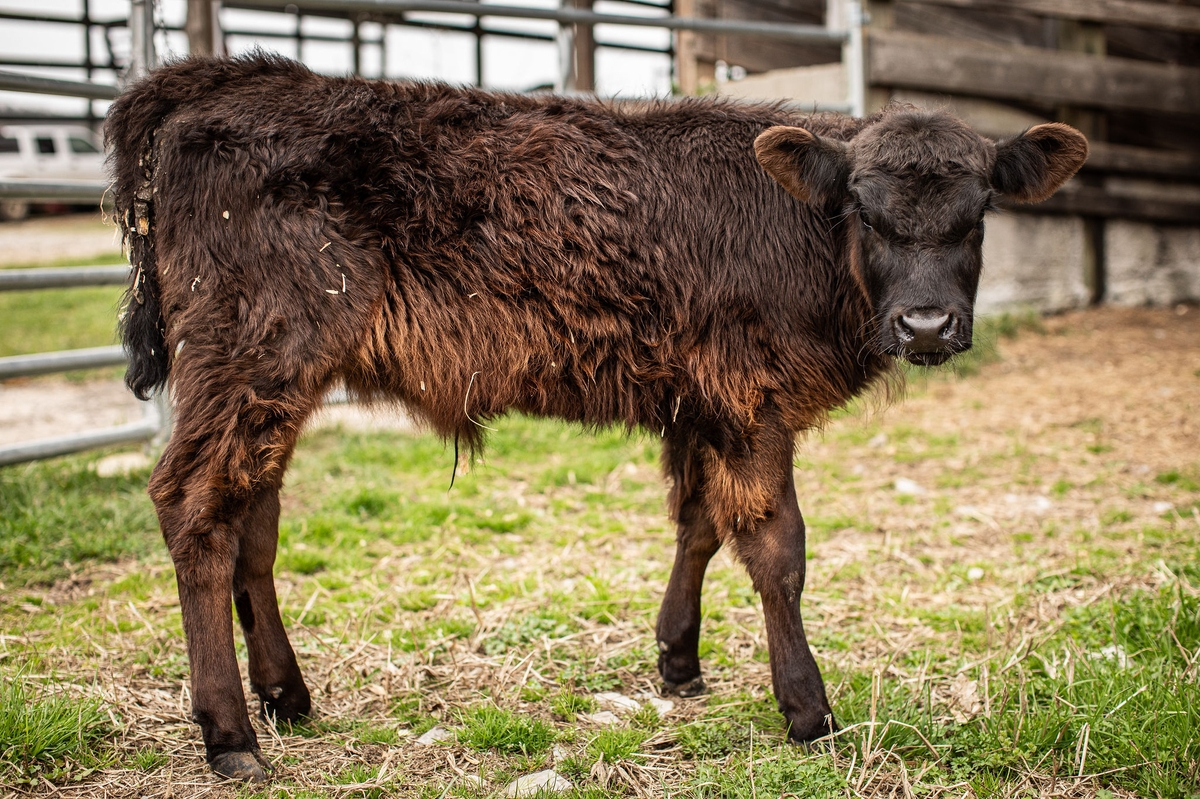
The calf was born in the night, under a crescent moon, with the morning sun still hours away.
As the sun rose, the calf began walking for the first time across the green fields, its umbilical cord still fresh and dangling across the dew like a leftover rope from another world.
"That'll dry up in a few days," said Ethan Loyd.
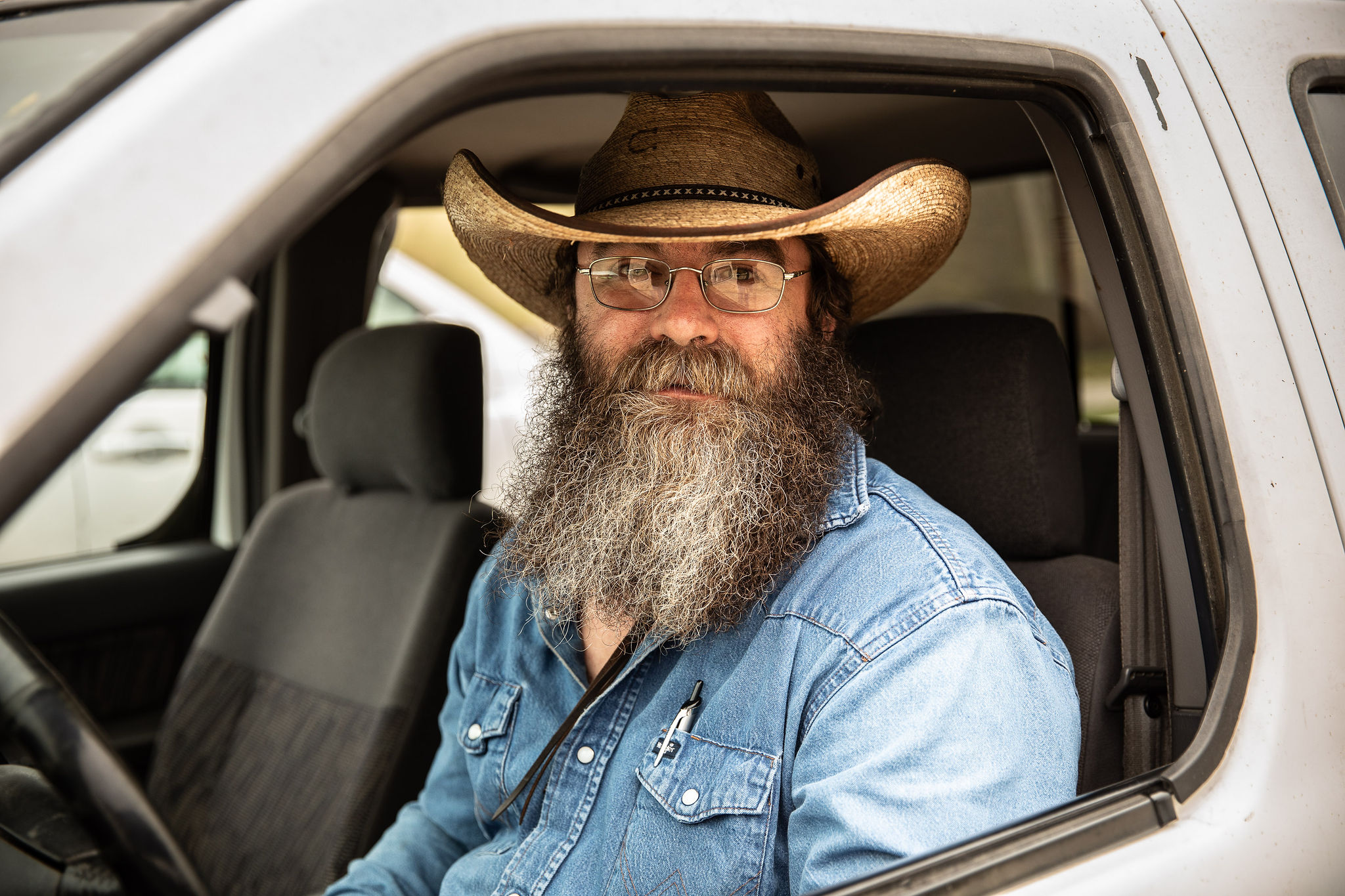
From his Nissan 4x4, Ethan's touring us across Loyd Farms in Pikeville, checking on newborn calves. Ethan's driving, his daughter's in the back, his son scouting out ahead on his three-wheeler.
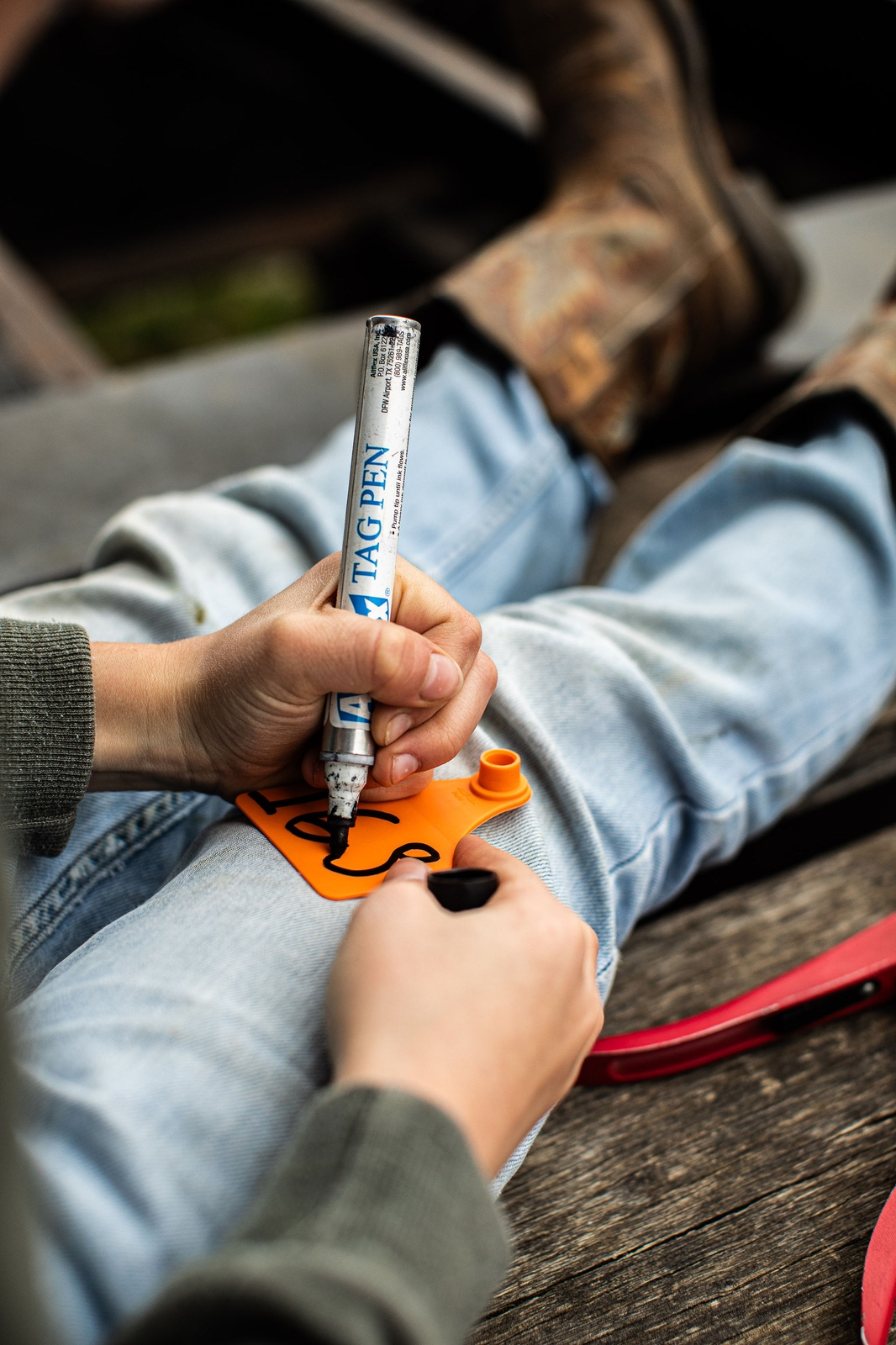
Ethan carries a tag — #168 — that his son had marked up for him earlier today.
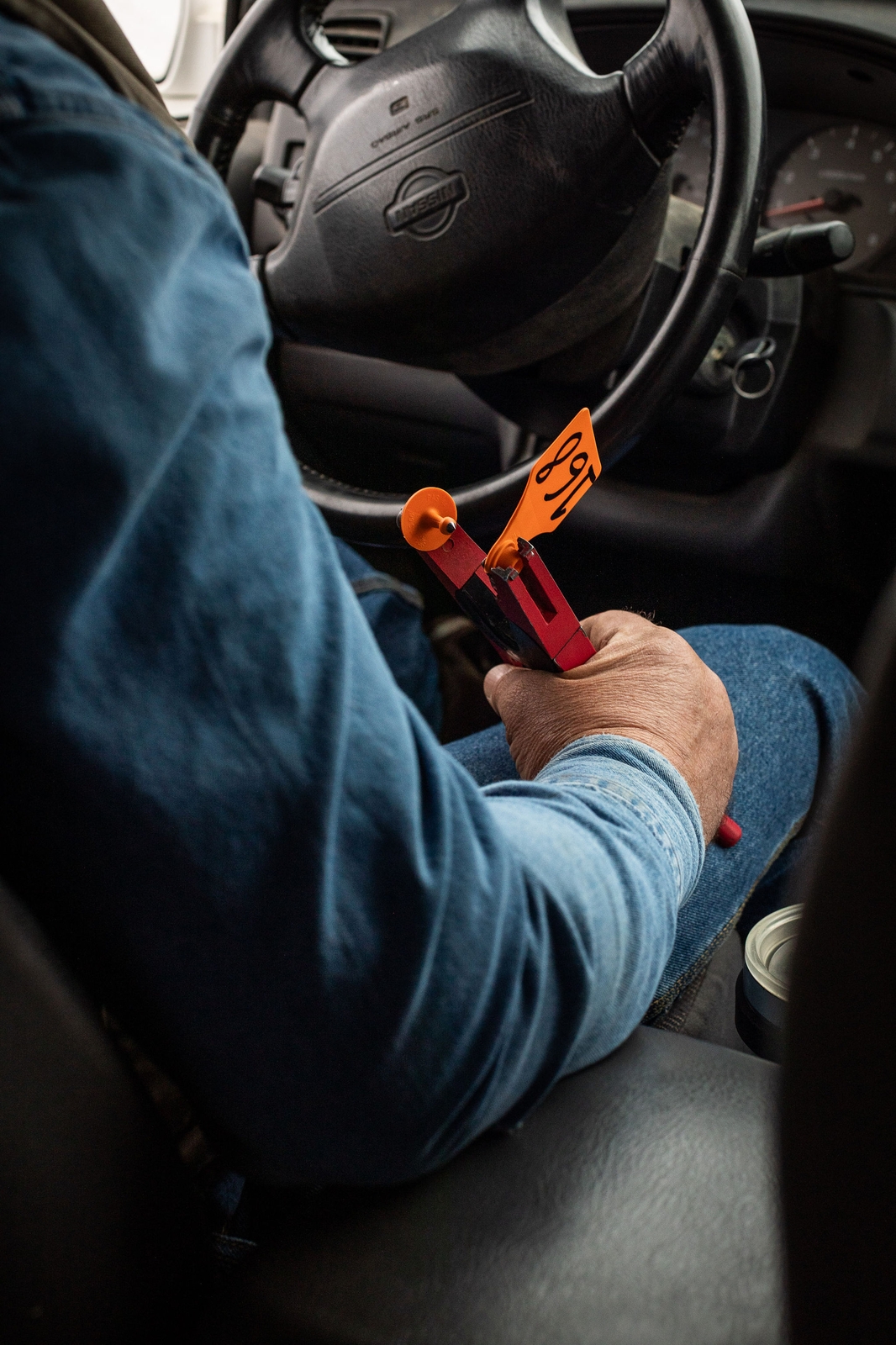
Ethan steps out of the idling Nissan 4x4, walking calmly but deliberately.
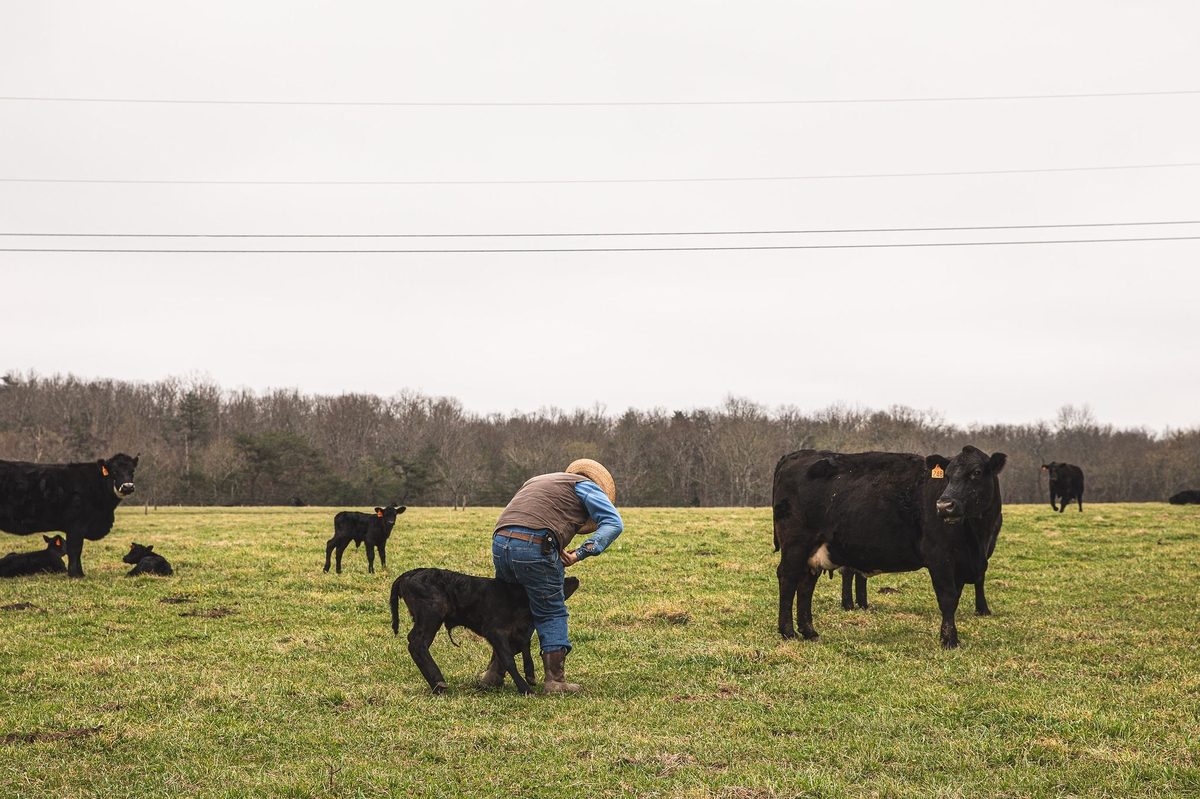
"I'm going to step across his neck and put a tag in its ear," he said.
It takes him less than 30 seconds, in a move he's done 100s of times.
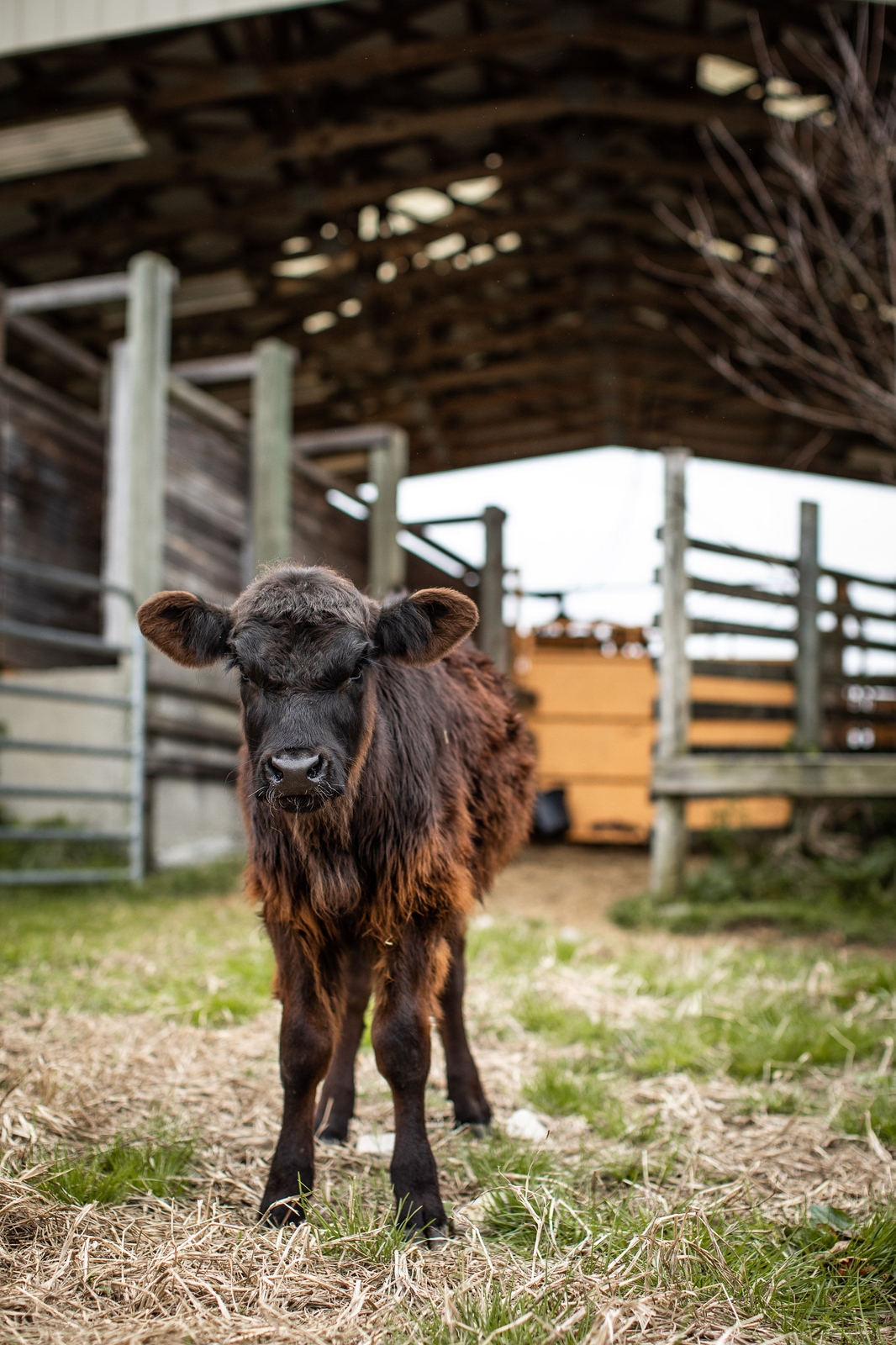
Farmers don't name their cows. Well, not always. Back at the barn, there's this one calf ...
"You ever watch Star Wars?" Ethan said. "I named this one 'Walker'."
It was born with a limp. They bottle-fed it.
From the backseat of the Nissan, his daughter gently reminds her dad there was another cow, too, they'd named.
"Speckles?" she said.
Ethan smiles.
"He named this one," she said. "I name them once in a blue while."
There are so many things going right at this moment:
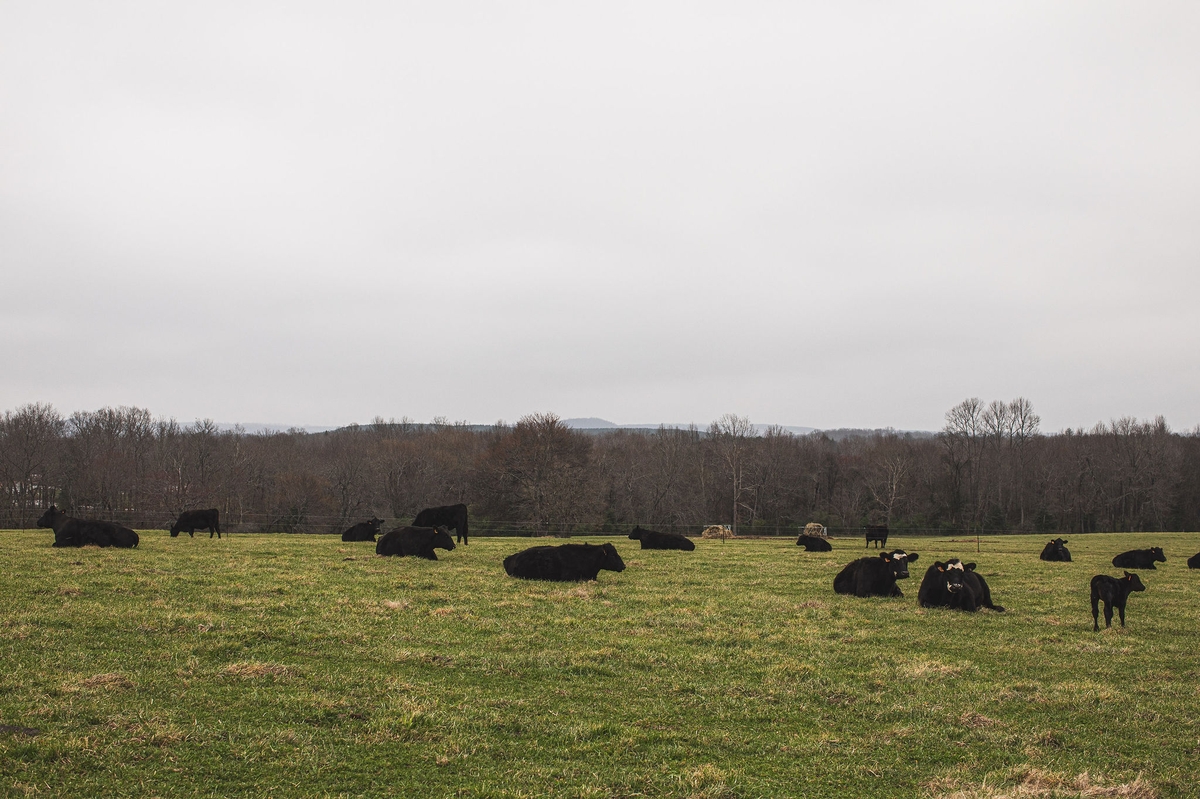
We're in the middle of the main pasture at Loyd Farms, Melanie and Ethan Loyd's Pikeville cattle farm. It carries an instinctual or inherent beauty, something that stirs the heart's DNA: healthy grass grown for healthy cattle managed by a healthy family.
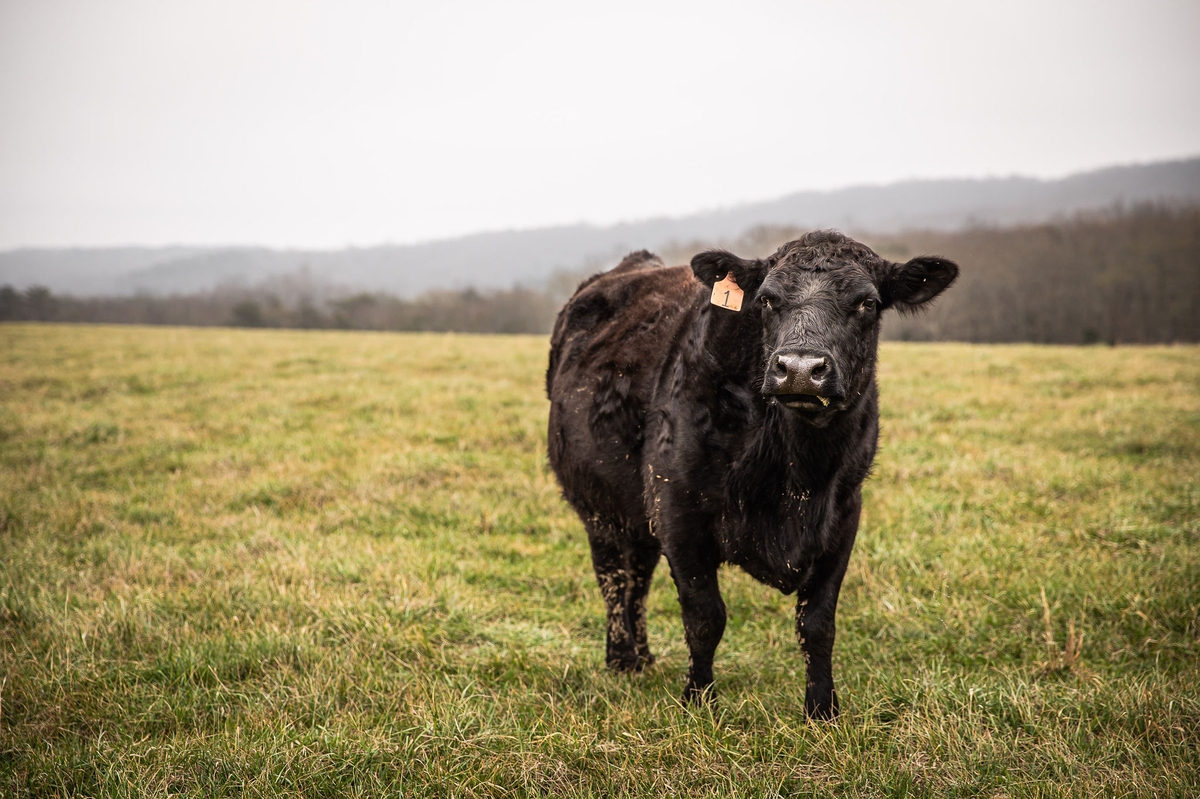
"We run a traditional cow-calf operation," he said. "We've got about 65 mama cows here that are mature breeding age and having calves.
"Black Angus predominantly," he said, "and registered Angus bulls."
Peel back another layer: there's the beauty of being surrounded by good neighbors, a dynamic that's particularly present among farmers. (Later that day, Ethan will get a call from a neighbor: need your help. "He had a cow die in the ditch with its feet up," he said.)
He is surrounded by the positive impact and orbit of his own decisions and actions: a man doing what he is meant to do in the world.
"I bought my first herd of cows in 1998," he said.
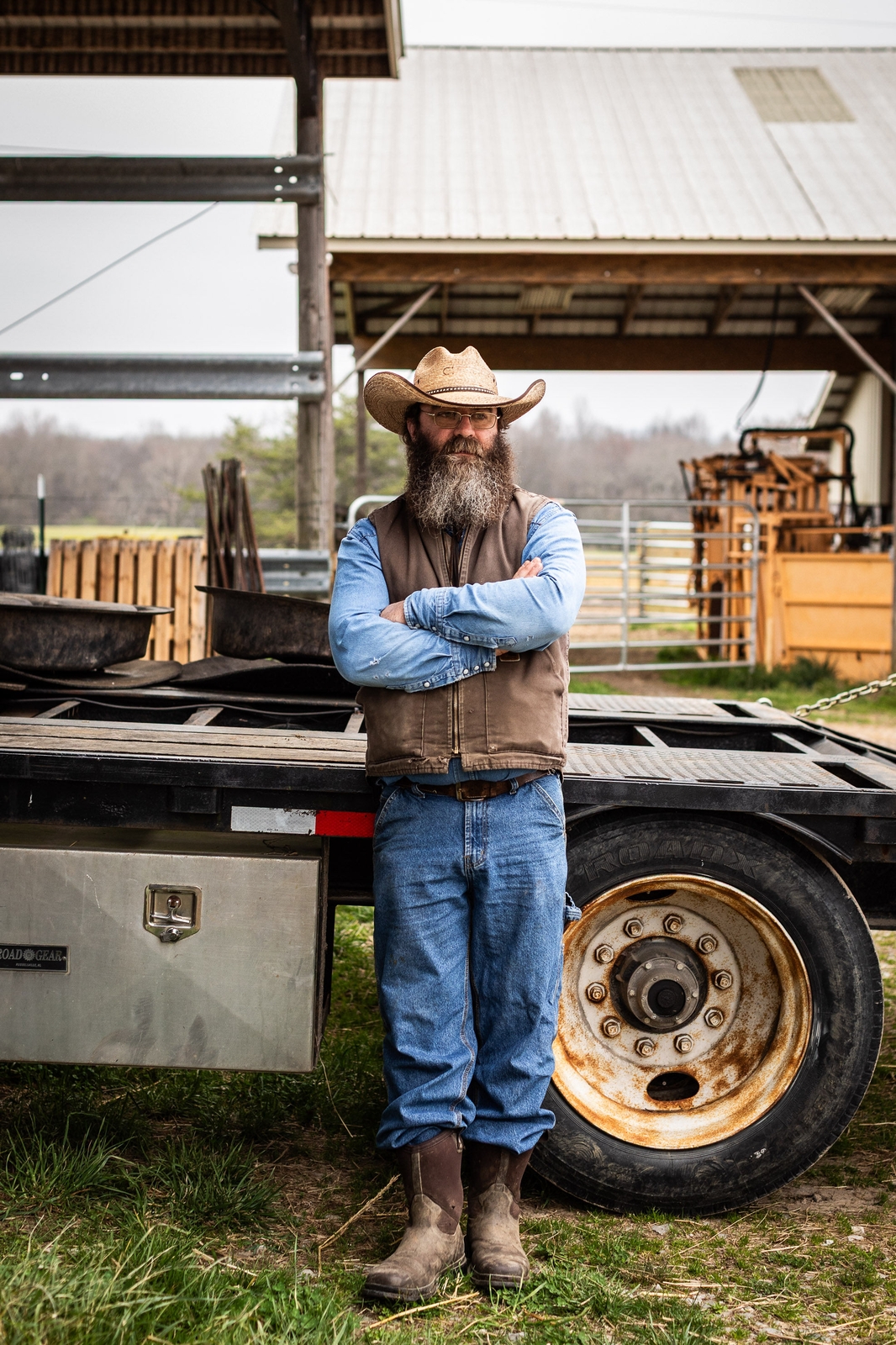
"I was raised farming beef cattle," he said. "I probably had bottle calves earlier than the age of 10."
He took his first herd to his grandmother Velma Hackworth's farm in Daus, a community in the lower end of Sequatchie County where his mother Dona Loyd was raised. It is a Century Farm that his mom's cousins still own.
We met Ethan, 47, last year on the banks of a Walden's Ridge creek, where we were searching for rare laurel dace with Tennessee Aquarium scientists.
(This is our fourth farmer profile produced with Southeast Tennessee Young Farmers. Each profile includes a series of questions and answers. Ethan's are found at the end of this story.)

He'd joined us an example of a farmer who'd changed practices: putting up fencing further back from creeks and streams in order to create a buffer, which reduced downstream sediment and run-off.
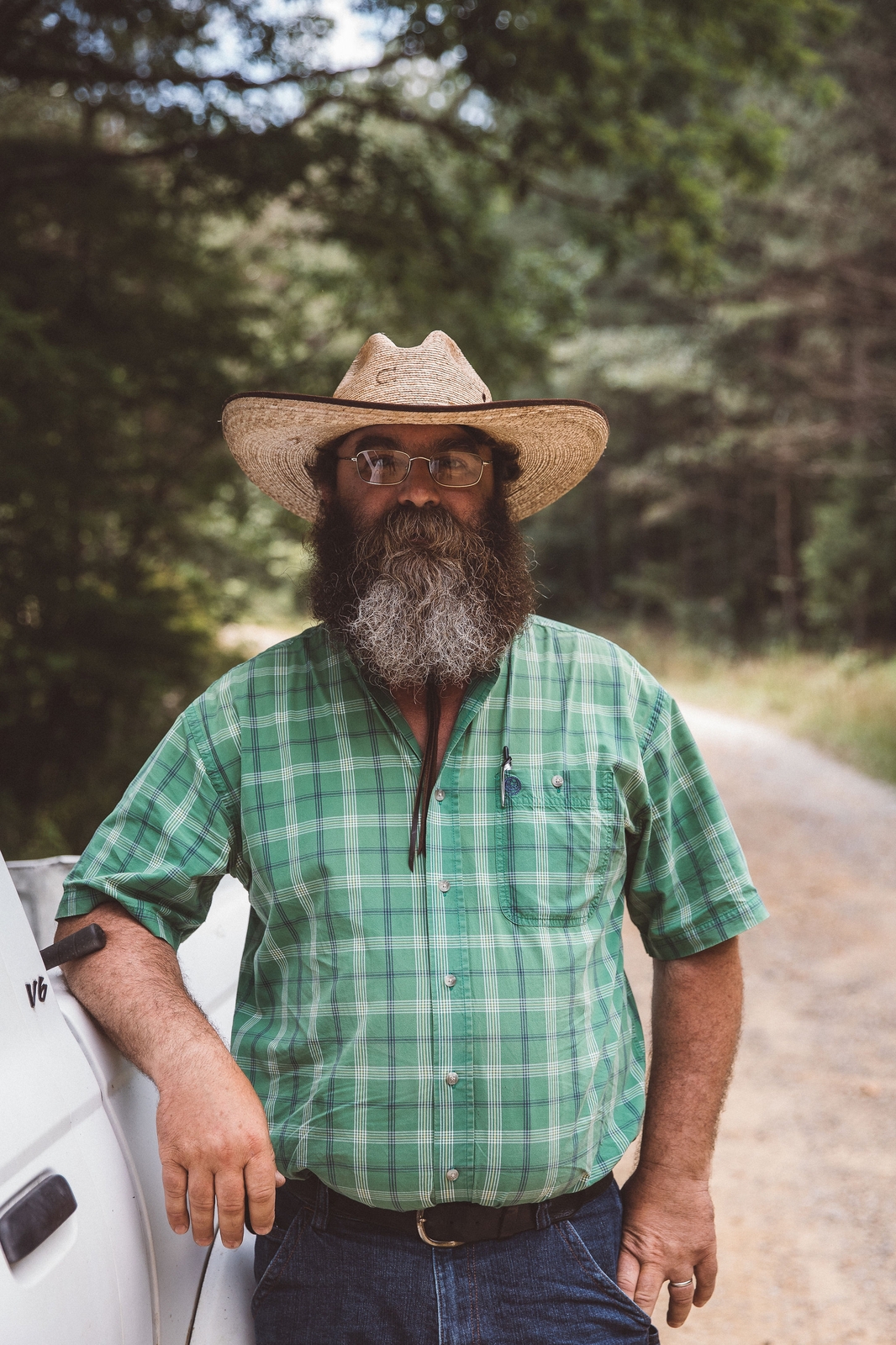
Ethan, a board member of Bledsoe Co. Soil and Water Conservation District, carries himself with a steadiness that is uncommon in the world yet common with many farmers.
There is an ease; you feel at home and calm around him. He's kind and inviting, willing to carry on a conversation as long as it needs to go while also able to sit in silence.
He invited us to visit Loyd Farms. Come early, he said. We'll have coffee.
"We're starting a little after 5," he said, "As soon as we can see without a flashlight."
Within minutes of arriving, we found something else equally compelling and beautiful.
Fathering.
And family.
"Every day is bring-your-kids-to-work-day," he said.
Loyd Farms is a Century Farm — the state's formal designation for farms older than 100 years — and a true family farm.
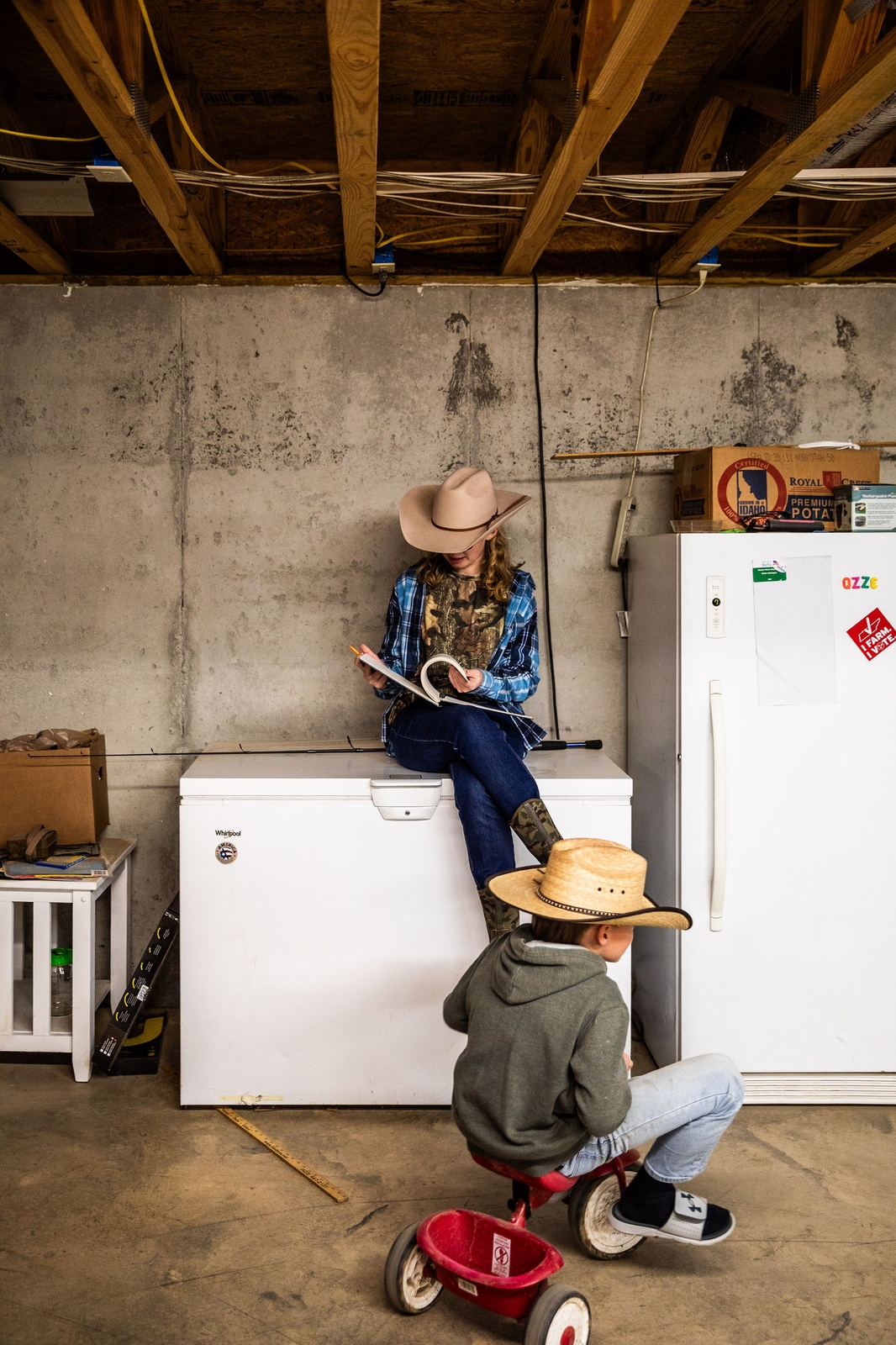
As soon as we pulled in, we were greeted by Ethan and Melanie's two children: their daughter, 12, and son, 10.
(Ethan asked us to keep their names and images private.)
We came to see a farmer, but instead, as the hours clocked by, we witnessed a father and family at work.
"They are involved," he said. "They've taken well to it.
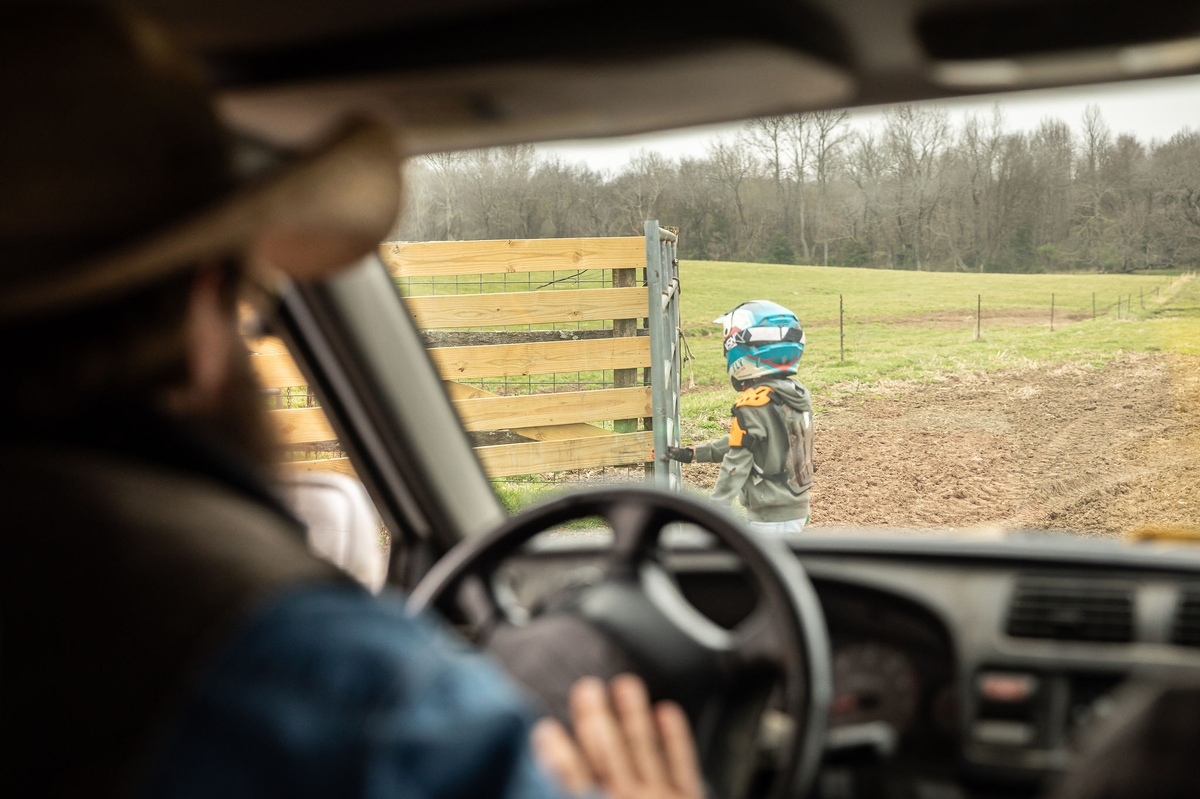
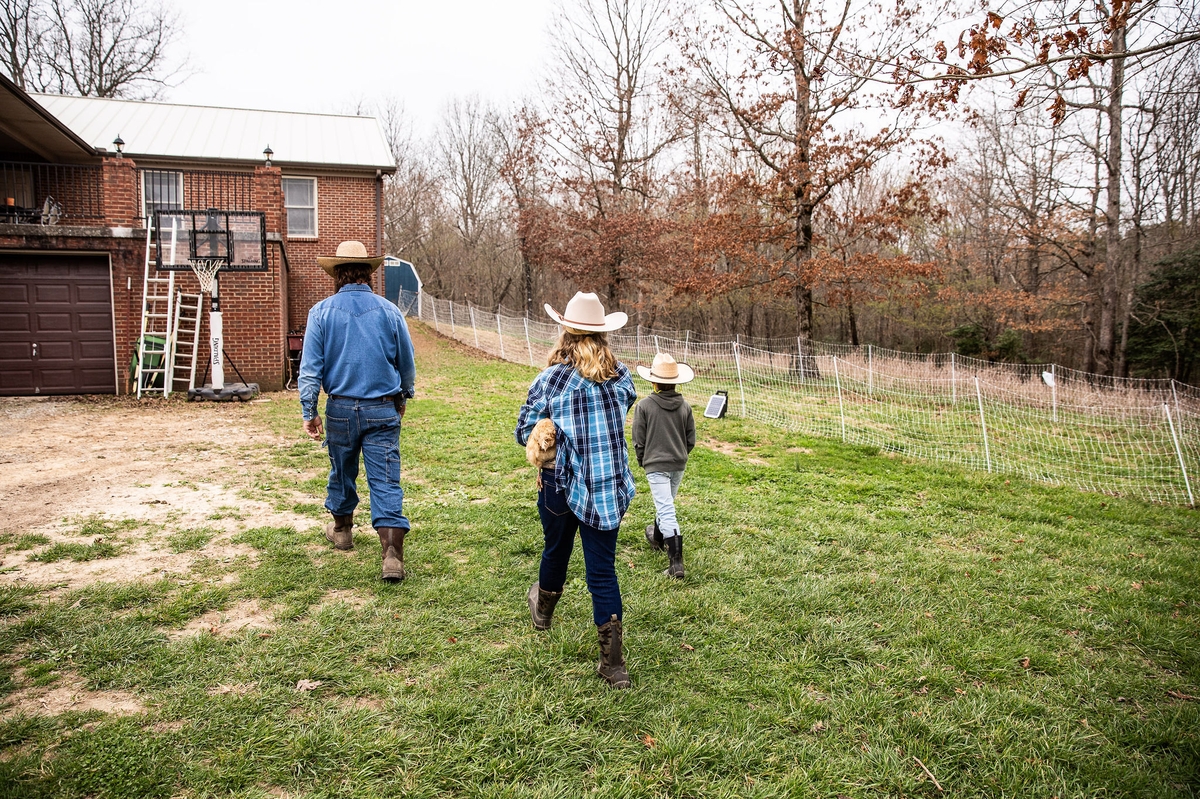
His son rode his three wheeler ahead, opening gates, scouting out the pastures.
From the backseat, his daughter told stories and histories of the family, cattle, hens and farm.
All day long, she was wearing her father's hat.
"She likes to wear my hat, although it don't fit her," Ethan said.
"I like the smell of it," she said. "It's got like a sweet smell."
As we toured the farm, they would ask one another questions, driving up on a certain cow, their conversation built on both inquiry and respect. Respect and tenderness flowed in both directions.
"You think it is successfully nursing?" she'd say.
Then, a gentle playfulness, a teasing that came from deep trust.
The cows with pink tags are hers, Ethan said. Blue tags belong to her brother. Orange are Melanie's.
"I just work here," smiled Ethan.
Beneath it all: the connective thread formed from a life lived together on a farm, among animals, chores, harvest, death and birth.
Their children seemed strong in remarkable ways, as if leaning against a world and landscape they trust and one that trusts them.
How rare.
How beautiful to witness.
"The land I live on?" Ethan said. "My kids are the eighth generation to live there."
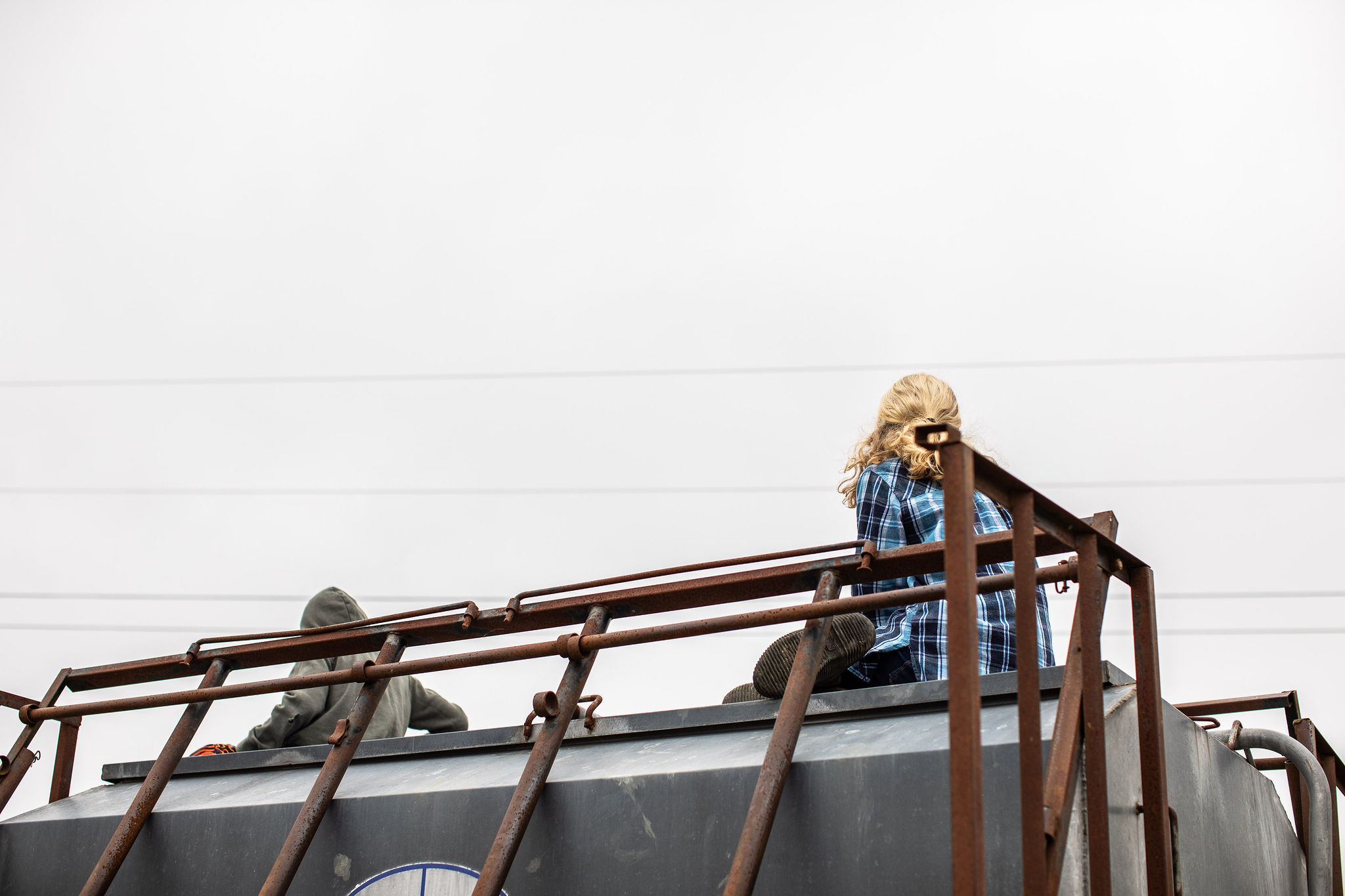
Loyd Farms's original deed dates back to 1823.
"My grandfather was always proud of this farm," he said. "He didn't want to see it divided."
Before he died, his grandfather deeded the land to Ethan.
"There's 165 on the deed here," he said. "I pay rent of some form on probably another 250. We do custom hay on another 150.
"When it's all said and done, we'll run over 750 acres for ourselves for other people."
Each morning, the four Loyds start chores together.
"It's a good time of the morning to get together," he said.
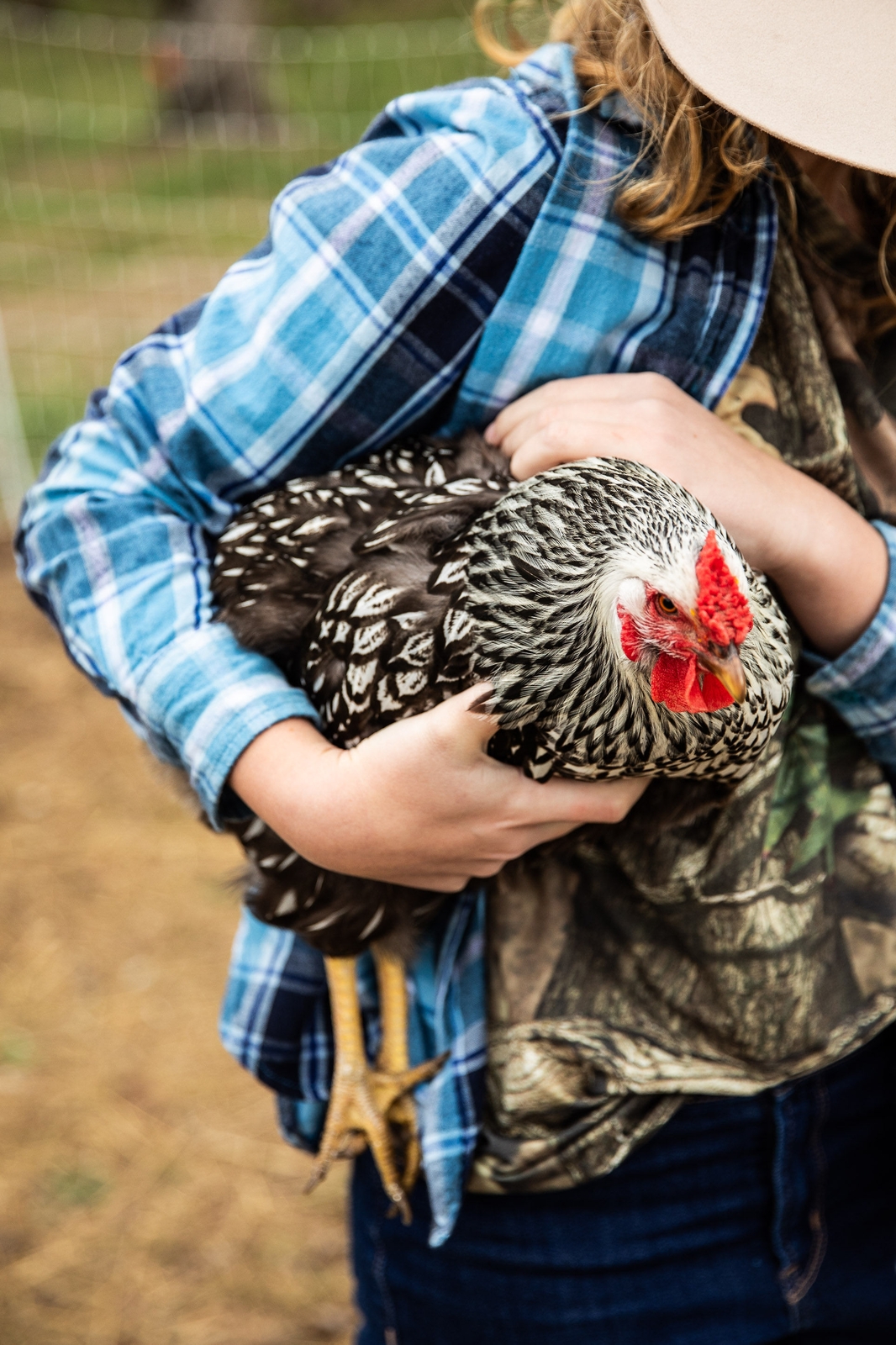
Both kids are raising 4H flocks. At a recent Chamber of Commerce meeting — with the head of the Tenn. Dept. of Ag. present — she gave a speech on hens and 4H.
If Melanie and Ethan suddenly vanished for the day, you got the sense she and her brother could run the farm ... at least for a spell.
"It is rewarding to know they can do it by themselves," he said. "They gain confidence when they run to do a task by themselves and. I gain confidence in them."
Melanie and Ethan both grew up in Bledsoe County.
"We went to high school together. I took her on a date when she was 16," he said. "Cracker Barrel. Meat and three."
Before they had kids, Ethan, who works a full-time off-farm job at Bledsoe Telephone Cooperative, would sit down and roll around one question: is farming worth it?
He would pencil out all his assets and debts, "making the dollars and cents make sense."
"We've been fortunate. God has blessed us. My family has blessed us. We've been given a lot of things and a lot of opportunities, but we've made a lot of improvements on credit," he said. "When things would get tough, I would sit down and run the numbers. If I had to sell fast, could I pay off all my debt to relieve some of this stress?"
"I'd try to figure out what it was all worth."
Then, a daughter, followed by a son. Now, the idea of worth has shifted. Sure, the asset-to-debt ratio still looms, perhaps even more than ever, but there's a new line item on the value sheet:
The present: a family farming together.
The future: they're building this farm their own children may inherit.
"I tell them as we make decisions, preparing for the future, we're doing it because we love it," he said. "I don't want them to feel like they never had a chance."
We continue our tour. Ethan stops by a fence row he installed probably 10 years ago.
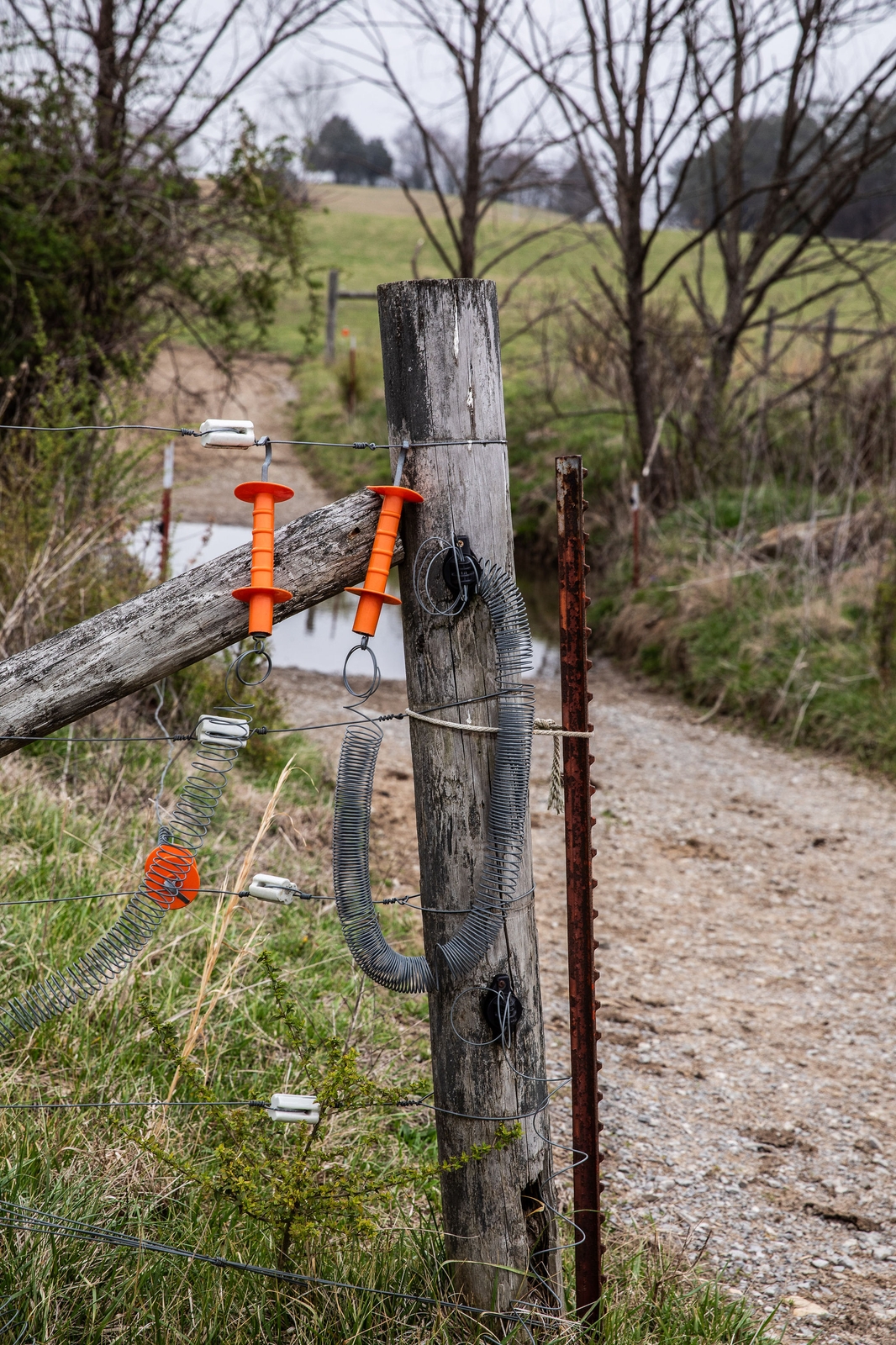
"Treated fence posts were done the same way for decades," he said.
New standards changed the type of fence posts, which aren't treated the same as years past. Old posts would have lasted for 30 years. Now ...
"I would done say any one of us in the truck could break these off at the top," he said.
It is a good metaphor: how do you build something lasting and firm in a world that seems to drift towards break-up and decay?
"So many people think we are out here spraying poison and these cows are full of hormones. They think that we don't care about the land," he said.
"Nothing could be further from the truth," he said. "I want to see the land saved indefinitely. I eat what I produce."
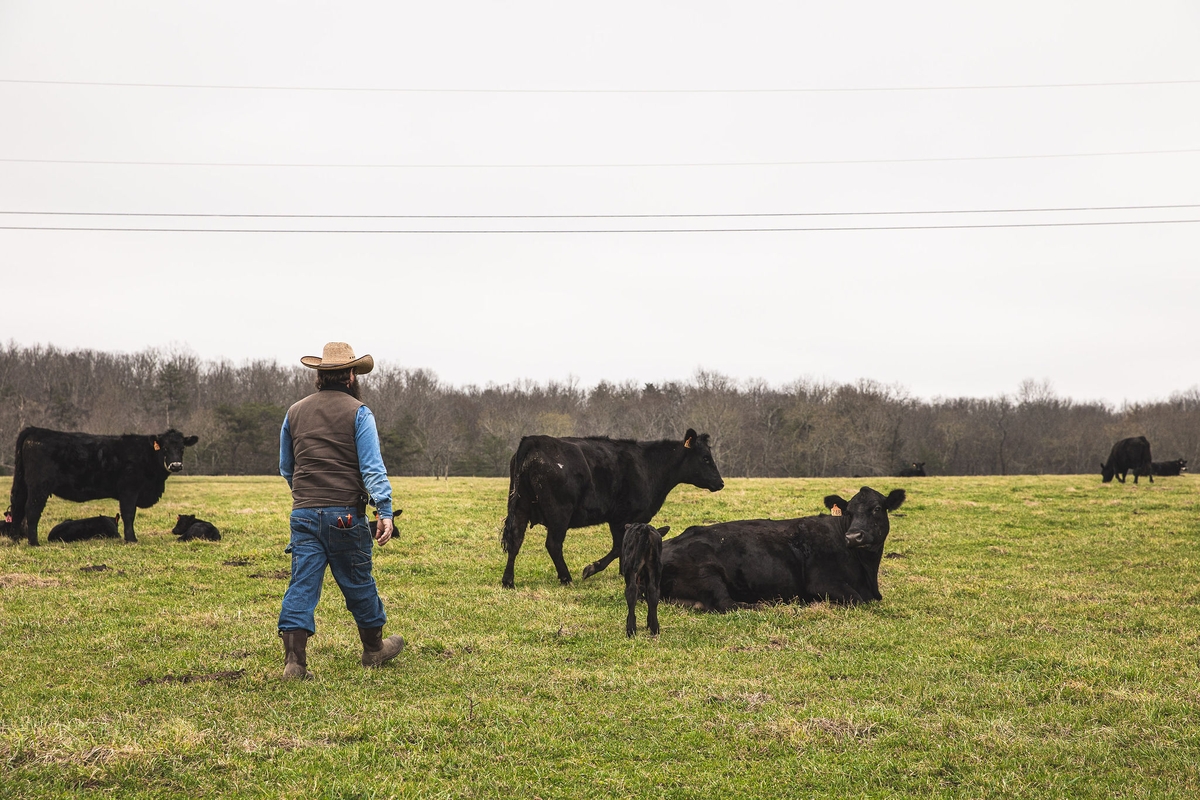
"We need people to trust their food. We need people to go to Kroger and buy a steak and go home and grill it and trust it's good for them," he said.
Each week, he watches the markets, paying close attention to sale prices.
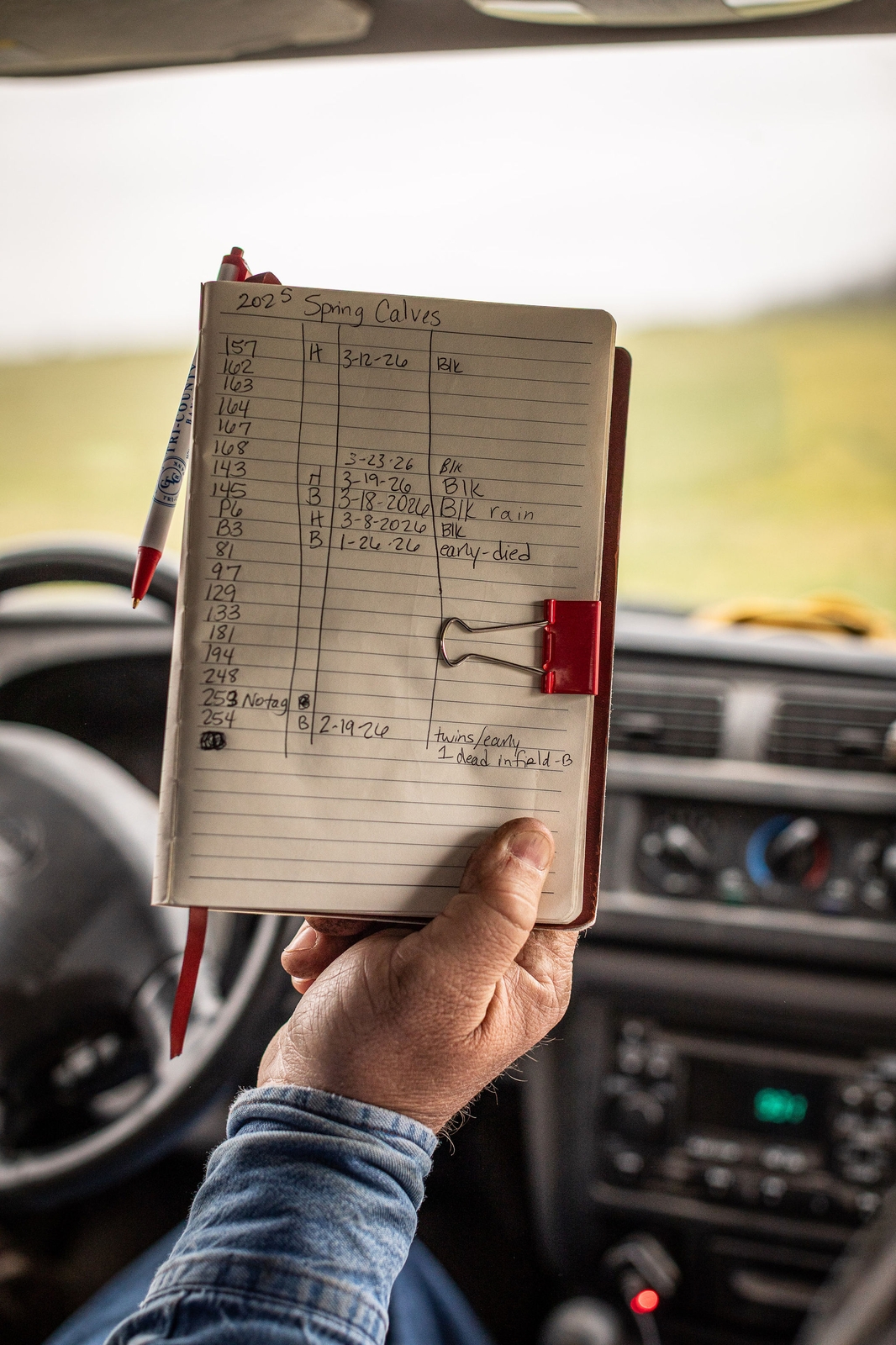
He keeps his own records in a spiral notebook, using a local bank pen to record vaccinations, weights, births and deaths.
They've diversified a bit over the years: now, they do custom hay work, including hay wrapping.
"I make a lot of hay," he said. "Make hay while the sun is shining."
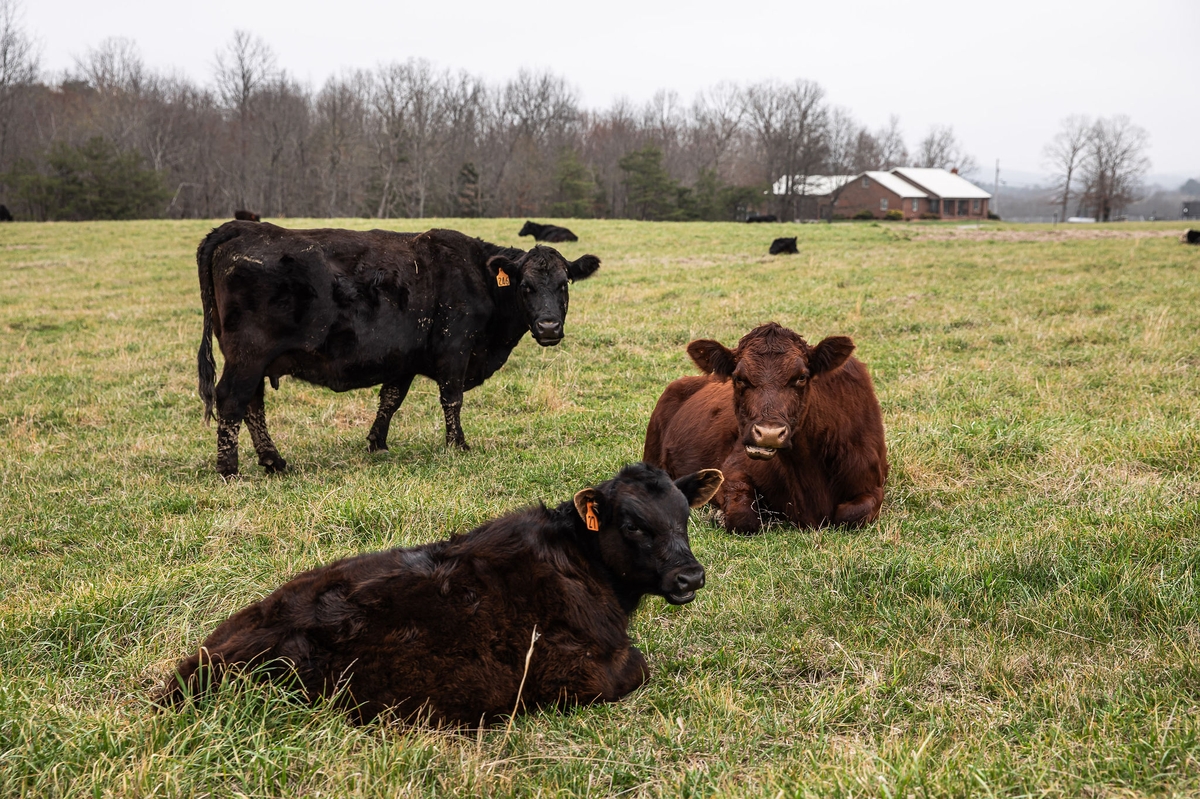
He drives us by another herd, pointing out one — #246 — in particular.
"You don't have to be in the cattle business to look at that and tell me she's not pretty," he said.
Ethan, what's the hardest part of farming?
Two words are immediate.
"Cash flow," he said.
It is a never-ending push-pull between investing and upgrading equipment, buying feed and infrastructure and profits and debt.
"I tell people cattle's as high as it's ever been and I still feel as broke as I've ever been," he said.
"Did you ever watch Johnny Carson growing up?" he began. "He'd have a guest that put those plates on a dowel rod and spin them?
"Does everybody not feel like they're that guy living life? You don't have to be farming. What if I can't spin the plates no more? Now what?" he said.
"That's when those thoughts crop up, especially if a plate falls."
One final stop: the farmhouse. His children want to introduce us to their flocks of hens.
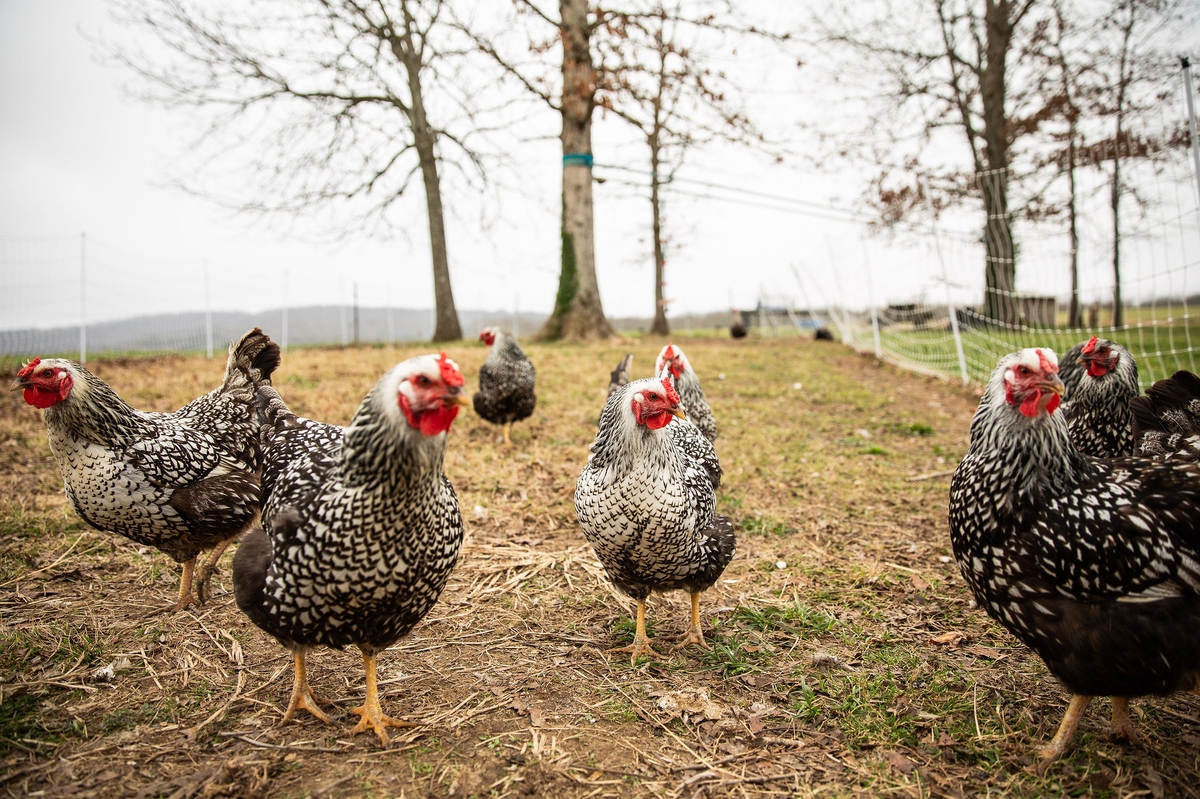
We tour the coops — inside and out — and hear stories about 4H and the price of eggs.
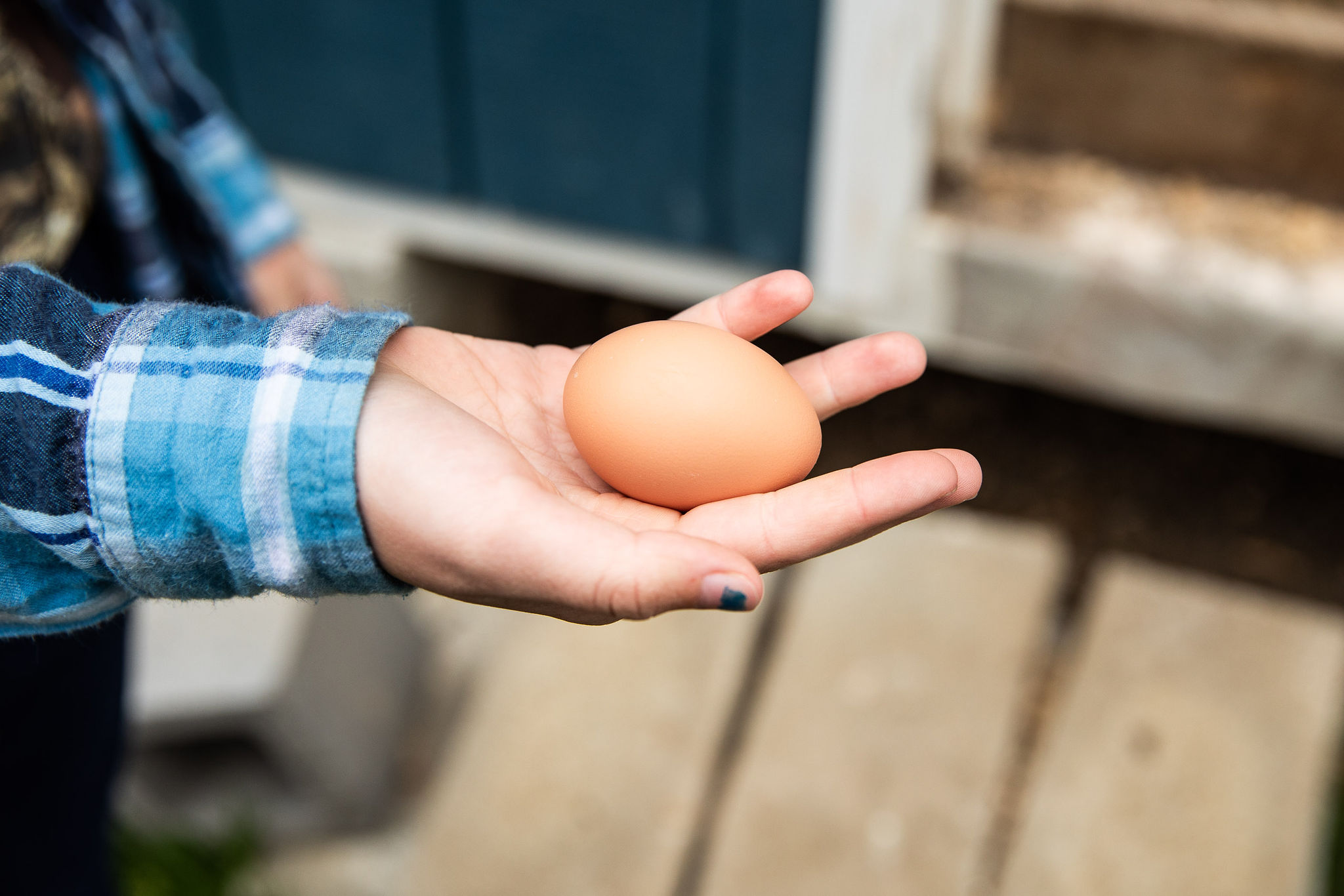
She sells hers for $3 a dozen.
"Honestly, eggs shouldn't be $10," she said.
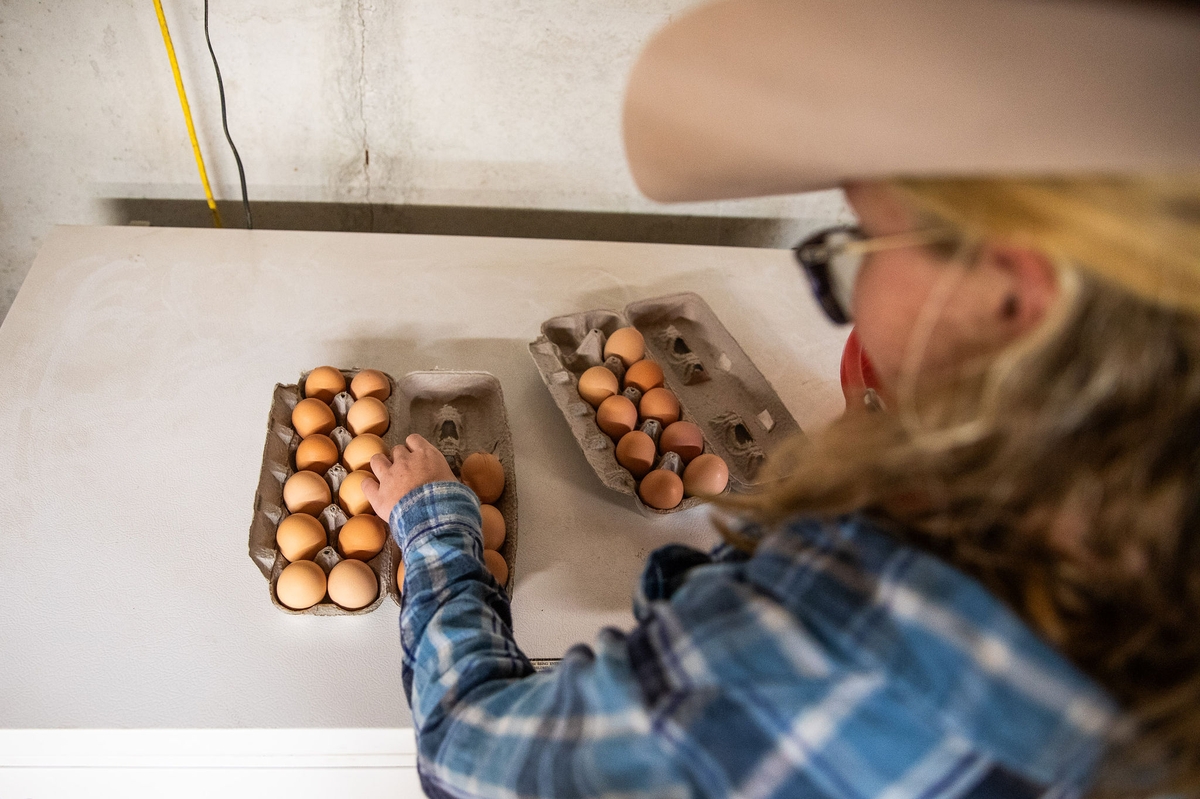
"Here," she said, handing us two dozen Loyd Farm eggs. "These are for you."
Earlier that morning, as we watched mama cows and newborn calves trailing umbilical cords as they dried in the spring sun, we asked Ethan one particular question.
He paused. Didn't answer.
Not just yet.
He went silent, looking out at the world, his own family, the life they're building.
Sure, somewhere in the distance, the plates continued to wobble and spin.
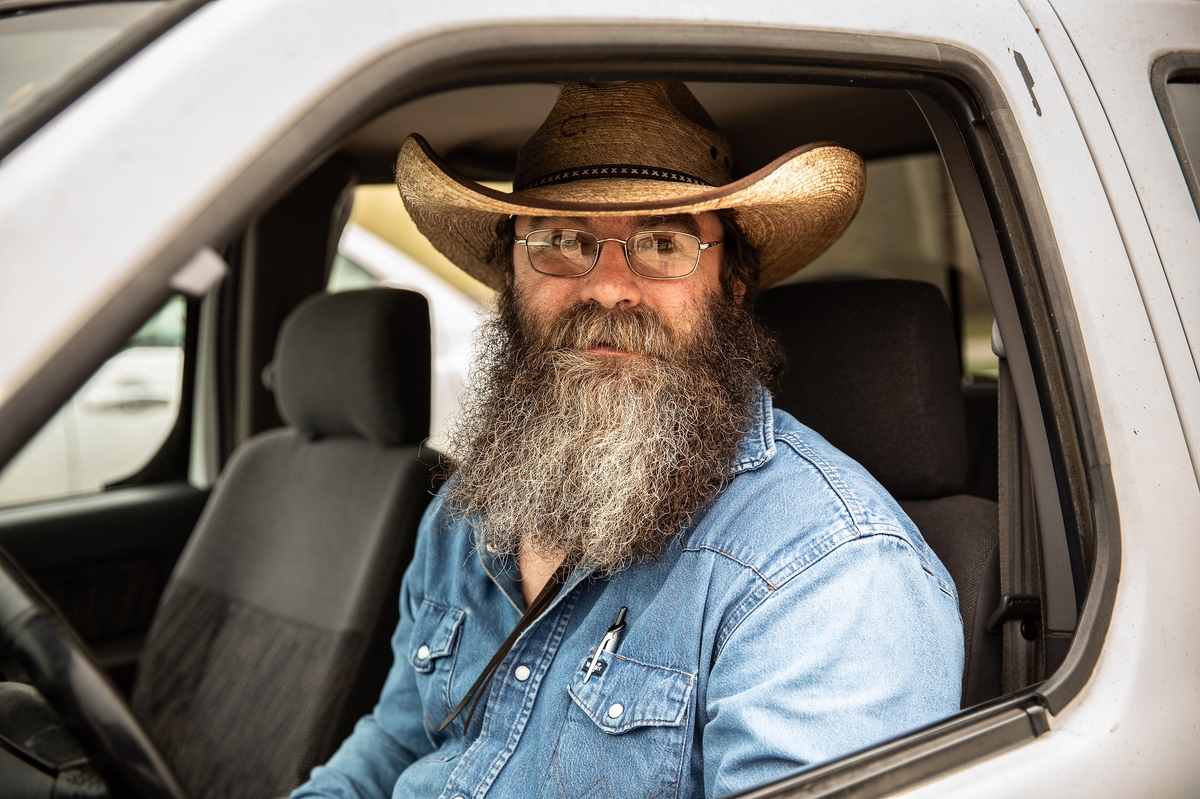
But as his son rode ahead opening gates and his daughter adjusted the brim of a sweet-smelling hat, Ethan found the one single word he needed to answer our question.
Ethan, what do you love most about farming?
"This."
This is our fourth farmer profile in a series produced in a partnership with the Southeast Tennessee Young Farmers Coalition. The series profiles young farmers in the region. Each farmer profile will contain these questions and answers. Here's Ethan:
What's the hardest part about farming?
Cash flow.
Making the dollars and cents make sense sometimes.
I tell people cattle's as high as it's ever been and I still feel as broke as I've ever been.
They's always something out there to improve and advance. And spend the money on.
To me personally, it's sitting down and explaining to myself and making the dollars and cents make sense. I used to think about it a lot more before I had kids. I would probably sit down twice a year and figure out what it was all worth.
Since our kids got old enough to help, I still try to run a balance sheet every year … but not with the thought of debt-to-asset ratio.
We've been fortunate. God has blessed us. My family has blessed us. We've been given a lot of things and a lot of opportunities, but we've made a lot of improvements on credit. When things would get tough, I would sit down and run numbers. If I had to sell fast, could I pay off all my debt to relieve some of this stress?
Did you ever watch Johnny Carson growing up? He'd have a guest that put those plates on a dowel rod and spin them? Does everybody not feel like they're that like that guy living life? You don't have to be farming. What if I can't spin the plates no more? Now what?
That's when those thoughts crop up, especially if a plate falls.
We still do a balance sheet once a year. I try to watch cattle markets every week, if not twice a week, different see sales I know I would visit to see what my cattle would have brought that week at the current weight or state.
How did farming with your kids change the way you see farming? How did it inspire you?
They are involved.
They're good at doing what we've taught them to do.
They've taken well to it. They enjoy it.
They show interest and want to do it on their own.
It's not pulling teeth effort to get them to do their chores.
I don't send them to do their chores regularly
It is more enjoyable for them and us when we do them together.
It is rewarding to know they can do it by themselves, rewarding for all of us. They gain confidence when they run to do a task all by themselves and I gain confidence in them.
We get up here and get out and do everything together. We enjoy that.
It's a good time of morning to get together. They've took to the 4H projects. They're on the third set of chickens now.
I never though I'd spend so much time and effort and energy into chickens.
My little girl give a speech for the 4H in front of the Chamber breakfast. The Commissioner of Agriculture was in.
Her part of it was to talk about the chickens.
She said, "you know it's very rewarding when things go well."
We get some good eggs. She's had to bury some chickens. We've lost them for various reasons: accidents, they smothered each other in the corners of the new coop there. They just piled up on top of one and killed it. We had some die when they was small in the first set. that's a lesson learned. It saddens here. She really likes taking care of all of her livestock. We don't like to lose them for any reason, but we also know they're food.
What are some misconceptions people have about farming and agriculture?
The way we handle our livestock.
The things we consider tools.
Between the way we fertilize, the way we spray herbicides, the way we spray pesticides, the diff vaccines we use on the animals.
People think farmers are all about the profit and doing all this stuff greedily or dangerously or lazily and that it's killing us all.
But we really pay close attention to the science. My land's been in family for over 200 years and I hope to see it stay in the family for over 200 years
I wouldn't put anything on it i thought would be dangerous to the health.
We use everything very cautiously. The farmers using this stuff are doing it in good conscience.
We need people to trust their food. We need people to go to Kroger and buy a steak and go home and grill it and trust it's good for them.
What are your goals for your farm over the next decade?
Eradicate all debt.
Have all of our equipment and fences and facilities in really good shape.
If we could set here with a larger number of mama cows, that's more gross income, zero debt, so it's the interest alone, and have all the equipment in tip top shape which would lower repairs and maintenance, and all our facilities in really good shape, fences cross fences water systems, all that very good, I would feel like if we can do that over the next decade, with our big capital projects ... we've got a barn and farm shop both dreamed up and visualized in my mind exactly where they're going to go and what size and how they'll look like here. That's something we're working saving and budgeting towards.
As pasture comes available and herds grow, we've got another farm we can use. We've been doing hay on it for quite some time. We go to church with the couple that owns it. We've been talking with them and they would like to see cattle on it. We need to get it fenced. So within the next 10 weeks, I'd like to see it fenced and cattle on it.
The end goal: by adding that pasture is to keep retaining heifers and grow the cow herd. Get out of debt and upgrade all the equipment that needs upgrading.
It all wears out.

Story ideas, questions, feedback? Interested in partnering with us? Email: david@foodasaverb.com
This story is 100% human generated; no AI chatbot was used in the creation of this content.
The calf was born in the night, under a crescent moon, with the morning sun still hours away.
As the sun rose, the calf began walking for the first time across the green fields, its umbilical cord still fresh and dangling across the dew like a leftover rope from another world.
"That'll dry up in a few days," said Ethan Loyd.
From his Nissan 4x4, Ethan's touring us across Loyd Farms in Pikeville, checking on newborn calves. Ethan's driving, his daughter's in the back, his son scouting out ahead on his three-wheeler.
Ethan carries a tag — #168 — that his son had marked up for him earlier today.
Ethan steps out of the idling Nissan 4x4, walking calmly but deliberately.
"I'm going to step across his neck and put a tag in its ear," he said.
It takes him less than 30 seconds, in a move he's done 100s of times.
Farmers don't name their cows. Well, not always. Back at the barn, there's this one calf ...
"You ever watch Star Wars?" Ethan said. "I named this one 'Walker'."
It was born with a limp. They bottle-fed it.
From the backseat of the Nissan, his daughter gently reminds her dad there was another cow, too, they'd named.
"Speckles?" she said.
Ethan smiles.
"He named this one," she said. "I name them once in a blue while."
There are so many things going right at this moment:
We're in the middle of the main pasture at Loyd Farms, Melanie and Ethan Loyd's Pikeville cattle farm. It carries an instinctual or inherent beauty, something that stirs the heart's DNA: healthy grass grown for healthy cattle managed by a healthy family.
"We run a traditional cow-calf operation," he said. "We've got about 65 mama cows here that are mature breeding age and having calves.
"Black Angus predominantly," he said, "and registered Angus bulls."
Peel back another layer: there's the beauty of being surrounded by good neighbors, a dynamic that's particularly present among farmers. (Later that day, Ethan will get a call from a neighbor: need your help. "He had a cow die in the ditch with its feet up," he said.)
He is surrounded by the positive impact and orbit of his own decisions and actions: a man doing what he is meant to do in the world.
"I bought my first herd of cows in 1998," he said.
"I was raised farming beef cattle," he said. "I probably had bottle calves earlier than the age of 10."
He took his first herd to his grandmother Velma Hackworth's farm in Daus, a community in the lower end of Sequatchie County where his mother Dona Loyd was raised. It is a Century Farm that his mom's cousins still own.
We met Ethan, 47, last year on the banks of a Walden's Ridge creek, where we were searching for rare laurel dace with Tennessee Aquarium scientists.
(This is our fourth farmer profile produced with Southeast Tennessee Young Farmers. Each profile includes a series of questions and answers. Ethan's are found at the end of this story.)
He'd joined us an example of a farmer who'd changed practices: putting up fencing further back from creeks and streams in order to create a buffer, which reduced downstream sediment and run-off.
Ethan, a board member of Bledsoe Co. Soil and Water Conservation District, carries himself with a steadiness that is uncommon in the world yet common with many farmers.
There is an ease; you feel at home and calm around him. He's kind and inviting, willing to carry on a conversation as long as it needs to go while also able to sit in silence.
He invited us to visit Loyd Farms. Come early, he said. We'll have coffee.
"We're starting a little after 5," he said, "As soon as we can see without a flashlight."
Within minutes of arriving, we found something else equally compelling and beautiful.
Fathering.
And family.
"Every day is bring-your-kids-to-work-day," he said.
Loyd Farms is a Century Farm — the state's formal designation for farms older than 100 years — and a true family farm.
As soon as we pulled in, we were greeted by Ethan and Melanie's two children: their daughter, 12, and son, 10.
(Ethan asked us to keep their names and images private.)
We came to see a farmer, but instead, as the hours clocked by, we witnessed a father and family at work.
"They are involved," he said. "They've taken well to it.
His son rode his three wheeler ahead, opening gates, scouting out the pastures.
From the backseat, his daughter told stories and histories of the family, cattle, hens and farm.
All day long, she was wearing her father's hat.
"She likes to wear my hat, although it don't fit her," Ethan said.
"I like the smell of it," she said. "It's got like a sweet smell."
As we toured the farm, they would ask one another questions, driving up on a certain cow, their conversation built on both inquiry and respect. Respect and tenderness flowed in both directions.
"You think it is successfully nursing?" she'd say.
Then, a gentle playfulness, a teasing that came from deep trust.
The cows with pink tags are hers, Ethan said. Blue tags belong to her brother. Orange are Melanie's.
"I just work here," smiled Ethan.
Beneath it all: the connective thread formed from a life lived together on a farm, among animals, chores, harvest, death and birth.
Their children seemed strong in remarkable ways, as if leaning against a world and landscape they trust and one that trusts them.
How rare.
How beautiful to witness.
"The land I live on?" Ethan said. "My kids are the eighth generation to live there."
Loyd Farms's original deed dates back to 1823.
"My grandfather was always proud of this farm," he said. "He didn't want to see it divided."
Before he died, his grandfather deeded the land to Ethan.
"There's 165 on the deed here," he said. "I pay rent of some form on probably another 250. We do custom hay on another 150.
"When it's all said and done, we'll run over 750 acres for ourselves for other people."
Each morning, the four Loyds start chores together.
"It's a good time of the morning to get together," he said.
Both kids are raising 4H flocks. At a recent Chamber of Commerce meeting — with the head of the Tenn. Dept. of Ag. present — she gave a speech on hens and 4H.
If Melanie and Ethan suddenly vanished for the day, you got the sense she and her brother could run the farm ... at least for a spell.
"It is rewarding to know they can do it by themselves," he said. "They gain confidence when they run to do a task by themselves and. I gain confidence in them."
Melanie and Ethan both grew up in Bledsoe County.
"We went to high school together. I took her on a date when she was 16," he said. "Cracker Barrel. Meat and three."
Before they had kids, Ethan, who works a full-time off-farm job at Bledsoe Telephone Cooperative, would sit down and roll around one question: is farming worth it?
He would pencil out all his assets and debts, "making the dollars and cents make sense."
"We've been fortunate. God has blessed us. My family has blessed us. We've been given a lot of things and a lot of opportunities, but we've made a lot of improvements on credit," he said. "When things would get tough, I would sit down and run the numbers. If I had to sell fast, could I pay off all my debt to relieve some of this stress?"
"I'd try to figure out what it was all worth."
Then, a daughter, followed by a son. Now, the idea of worth has shifted. Sure, the asset-to-debt ratio still looms, perhaps even more than ever, but there's a new line item on the value sheet:
The present: a family farming together.
The future: they're building this farm their own children may inherit.
"I tell them as we make decisions, preparing for the future, we're doing it because we love it," he said. "I don't want them to feel like they never had a chance."
We continue our tour. Ethan stops by a fence row he installed probably 10 years ago.
"Treated fence posts were done the same way for decades," he said.
New standards changed the type of fence posts, which aren't treated the same as years past. Old posts would have lasted for 30 years. Now ...
"I would done say any one of us in the truck could break these off at the top," he said.
It is a good metaphor: how do you build something lasting and firm in a world that seems to drift towards break-up and decay?
"So many people think we are out here spraying poison and these cows are full of hormones. They think that we don't care about the land," he said.
"Nothing could be further from the truth," he said. "I want to see the land saved indefinitely. I eat what I produce."
"We need people to trust their food. We need people to go to Kroger and buy a steak and go home and grill it and trust it's good for them," he said.
Each week, he watches the markets, paying close attention to sale prices.
He keeps his own records in a spiral notebook, using a local bank pen to record vaccinations, weights, births and deaths.
They've diversified a bit over the years: now, they do custom hay work, including hay wrapping.
"I make a lot of hay," he said. "Make hay while the sun is shining."
He drives us by another herd, pointing out one — #246 — in particular.
"You don't have to be in the cattle business to look at that and tell me she's not pretty," he said.
Ethan, what's the hardest part of farming?
Two words are immediate.
"Cash flow," he said.
It is a never-ending push-pull between investing and upgrading equipment, buying feed and infrastructure and profits and debt.
"I tell people cattle's as high as it's ever been and I still feel as broke as I've ever been," he said.
"Did you ever watch Johnny Carson growing up?" he began. "He'd have a guest that put those plates on a dowel rod and spin them?
"Does everybody not feel like they're that guy living life? You don't have to be farming. What if I can't spin the plates no more? Now what?" he said.
"That's when those thoughts crop up, especially if a plate falls."
One final stop: the farmhouse. His children want to introduce us to their flocks of hens.
We tour the coops — inside and out — and hear stories about 4H and the price of eggs.
She sells hers for $3 a dozen.
"Honestly, eggs shouldn't be $10," she said.
"Here," she said, handing us two dozen Loyd Farm eggs. "These are for you."
Earlier that morning, as we watched mama cows and newborn calves trailing umbilical cords as they dried in the spring sun, we asked Ethan one particular question.
He paused. Didn't answer.
Not just yet.
He went silent, looking out at the world, his own family, the life they're building.
Sure, somewhere in the distance, the plates continued to wobble and spin.
But as his son rode ahead opening gates and his daughter adjusted the brim of a sweet-smelling hat, Ethan found the one single word he needed to answer our question.
Ethan, what do you love most about farming?
"This."
This is our fourth farmer profile in a series produced in a partnership with the Southeast Tennessee Young Farmers Coalition. The series profiles young farmers in the region. Each farmer profile will contain these questions and answers. Here's Ethan:
What's the hardest part about farming?
Cash flow.
Making the dollars and cents make sense sometimes.
I tell people cattle's as high as it's ever been and I still feel as broke as I've ever been.
They's always something out there to improve and advance. And spend the money on.
To me personally, it's sitting down and explaining to myself and making the dollars and cents make sense. I used to think about it a lot more before I had kids. I would probably sit down twice a year and figure out what it was all worth.
Since our kids got old enough to help, I still try to run a balance sheet every year … but not with the thought of debt-to-asset ratio.
We've been fortunate. God has blessed us. My family has blessed us. We've been given a lot of things and a lot of opportunities, but we've made a lot of improvements on credit. When things would get tough, I would sit down and run numbers. If I had to sell fast, could I pay off all my debt to relieve some of this stress?
Did you ever watch Johnny Carson growing up? He'd have a guest that put those plates on a dowel rod and spin them? Does everybody not feel like they're that like that guy living life? You don't have to be farming. What if I can't spin the plates no more? Now what?
That's when those thoughts crop up, especially if a plate falls.
We still do a balance sheet once a year. I try to watch cattle markets every week, if not twice a week, different see sales I know I would visit to see what my cattle would have brought that week at the current weight or state.
How did farming with your kids change the way you see farming? How did it inspire you?
They are involved.
They're good at doing what we've taught them to do.
They've taken well to it. They enjoy it.
They show interest and want to do it on their own.
It's not pulling teeth effort to get them to do their chores.
I don't send them to do their chores regularly
It is more enjoyable for them and us when we do them together.
It is rewarding to know they can do it by themselves, rewarding for all of us. They gain confidence when they run to do a task all by themselves and I gain confidence in them.
We get up here and get out and do everything together. We enjoy that.
It's a good time of morning to get together. They've took to the 4H projects. They're on the third set of chickens now.
I never though I'd spend so much time and effort and energy into chickens.
My little girl give a speech for the 4H in front of the Chamber breakfast. The Commissioner of Agriculture was in.
Her part of it was to talk about the chickens.
She said, "you know it's very rewarding when things go well."
We get some good eggs. She's had to bury some chickens. We've lost them for various reasons: accidents, they smothered each other in the corners of the new coop there. They just piled up on top of one and killed it. We had some die when they was small in the first set. that's a lesson learned. It saddens here. She really likes taking care of all of her livestock. We don't like to lose them for any reason, but we also know they're food.
What are some misconceptions people have about farming and agriculture?
The way we handle our livestock.
The things we consider tools.
Between the way we fertilize, the way we spray herbicides, the way we spray pesticides, the diff vaccines we use on the animals.
People think farmers are all about the profit and doing all this stuff greedily or dangerously or lazily and that it's killing us all.
But we really pay close attention to the science. My land's been in family for over 200 years and I hope to see it stay in the family for over 200 years
I wouldn't put anything on it i thought would be dangerous to the health.
We use everything very cautiously. The farmers using this stuff are doing it in good conscience.
We need people to trust their food. We need people to go to Kroger and buy a steak and go home and grill it and trust it's good for them.
What are your goals for your farm over the next decade?
Eradicate all debt.
Have all of our equipment and fences and facilities in really good shape.
If we could set here with a larger number of mama cows, that's more gross income, zero debt, so it's the interest alone, and have all the equipment in tip top shape which would lower repairs and maintenance, and all our facilities in really good shape, fences cross fences water systems, all that very good, I would feel like if we can do that over the next decade, with our big capital projects ... we've got a barn and farm shop both dreamed up and visualized in my mind exactly where they're going to go and what size and how they'll look like here. That's something we're working saving and budgeting towards.
As pasture comes available and herds grow, we've got another farm we can use. We've been doing hay on it for quite some time. We go to church with the couple that owns it. We've been talking with them and they would like to see cattle on it. We need to get it fenced. So within the next 10 weeks, I'd like to see it fenced and cattle on it.
The end goal: by adding that pasture is to keep retaining heifers and grow the cow herd. Get out of debt and upgrade all the equipment that needs upgrading.
It all wears out.
Story ideas, questions, feedback? Interested in partnering with us? Email: david@foodasaverb.com
This story is 100% human generated; no AI chatbot was used in the creation of this content.
Food as a verb thanks our story sponsor:
Food as a Verb Thanks our sustaining partner:
Food as a verb thanks our story sponsor:
Join our table

keep reading