An Autopsy and Possible Resurrection: the First (and Second?) Food Hub
Local leaders opened a food hub in 2014. It closed two years later.
Food as a verb thanks
for sponsoring this series

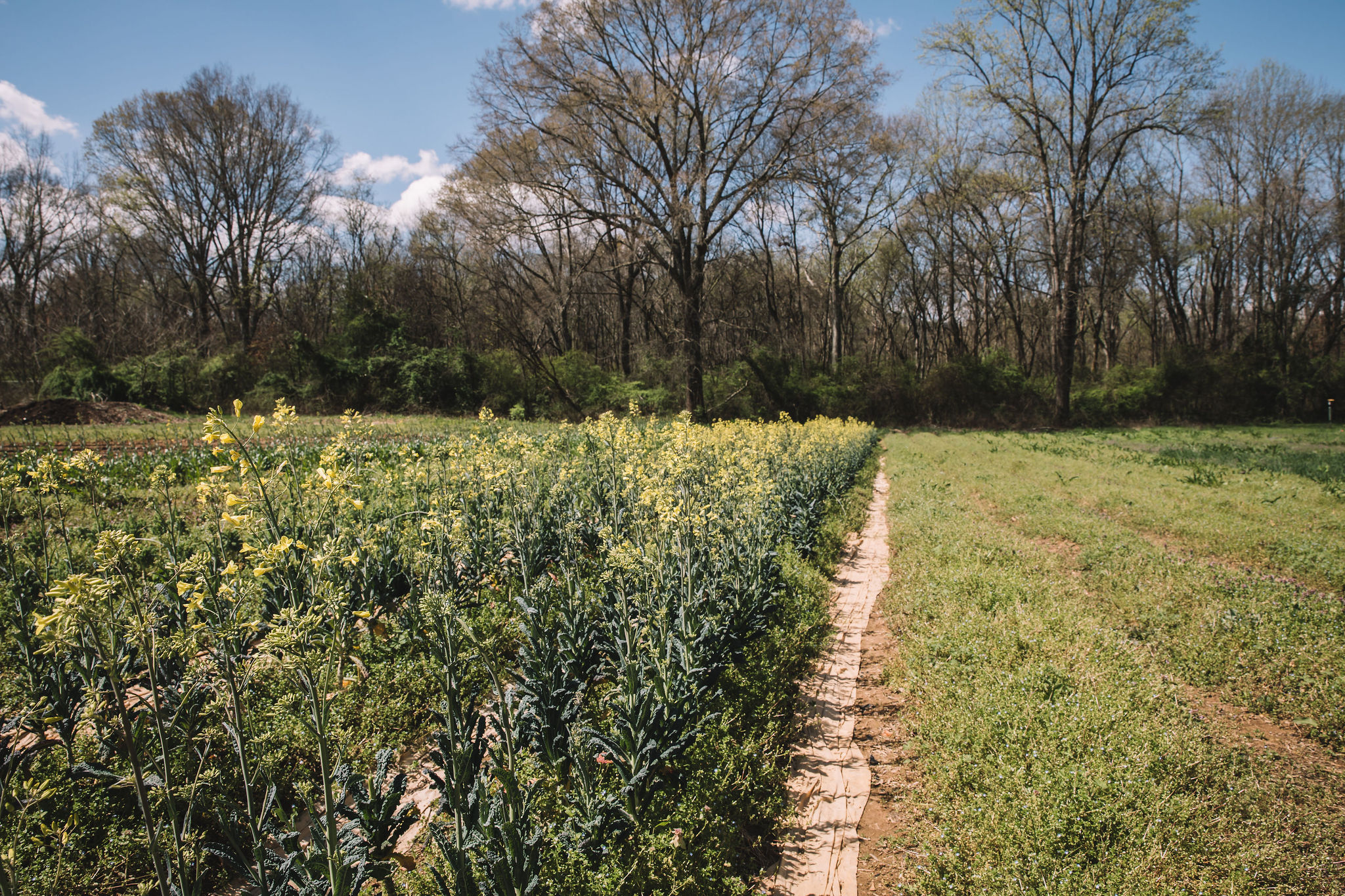
In the summer of 2014, the Harvested Here Food Hub opened here. It was a time of great optimism: a local foundation had invested more than $1 million in promoting local food in a variety of ways.
Yet, just two years later, the Food Hub closed.
According to internal documents, it was "faced with lack of sufficient progress toward sustainability and with a number of significant challenges in its way."
In 2017, a local consulting firm was hired to perform an autopsy.
What went wrong?
What can we learn?
And is a successful food hub possible in Chattanooga?
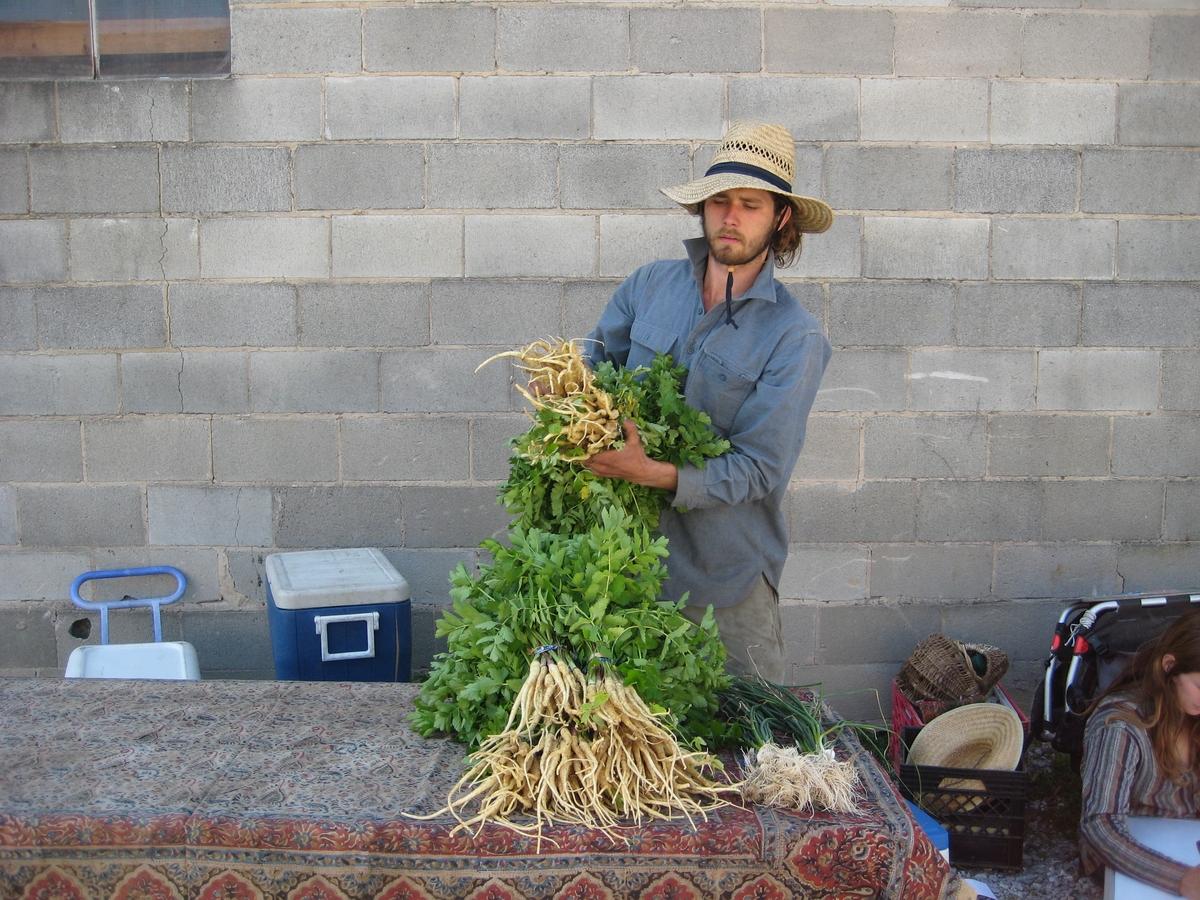
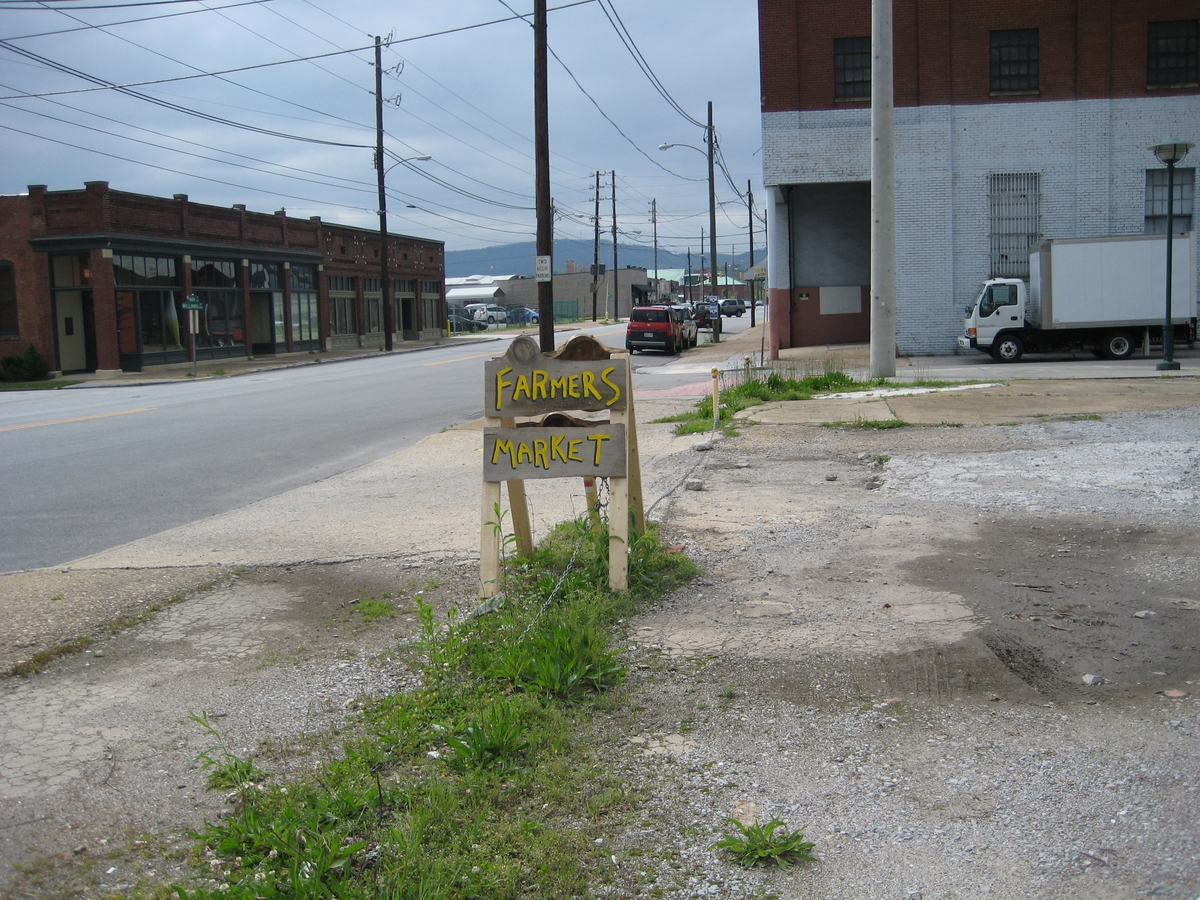
A dozen years ago? These were exciting years. Main St. was becoming activated: Niedlov's Bakery & Cafe, the Niels taking over Main Street Meats, and a local farmers' market nearby.
In the background, The Benwood Foundation had launched Gaining Ground, a $1.65 million initiative to fund and grow our local food movement.
"Some of these efforts were more successful than others but all pointed to a sense of optimism about the prospects for continued strengthening of the local food economy," according to a report from Ann Coulter and A. Coulter Consulting.
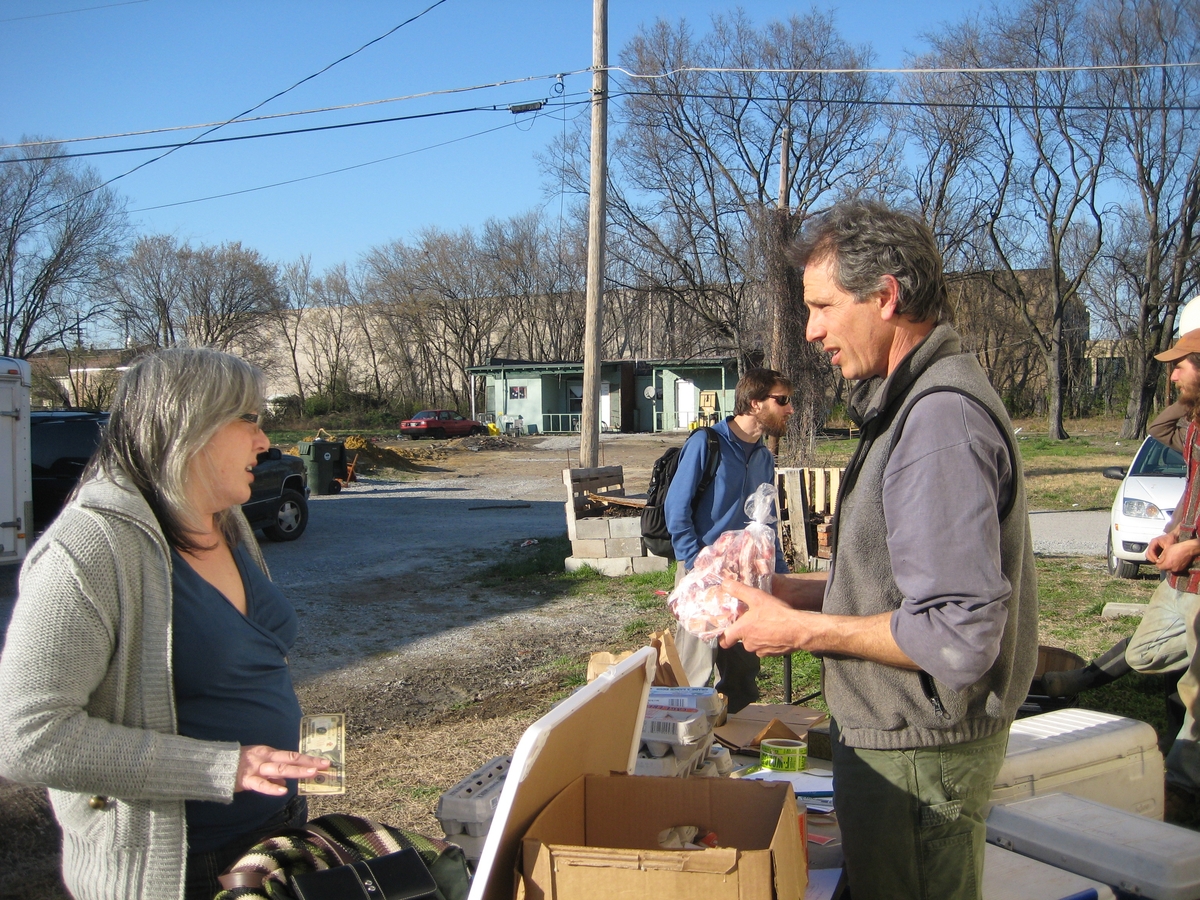
With this came the idea for the Harvested Here Food Hub. Folks looked east, towards a model in South Carolina, which was quite good.
The Chattanooga Area Food Bank (CAFB) offered space and Benwood offered funding: a five-year grant worth $1 million for a food hub located within CAFB, yet independent with its own board, staff and funders. The board, especially its chair, were wise, established Chattanoogans.
Yet, within two years, the food hub closed.
Coulter was hired as a consultant to report on the reasons why. Digging through food hub documents and interviewing a dozen or more people, she issued a report that declared:
"It is the conclusion of this report that while the Food Hub was an honest and thoughtful attempt to implement a business model that would better connect local farms to the Chattanooga regional market for fresh food, it was an ambitious and risky undertaking," she wrote.
"Stakeholders knew they were taking a calculated risk but it is doubtful anyone could have foreseen the magnitude of hurdles the Food Hub continuously encountered."
She divides her report into three sections: basic assumptions on the food hub, management and oversight decisions, and future prospects for a food hub 2.0.
Basic Assumptions
Coulter writes that a series of assumptions were made that, in hindsight, "hampered its work and that were, for the most part, not corrected or adequately examined until almost the end of the second year of Food Hub operation."
The biggest?
"The ability of the Food Hub to meet the monthly sales goals," she wrote.
The assumption was easy to make: at a time of increased attention on local food, the food hub would become increasingly profitable, reaching full self-sufficiency by year five, with $2 million in projected gross sales.
Nope.
It was underwhelming from the get-go.
The first year budget projected $300,000 in gross sales.
"But sales were only $33,704," Coulter reported.
Second year projects: $600,000, later adjusted to a little more than $252,000.
Gross second year sales: $129,000.
The second assumption: big buyers, like institutional cafeterias and local supermarkets, would purchase in significant amounts that would allow the food hub to meet its budget projections.
"This failed to happen," the report reads.
Harvest Grocery opened, signed on as a food hub partner, but then closed in May 2016.
"Some headway was made with Food City but serving it was labor intensive," the report reads.
Many farmer-to-restaurant connections were made quickly, "but this market had limited potential and was labor intensive for the amount of food it could move."
And, the daily grind of distributing food coupled with training farmers on how to package and store meant "time to develop new customers was constrained."
(Bookmark this moment. Grocery stores wouldn't or couldn't sign on. Some restaurants did, but not enough.)
Then, the final coffin-nail-assumption: CAFB.
It had relied on the Food Hub to provide some of its, but its needs grew exponentially, "as the Food Hub’s ability to deliver any substantial volume of the types of food the Food Bank required declined," Coulter reported.
"This served to make the Food Hub less of a contributing partner to the CAFB and ultimately resulted in the space occupied by the Food Hub being needed for Food Bank growth."
Finally, the vexing question: do we act like a non-profit or for-profit?
Not everyone was sure.
"There was the assumption that some type of non-profit, for-profit hybrid entity was the way to approach the structure and operations of the Food Hub, although it seems this decision was not fully discussed or understood by everyone," Coulter's report stated.
"It seems that staff and even some board members remained confused as to whether the Food Hub was a non-profit or a for-profit entity and this had implications for how decisions were made and how aggressively sustainability was pursued."
Management and Oversight
Harvested Here was located within the Food Bank, and managed by its own board and director.
"There is solid agreement that the Manager did not provide strong leadership to the Food Hub in its crucial early months," the report reads.
"It was as if everyone was looking to someone else to be on top of the situation, size up options, and call for the kinds of decisions that might have corrected problems early on."
Plus, the work seemed overwhelming, with not enough staff available to develop new relationships. Everyone was scrambling to fulfill existing orders, train existing farmers on proper storage and packing practices and maintain restaurant relationships.
"In the press of providing daily food distribution to restaurants, time to develop new customers was constrained," Coulter wrote.
Then, CAFB's CEO announced she was leaving to take another position. Then, Harvested Here moved its operations, a process Coulter says was "badly handled, resulting in downtime due to equipment failure and lack of preparation for meeting food safety requirements. Rent, warehouse and maintenance expenses significantly increased at the new location."
Near the end of 2016, the food hub's manager resigned.
An interim manager took over, along with a new board chair.
Quickly, it became clear: "the dire nature of Food Hub finances and performance."
"While it was obvious the Food Hub could be made more profitable quickly, there was no way for it to achieve any measure of sustainability in the grant time remaining, and it still would need to find a new Manager and cope with an ongoing operating facility that was not optimal," Coulter wrote.
"The decision was made to close the Food Hub at the end of calendar year 2016 and to connect farmers with all contact information about customers so they could follow up directly with the purchasers of their products."
Prospects for a Food Hub 2.0
Coulter's report ends with suggestions for future considerations.
- Have detailed conversations with all aspects of the market before developing the business model − producers of all sizes, grocery stores, food distribution companies, regulatory entities, etc.
- Start small and test every aspect of the market sector before making considerable investments in staff, equipment, facilities and vehicles – have a start-up mentality.
- Do not try to meet too many expectations about providing services that do not have a direct relationship to the bottom line.
- If there are philanthropic funders, have a clear understanding of what they expect, what type of partner they intend to be, and what that partnership entails.
- If there is a board of directors, make sure they are fully committed to the success of the business or organization and fully engaged in organizational issues.
- Focus first on where the most volume can be produced and sell it with the least possible labor involved.
- Philanthropic funding should be tied to the achievement of certain milestones, not provided up front in large amounts.
- It may be necessary to pay top dollar to acquire the business acumen needed to start and run something as risky and complicated as a food hub.
- Explore how on-line technologies from ordering to delivery could help cut costs and streamline operations.
Now, nearly a decade later, the idea resurfaces, at least with Food as a Verb.
As David Littlejohn continues to muster ideas and funding for expanded National Park City work, a few of us (re)consider the possibility of a second food hub here.
Yet, it's vital to know the story of the original Food Hub. And painful to consider the implications.
A food hub is not really anything magical or innovative. For a community that invests in and cares about local food, a food hub would emerge normally and naturally, like obvious, low-hanging (local) fruit.
If we read the tea leaves correctly, a strong business plan coupled with a strong leader and team following a clear non-profit vision could have had greater odds.
Yet, remember our earlier bookmark: the most effective leader within the most timeliest of seasons cannot move mountains alone.
If enough restaurants, businesses, cafeterias and regular families aren't interested in supporting this, then nothing will ever be successsful.
We vote with our wallet, time and attention.
Coulter ends her report with the following conclusion:
"While a lot of lessons were learned during the operation of the Food Hub, these lessons do not seem to indicate that conditions currently exist for the prospect of a Food Hub in the Chattanooga area without significant testing of every aspect of a possible business model to connect local farmers with the local market.
"Food Hubs remain an uncommon and complicated interface between local farms and their market of potential consumers and their impact on food regions remains to be determined."
Story ideas, questions, feedback? Interested in partnering with us? Email: david@foodasaverb.com
This story is 100% human generated; no AI chatbot was used in the creation of this content.
In the summer of 2014, the Harvested Here Food Hub opened here. It was a time of great optimism: a local foundation had invested more than $1 million in promoting local food in a variety of ways.
Yet, just two years later, the Food Hub closed.
According to internal documents, it was "faced with lack of sufficient progress toward sustainability and with a number of significant challenges in its way."
In 2017, a local consulting firm was hired to perform an autopsy.
What went wrong?
What can we learn?
And is a successful food hub possible in Chattanooga?
A dozen years ago? These were exciting years. Main St. was becoming activated: Niedlov's Bakery & Cafe, the Niels taking over Main Street Meats, and a local farmers' market nearby.
In the background, The Benwood Foundation had launched Gaining Ground, a $1.65 million initiative to fund and grow our local food movement.
"Some of these efforts were more successful than others but all pointed to a sense of optimism about the prospects for continued strengthening of the local food economy," according to a report from Ann Coulter and A. Coulter Consulting.
With this came the idea for the Harvested Here Food Hub. Folks looked east, towards a model in South Carolina, which was quite good.
The Chattanooga Area Food Bank (CAFB) offered space and Benwood offered funding: a five-year grant worth $1 million for a food hub located within CAFB, yet independent with its own board, staff and funders. The board, especially its chair, were wise, established Chattanoogans.
Yet, within two years, the food hub closed.
Coulter was hired as a consultant to report on the reasons why. Digging through food hub documents and interviewing a dozen or more people, she issued a report that declared:
"It is the conclusion of this report that while the Food Hub was an honest and thoughtful attempt to implement a business model that would better connect local farms to the Chattanooga regional market for fresh food, it was an ambitious and risky undertaking," she wrote.
"Stakeholders knew they were taking a calculated risk but it is doubtful anyone could have foreseen the magnitude of hurdles the Food Hub continuously encountered."
She divides her report into three sections: basic assumptions on the food hub, management and oversight decisions, and future prospects for a food hub 2.0.
Basic Assumptions
Coulter writes that a series of assumptions were made that, in hindsight, "hampered its work and that were, for the most part, not corrected or adequately examined until almost the end of the second year of Food Hub operation."
The biggest?
"The ability of the Food Hub to meet the monthly sales goals," she wrote.
The assumption was easy to make: at a time of increased attention on local food, the food hub would become increasingly profitable, reaching full self-sufficiency by year five, with $2 million in projected gross sales.
Nope.
It was underwhelming from the get-go.
The first year budget projected $300,000 in gross sales.
"But sales were only $33,704," Coulter reported.
Second year projects: $600,000, later adjusted to a little more than $252,000.
Gross second year sales: $129,000.
The second assumption: big buyers, like institutional cafeterias and local supermarkets, would purchase in significant amounts that would allow the food hub to meet its budget projections.
"This failed to happen," the report reads.
Harvest Grocery opened, signed on as a food hub partner, but then closed in May 2016.
"Some headway was made with Food City but serving it was labor intensive," the report reads.
Many farmer-to-restaurant connections were made quickly, "but this market had limited potential and was labor intensive for the amount of food it could move."
And, the daily grind of distributing food coupled with training farmers on how to package and store meant "time to develop new customers was constrained."
(Bookmark this moment. Grocery stores wouldn't or couldn't sign on. Some restaurants did, but not enough.)
Then, the final coffin-nail-assumption: CAFB.
It had relied on the Food Hub to provide some of its, but its needs grew exponentially, "as the Food Hub’s ability to deliver any substantial volume of the types of food the Food Bank required declined," Coulter reported.
"This served to make the Food Hub less of a contributing partner to the CAFB and ultimately resulted in the space occupied by the Food Hub being needed for Food Bank growth."
Finally, the vexing question: do we act like a non-profit or for-profit?
Not everyone was sure.
"There was the assumption that some type of non-profit, for-profit hybrid entity was the way to approach the structure and operations of the Food Hub, although it seems this decision was not fully discussed or understood by everyone," Coulter's report stated.
"It seems that staff and even some board members remained confused as to whether the Food Hub was a non-profit or a for-profit entity and this had implications for how decisions were made and how aggressively sustainability was pursued."
Management and Oversight
Harvested Here was located within the Food Bank, and managed by its own board and director.
"There is solid agreement that the Manager did not provide strong leadership to the Food Hub in its crucial early months," the report reads.
"It was as if everyone was looking to someone else to be on top of the situation, size up options, and call for the kinds of decisions that might have corrected problems early on."
Plus, the work seemed overwhelming, with not enough staff available to develop new relationships. Everyone was scrambling to fulfill existing orders, train existing farmers on proper storage and packing practices and maintain restaurant relationships.
"In the press of providing daily food distribution to restaurants, time to develop new customers was constrained," Coulter wrote.
Then, CAFB's CEO announced she was leaving to take another position. Then, Harvested Here moved its operations, a process Coulter says was "badly handled, resulting in downtime due to equipment failure and lack of preparation for meeting food safety requirements. Rent, warehouse and maintenance expenses significantly increased at the new location."
Near the end of 2016, the food hub's manager resigned.
An interim manager took over, along with a new board chair.
Quickly, it became clear: "the dire nature of Food Hub finances and performance."
"While it was obvious the Food Hub could be made more profitable quickly, there was no way for it to achieve any measure of sustainability in the grant time remaining, and it still would need to find a new Manager and cope with an ongoing operating facility that was not optimal," Coulter wrote.
"The decision was made to close the Food Hub at the end of calendar year 2016 and to connect farmers with all contact information about customers so they could follow up directly with the purchasers of their products."
Prospects for a Food Hub 2.0
Coulter's report ends with suggestions for future considerations.
- Have detailed conversations with all aspects of the market before developing the business model − producers of all sizes, grocery stores, food distribution companies, regulatory entities, etc.
- Start small and test every aspect of the market sector before making considerable investments in staff, equipment, facilities and vehicles – have a start-up mentality.
- Do not try to meet too many expectations about providing services that do not have a direct relationship to the bottom line.
- If there are philanthropic funders, have a clear understanding of what they expect, what type of partner they intend to be, and what that partnership entails.
- If there is a board of directors, make sure they are fully committed to the success of the business or organization and fully engaged in organizational issues.
- Focus first on where the most volume can be produced and sell it with the least possible labor involved.
- Philanthropic funding should be tied to the achievement of certain milestones, not provided up front in large amounts.
- It may be necessary to pay top dollar to acquire the business acumen needed to start and run something as risky and complicated as a food hub.
- Explore how on-line technologies from ordering to delivery could help cut costs and streamline operations.
Now, nearly a decade later, the idea resurfaces, at least with Food as a Verb.
As David Littlejohn continues to muster ideas and funding for expanded National Park City work, a few of us (re)consider the possibility of a second food hub here.
Yet, it's vital to know the story of the original Food Hub. And painful to consider the implications.
A food hub is not really anything magical or innovative. For a community that invests in and cares about local food, a food hub would emerge normally and naturally, like obvious, low-hanging (local) fruit.
If we read the tea leaves correctly, a strong business plan coupled with a strong leader and team following a clear non-profit vision could have had greater odds.
Yet, remember our earlier bookmark: the most effective leader within the most timeliest of seasons cannot move mountains alone.
If enough restaurants, businesses, cafeterias and regular families aren't interested in supporting this, then nothing will ever be successsful.
We vote with our wallet, time and attention.
Coulter ends her report with the following conclusion:
"While a lot of lessons were learned during the operation of the Food Hub, these lessons do not seem to indicate that conditions currently exist for the prospect of a Food Hub in the Chattanooga area without significant testing of every aspect of a possible business model to connect local farmers with the local market.
"Food Hubs remain an uncommon and complicated interface between local farms and their market of potential consumers and their impact on food regions remains to be determined."
Story ideas, questions, feedback? Interested in partnering with us? Email: david@foodasaverb.com
This story is 100% human generated; no AI chatbot was used in the creation of this content.
Food as a verb thanks our story sponsor:
Food as a Verb Thanks our sustaining partner:
Food as a verb thanks our story sponsor:
Join our table

keep reading