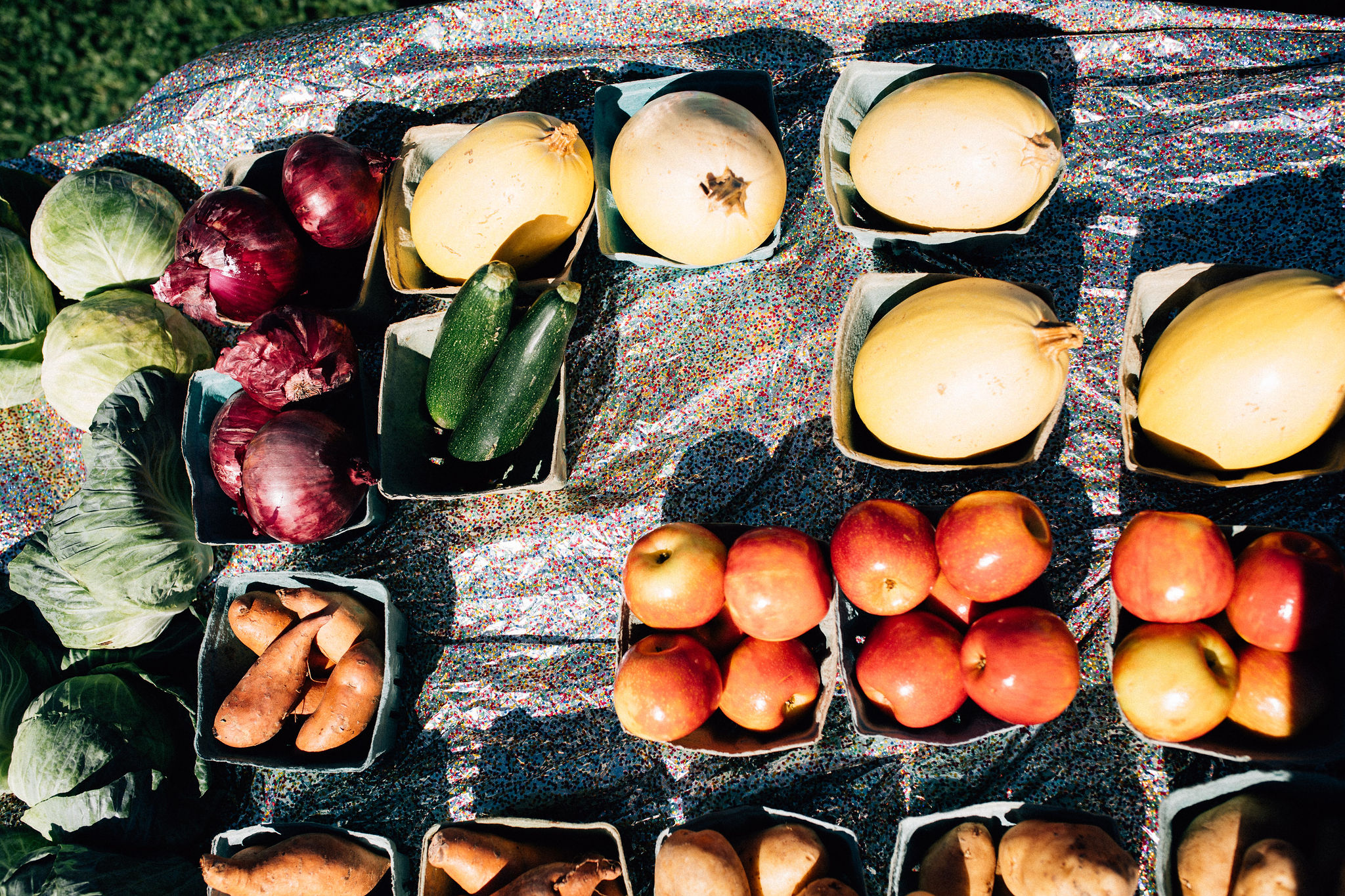
Chattanooga Chopped: Inside One Neighborhood Kitchen and Affordable Grocery Bill
"I see you and I raise you a trip to your nearest farmer’s market."
Food as a verb thanks
for sponsoring this series

Today's story comes from writer, hunter and horsewoman Madison Baldwin; it's her second essay for Food as a Verb, and a very practical one at that.
(A deer hunter, Madison sent in one of my very favorite writer headshots.)

In today's story, Madison takes us inside her grocery bill, meal-prep and the jaw-dropping difference we could make if just 100 people spent more time at farmers' markets.
Oh yeah. Best part? She frames it around the beloved show Chopped.
Chattanooga Chopped: Inside One Neighborhood Kitchen and Affordable Grocery Bill
By Madison Baldwin
My household grocery budget averages in the neighborhood of $400 a month. We’re two adults who eat the majority of our meals at home. Last week, we spent $183.97 on groceries; 39% of that was allocated to local agriculture.
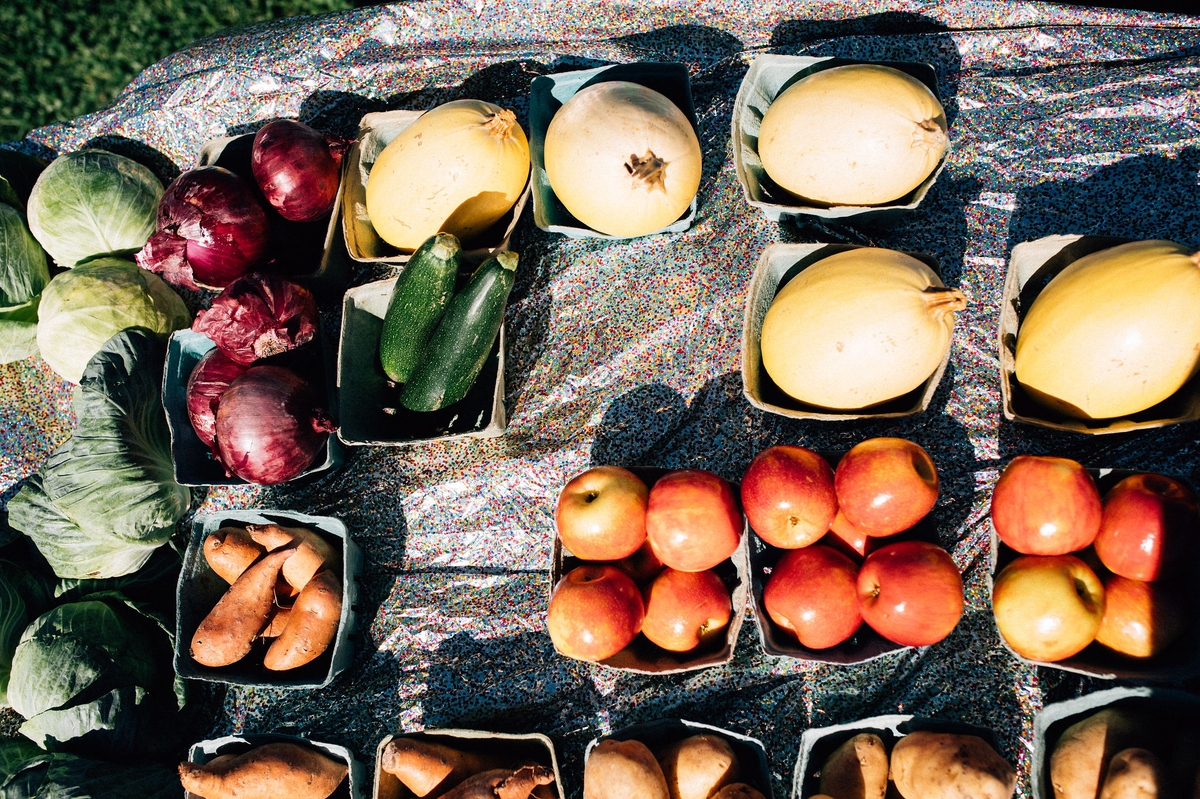
Yes, that’s less than half of my total bill, and I proudly call myself a local food supporter. Engaging consciously with your local food system does not demand an inflexible totality or a bottomless grocery budget. But it does require moving with purpose.
This shopping day is a pretty accurate snapshot of my regular spending. You may be reading this and thinking that a 39% allocation of grocery spending to local food is inconsequential. The Local Food Impact Calculator suggets otherwise.

* If 100 people spend $50 a month at one county-level, direct sale farmer’s market then those 100 people would generate $5,000 in additional sales.
* If this modest $5,000 estimate occurs every month for one year, then an additional $60,000 is added into farmers' profits.
* This leads to an Impact Valuation for a county-level, direct sale Farmer's Market of more than $91,000.
So, if you’re thinking as little as $20-50 a month spent on local food doesn’t matter, I see you and I raise you a trip to your nearest farmer’s market.
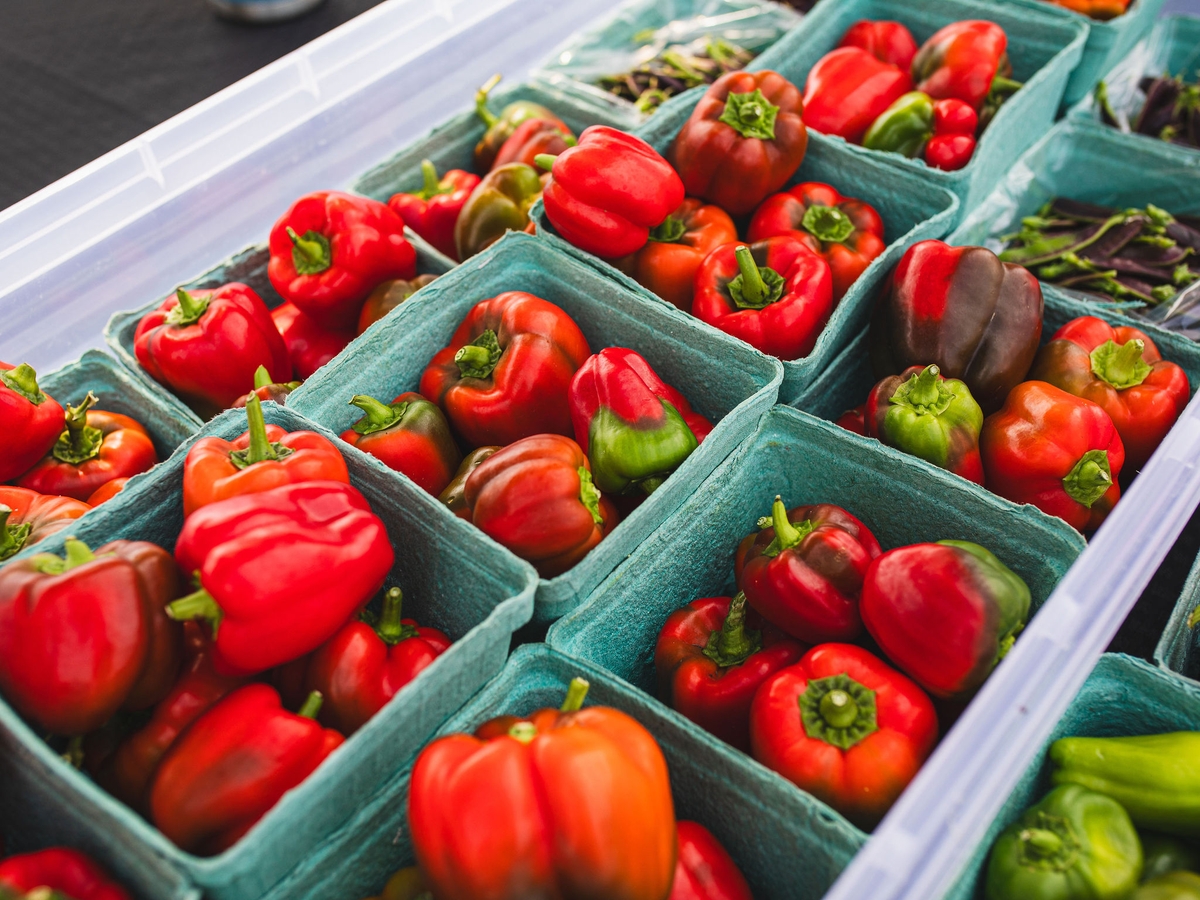
There's a perceived distance between local food supporters and regular folks who are busy doing their best. As hard as the marketing hive mind in our country has tried to sell local food as a gimmick meant for a specific consumer profile, actual customers of the farmer’s markets and local food access points that I visit don’t fit in these boxes so easily.
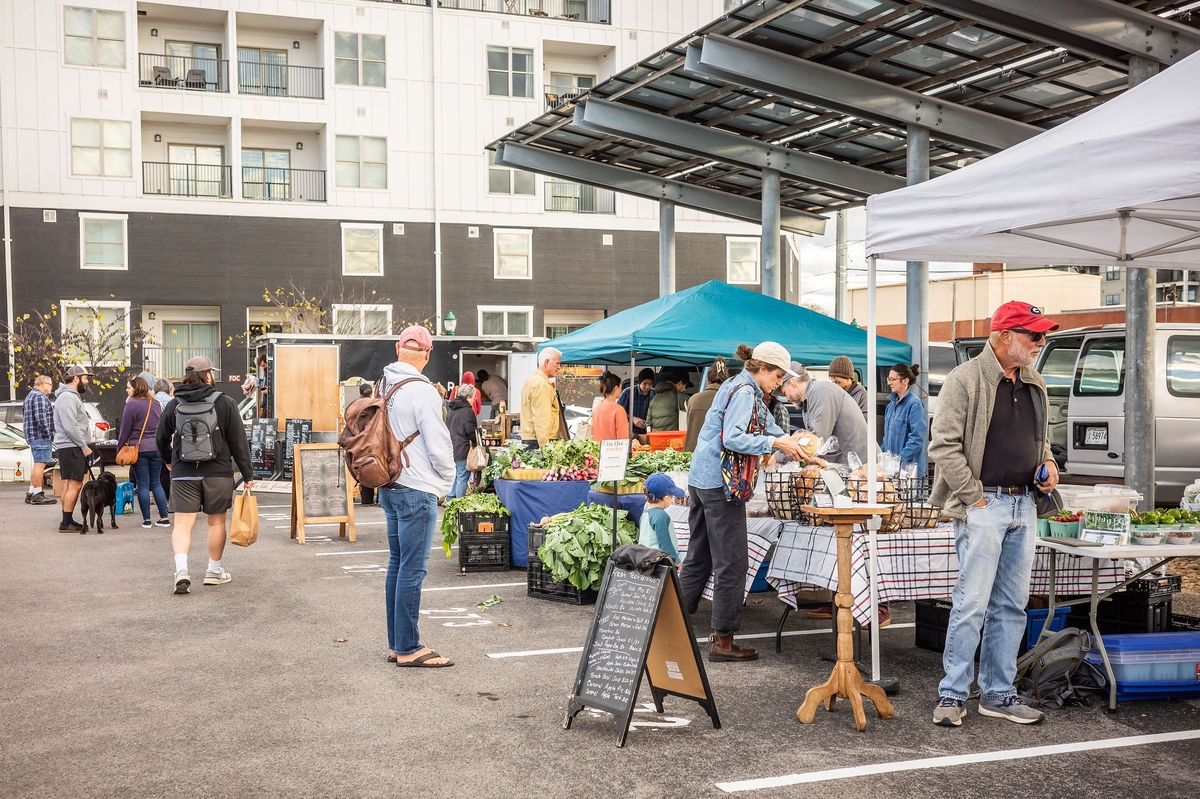
The people I shop alongside are fresh off their shift and still in a work uniform. Parents with kids in tow explaining all the squash varieties to their youngin's. Neighbors weighing out their produce and doing quick math because they only have a certain amount to spend today.

I vote with my dollar by keeping a rhythm and embracing what I have deemed as a Chopped mentality. This idea is led by creativity and reducing waste. A rhythm is more personal and flexible than a routine and allows room to adjust to the seasons of life.
Below, I’ve detailed my shopping + cooking + eating rhythm. The article ends with breakfast, lunch, and dinner recipes featuring my groceries and items on hand.
What do you mean by Chopped?
No, I don’t mean ugly. I’m a millennial. I’m talking about the Food Network show that first aired in 2009. Chopped, the television program, is a timed cooking contest that challenges four chefs to incorporate baskets of various ingredients into three rounds of dishes, serving an appetizer, entree, and dessert to the judges. During each round, one chef is eliminated based on the taste and presentation of their dish.
Contestants have access to a world-class pantry, spice cabinet and commercial kitchen full of speciality equipment. The priority of the competition is that all ingredients in the basket are creatively featured into the dishes, instead of hidden or sloppily applied as a garnish.
The Chopped mentality is one of creativity and resourcefulness. Stock your kitchen well, use what you got and try to have fun with one of life’s most necessary tasks.
Find a Rhythm and KISS
Regarding food shopping and cooking, a rhythm I have settled into goes like this:
* Late week —Take inventory of the fridge, freezer, and pantry. What are we low on? What needs to be used up? Does any of this freeze beautifully? Am I going out of town soon and need to chow down on as much as possible?
* Saturday — Food shopping, if needed. Start at the closest markets to me, HiLO and Gaining Ground, finish up at Food City. Restock the usual suspects. Purchase interesting items and produce that can be paired with our groceries and garden bounty on hand. Mind the sales.
* One Weekend Day — Bulk food prep a breakfast and lunch/dinner dish. Ideally, I prefer to shop and bulk cook on different days. Depending on plans, sometimes it is done on the same day or I only prep a breakfast item that will last a couple of days.
* Weekday Dinners — Rotate between meal prep and easy dishes to avoid waste (or getting sick of the meal prepped dish).
KISS — Keep it simple, stupid! I don’t break my neck trying to accomplish more than necessary. This includes reminding myself that I’m only cooking for two people.
How do you stock your kitchen? What are your staples?
Grocery staples are unique to each household. They make up the core of your kitchen. The idea of staples is that you have enough ingredients on hand to conjure up a meal or a treat at any time if you can’t make it out to shop or if money gets really tight. Welcome to my world. I replenish these items on rotation.
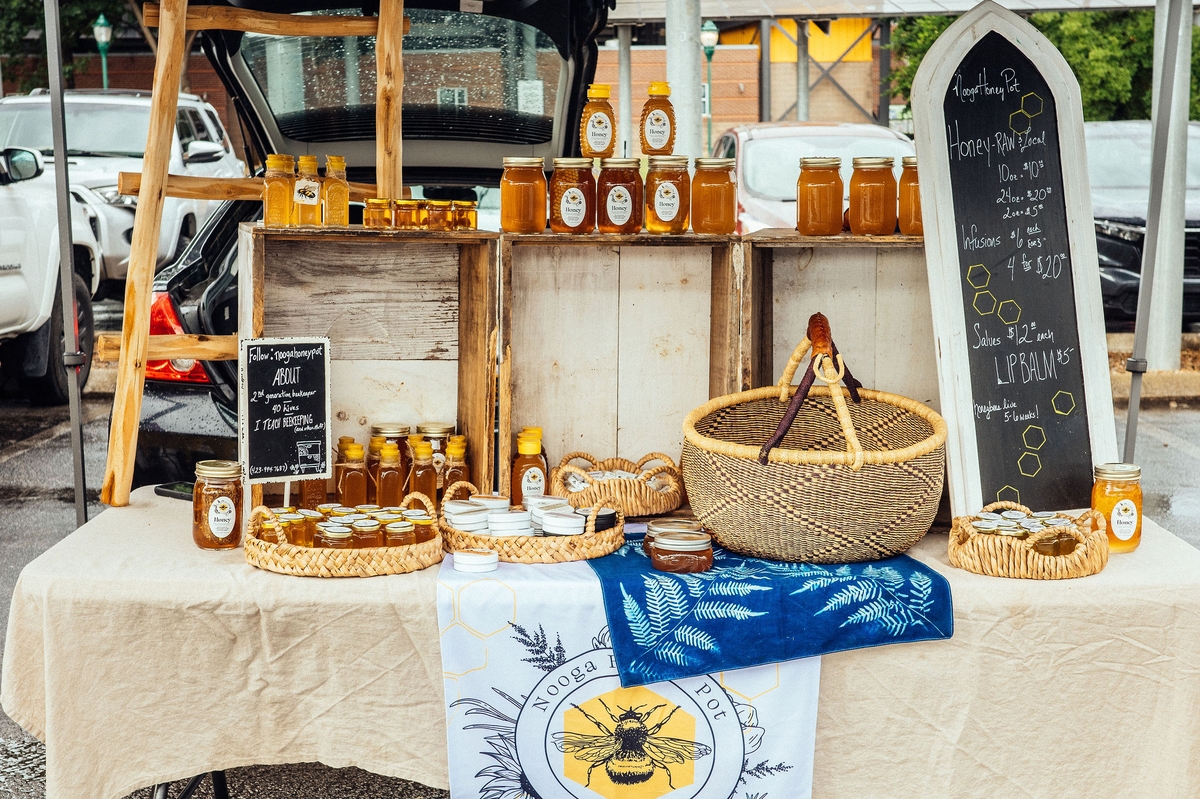
* Honey
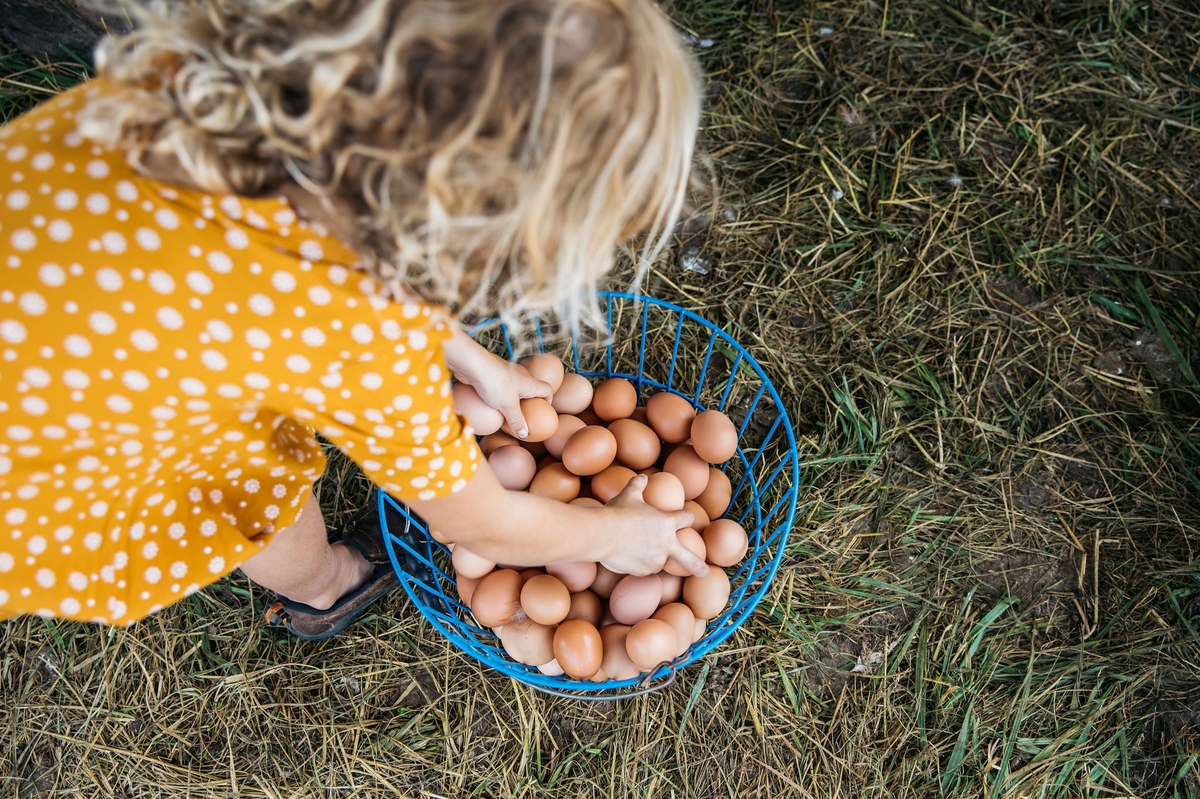
* Dairy — eggs, greek yogurt, butter, block cheese
* Carbs — bread, tortillas
* Beverages — coffee, bubbly water, instant espresso, herbal tea, half-and-half
* Baking — King Arthur AP flour, baking soda, cocoa powder, vanilla bean paste
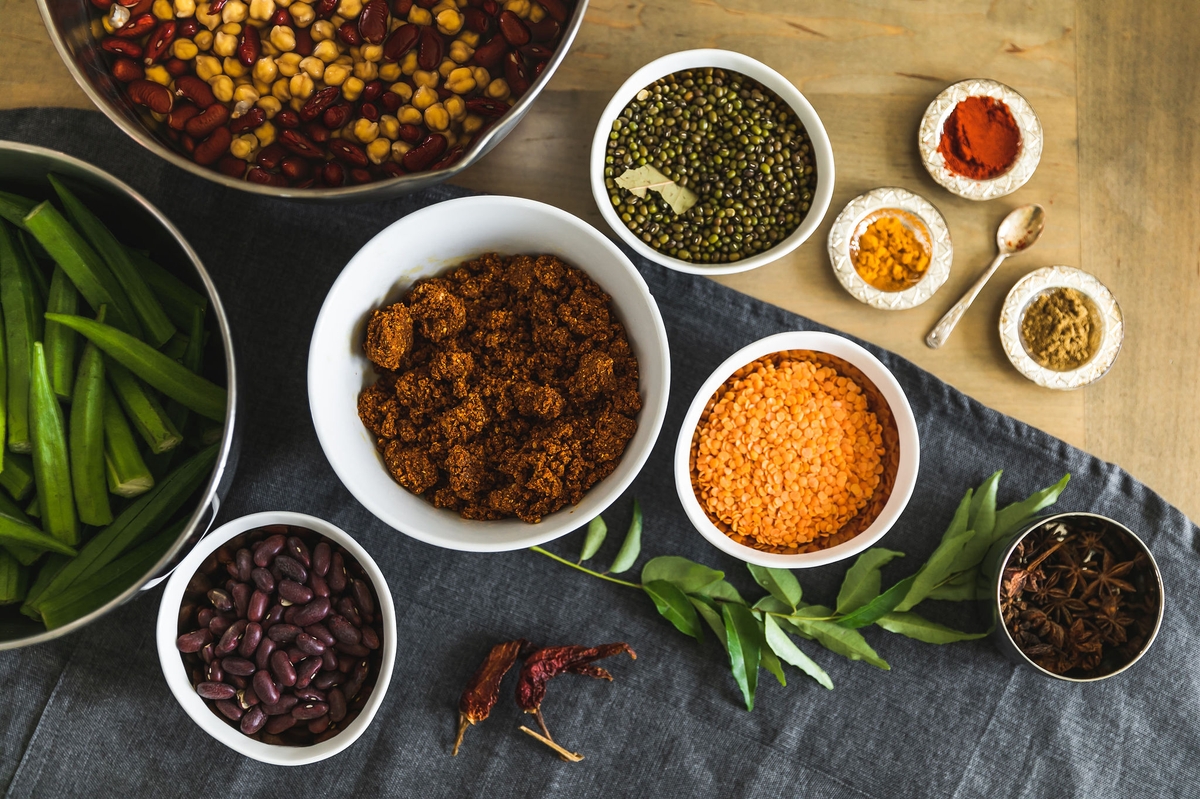
* Canned and dry goods — Jasmine rice, short and long pasta, egg noodles, beans, canned tomatoes
* Fruits and vegetables — sweet potatoes, onions, garlic, bananas, lemons
* Snacks — granola bars, nuts, string cheese, popcorn, some variety of crackers or chips
* Spices — Kosher salt, Maldon salt, table salt, peppercorns for the grinder, olive oil, avocado oil, sesame oil, soy sauce, Valentina hot sauce, Worcestershire, apple cider vinegar, rice vinegar, adobo, cumin, smoked paprika, curry, red pepper flakes, garlic powder.
What is your grocery bill? How much is local?
On my most recent shopping day, I spent a total of $183.97. I made it to HiLO for the last 30 minutes of the market. Most of this time, I was visiting and drinking Hot Damn drip coffee, but walked away with a bundle of spring onions from Hissing Possum Farm for $3. Across the street, a yard sale beckoned.
I took the bait and ran into a friend who lives in the neighborhood, we caught up and fished through Chattanooga Football Club and beach souvenir t-shirts.
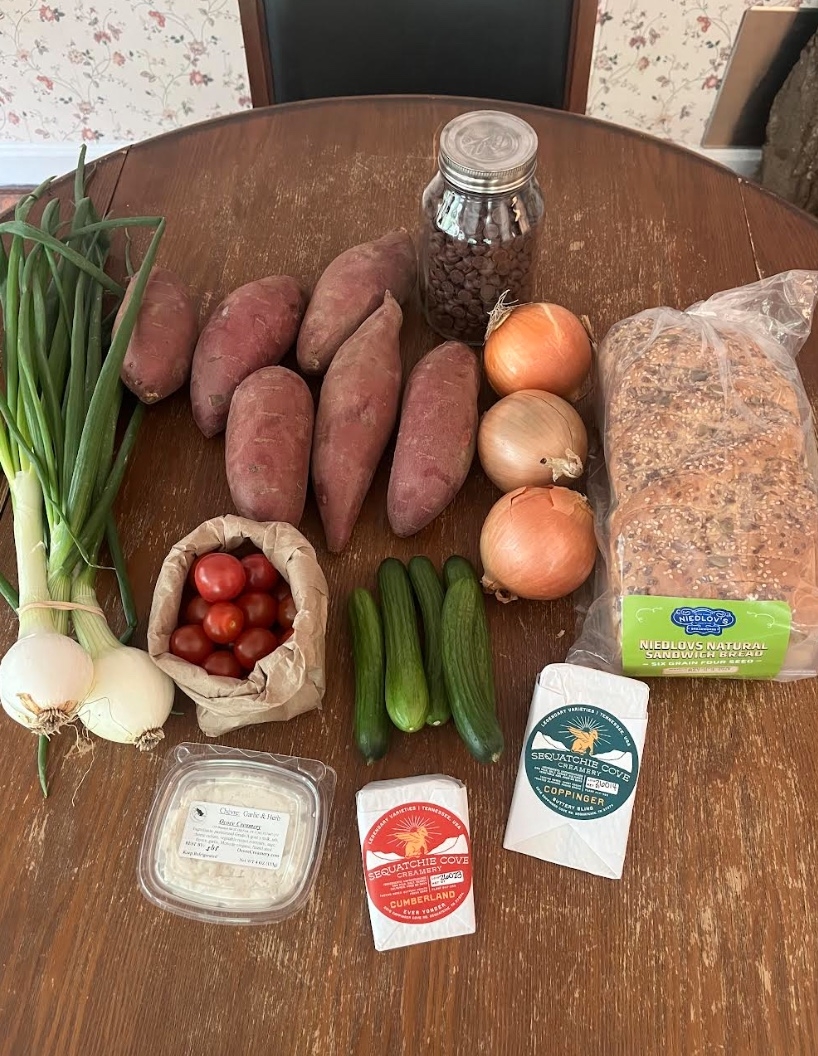
We went into Gaining Ground together where I left with a tote bag full of garnet sweet potatoes, Ocoee Creamery chevre and other treasures for $69.01.
Back up the ridge, the Food City total was $111.96. This includes non-food items like freezer bags and hand soap. Sales are the bellwether for my regular grocery store shopping list. I got eight avocados for $.049/ a unit and butter quarters were buy one, get one.
How do you get inspired and learn techniques?
YouTube University, cookbooks, recipes shared on Substack, trial and error. Here are a few of my specific favorites:
- Hailee Catalano’s YouTube Channel & Cookbook
- Sarah & Nahm Soon Ahn’s Youtube Channel Ahnest Kitchen & Website
- The L.L. Bean Game and Fish Cookbook
- Appetites by Jenna Rozelle
- Cow We Doin’ by Lou Tamposi
- On Food Without Compromise by John Gonter
Use What You Got
The most important part of all this is storing, preserving, cooking and eating food. Using what is already available to you before it goes to waste. I am so lucky to share my life with a green thumb who brings in pounds of produce, herbs, and flowers from his backyard garden. I am also lucky that we share an interest in deer hunting, as venison is our main protein source. Both of these factors guide my cooking. Here is a breakfast, lunch, and dinner that I made with my local and regular grocery haul as a home cook.
Breakfast: Fridge Clean-out Frittata
Ingredients:
White shimeji mushrooms, radishes, spring onions, bok choy, hydro cherry tomatoes, a dozen eggs, half a cup of milk, 1.5 cups shredded Sequatchie Cove Creamery Cumberland cheese, 1 tbsp butter, 1 tbsp olive oil. (Truly: clean out your fridge. Use whatever veggies, cheese, or ground meat you have on hand. It will work.)
Notes: These white shimeji mushrooms are from the Asian market down the street from my house next to the dollar store, aptly named Asian Market.
They are nutty, buttery, rich tasting and very affordable at under $3. We are regularly gifted chicken eggs from a family member who keeps a flock.
When her hens aren’t laying or I need a restock in between, I opt for the flat of Sequatchie Cove Farm eggs from Gaining Ground for taste and price.
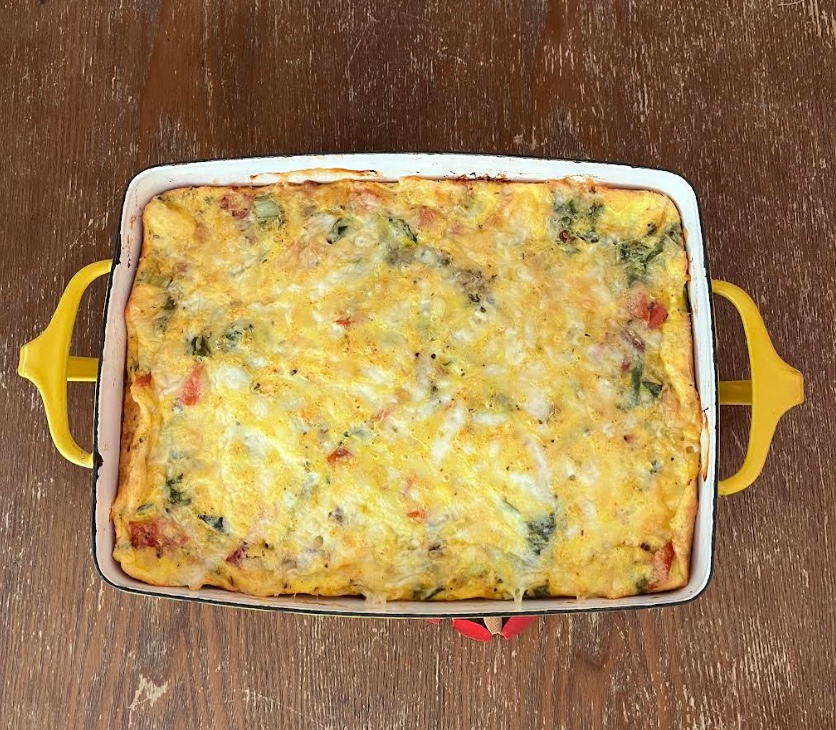
Grate your own cheese, no matter where you get it, it tastes better. My yellow Dansk casserole dish was a $3 thrift store find. I use a cast iron skillet for this recipe.
Directions: Preheat the oven to 350F. Heat your skillet to medium and wait a few minutes for it to come up to temp. Add a dab of butter and oil. Add the mushrooms and let them brown first without other ingredients and wait to salt them. Once the mushrooms have some color on them, add the other vegetables except for the greens.
While the veggies are sweating, add your eggs and milk to a large bowl. Add salt, pepper, and seasonings of choice. I used cajun blend, smoked paprika, and garlic powder. Whisk until combined and set aside. Stir your veggie skillet, add in the greens, seasonings and let them cook down.
Once the veggies are tender, add them to the bottom of a greased casserole dish or leave them in the skillet if you prefer. Add the whisked, seasoned eggs and top with cheese. Bake at 350F for 30 minutes or until golden brown. Serve warm with your favorite toppings.
Lunch: Shank’n Beans
Ingredients: 4 tbsp tomato paste, 1.5lb thawed venison shank, 2 tsp avocado oil, 4 cups dry beans of choice, 1 tbsp better than bouillon, 5 cups~ water, 1 cup diced onion, 4 garlic cloves, bay leaf, salt and pepper to taste.
Notes: This is a long-cook dish that we took for lunch several times this week. On the day that I cooked this, I ate leftovers for lunch.
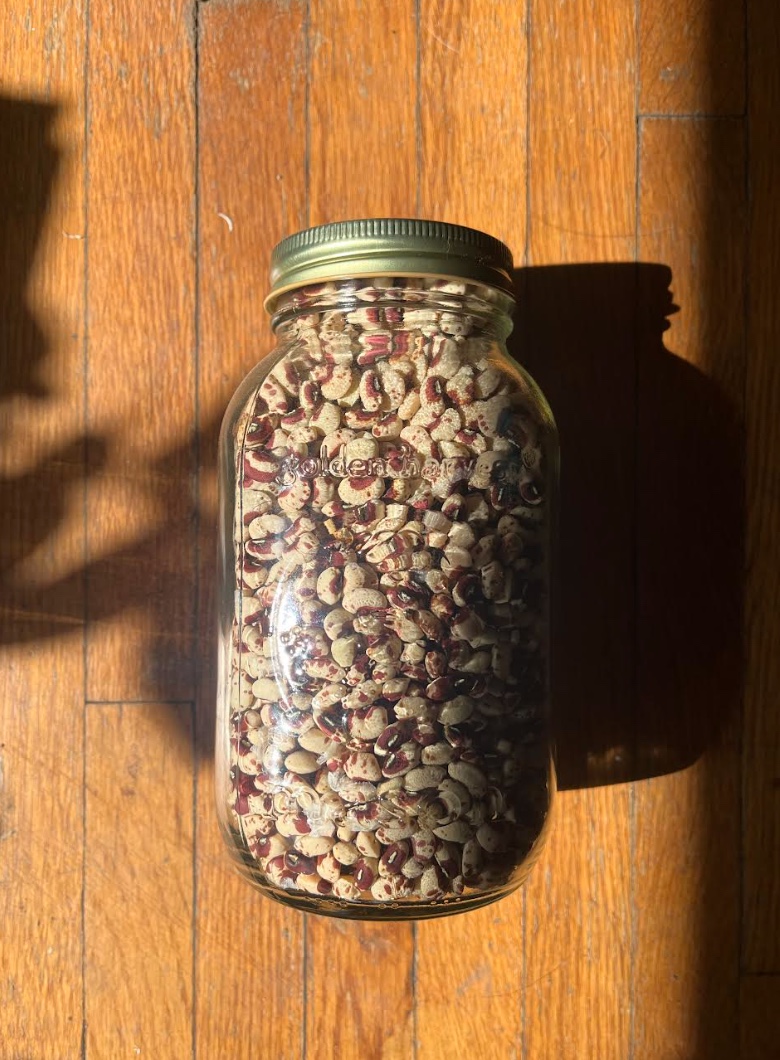
My bean of choice for this recipe was a cow pea, an heirloom bean from the garden. It tastes similar to a black-eyed pea. I am happy with the meat-to-bean ratio on the final product of this dish, but if I were to remake it, I’d use one cup less beans for a smaller portion and I’d pre-soak them longer for more tenderness.
As a home cook, I feel like I’m operating a test kitchen most of the time, adjusting methods week to week.
An ingredient I would have added to this is a parmesan rind that I forgot I had squirreled away in the cheese drawer. The roasting of the meat that occurs before slow cooking is essential for the best texture and flavor. Do not skip this step!
The rear shank can be a tougher cut of venison, but the acidity of the tomato paste tenderizes it and adds a deep, sweet flavor. Substitute for another cut of bone in meat of your choice.
Directions: Preheat the oven to 400F. Slather the meat and bone with tomato paste and a dab of avocado oil. Roast in a casserole dish for 30 minutes or until there is a light crust forming on the meat and the bone is a little golden. Transfer to a slow cooker set on low heat with 1 cup of water and a spoonful of Better than Bouillon or 1 cup broth of choice.
Rinse beans and remove any twigs or shriveled beans. Fully submerge your rinsed beans in a large bowl of water and soak at room temperature for at least four hours (if you’re soaking beans overnight, place them in the fridge - a longer soak will make your beans more tender). The meat should cook on its own for several hours (this batch took 5 hours) and start to release from the bone before you add the beans.
Add the rinsed beans to the slow cooker with 2 more cups of fresh water, a bay leaf, 1 tbsp kosher salt, and 2 whole cloves of garlic. Check the dish over the next several hours and add more water as needed. After 4 more hours of cooking time, add diced onions and more garlic to taste. The meat should be coming off the bone and fork tender. Cook for 30 more minutes. Serve hot with your favorite loaf or cornbread.
Dinner: Classic Steakhouse Plate
Ingredients: 2lbs venison backstrap, 2 medium garnet sweet potatoes, 1 tbsp avocado oil, salad greens & toppings of choice.
Marinade ingredients: juice from half a lemon, swirl of honey (1 tsp, probably), 1 tsp kosher salt, half a dozen cracks of black pepper from the grinder, ½ cup olive oil, ½ tbsp worcestershire.
Salad ingredients: bok choy, gem lettuce, arugula, hydro cherry tomatoes, baby cucumbers, Ocoee Creamery garlic & herb goat cheese chevre, salt and pepper.
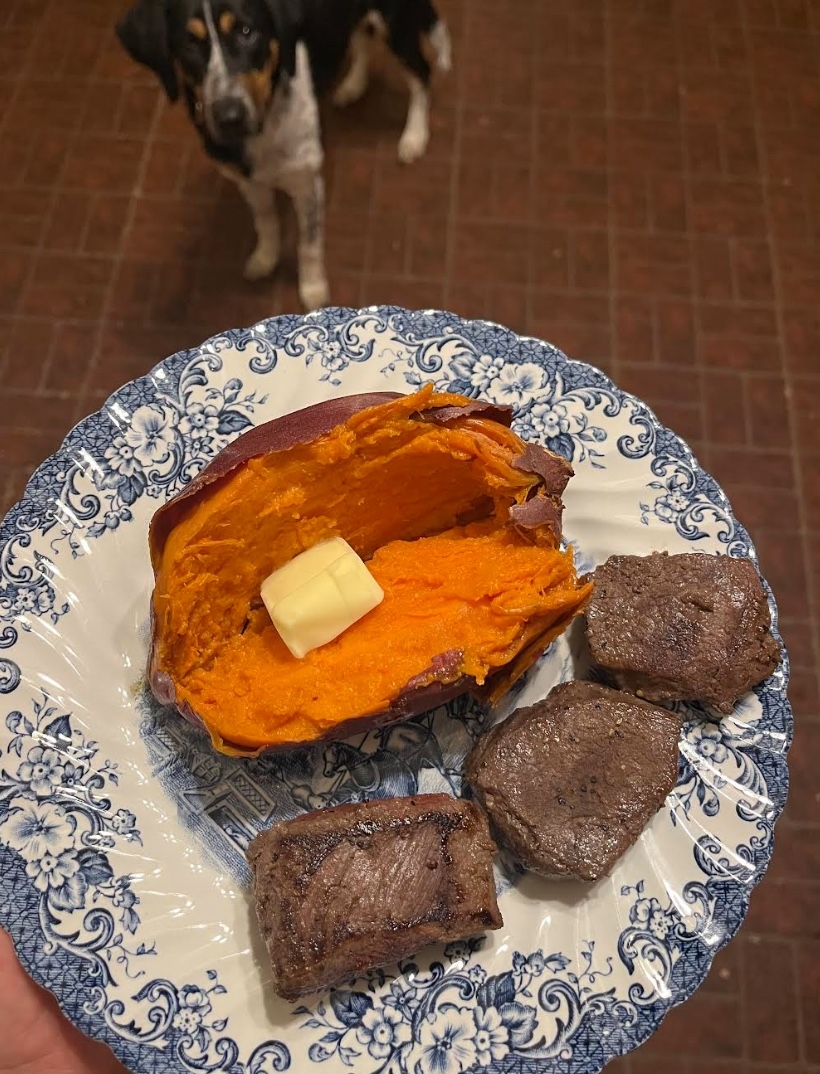
Notes: The backstrap is the crown jewel of venison cuts. It’s what converts deer meat skeptics into fans. It’s an extremely tender cut of meat and the marinade is for flavor rather than tenderization. The garnet sweet potato brings equal star power here. Roast them until they are producing a caramel-looking substance. I am personally anti-foil wrapping for potato roasting because I prefer the texture of the finished product without it, but do as you wish.
My partner’s backyard garden has been producing pounds of bok choy cabbage, so it’s been our main salad green the last couple of weeks. The leaves are sturdy enough for different varieties of dressing and super crunchy. Instead of dressing for this salad, I loaded it up with the garlic and herb chevre and added a drizzle of oil, squeeze of lemon juice, salt, and lots of cracked pepper.
Instructions: Preheat oven to 400F. Transfer thawed meat from the package to a clean bowl. Add marinade ingredients and stir to evenly coat all medallions. Cover and place in the fridge for an hour. Wash sweet potatoes and pat dry with a towel or let air dry. Place on a baking sheet lined with parchment paper. Poke 3 sets of holes in the sweet potatoes with a fork and slather with avocado oil. Roast sweet potatoes for one hour or until you can hear them “sing” (releasing steam) and there is a caramelly looking substance oozing from the poked holes.
Bring a cast iron pan to temp on medium heat on your stovetop. Add your backstrap medallions and don’t move them around in the pan. Leave them in place for about 3 minutes or until you see blood rising from the uncooked, face up side of the meat. Flip the medallions and cook for an additional 2 minutes, or longer if you enjoy a more well done steak. Remove from heat and let your backstrap medallions rest on a cutting board for a few minutes while you assemble your salad.
Chop all salad greens and ingredients so that they are a similar size. Combine in a serving bowl and season with salt and pepper. Add as much chevre as your heart desires. Top with a swirl of olive oil and squeeze of lemon juice. Cut and fluff up your sweet potato and add butter. Assemble your dinner plate and enjoy right away.
Author’s Note: The Author’s opinion is her own and does not reflect that of her employer or all members of organizations she is a part of.
Madison Baldwin can be reached at madisonkbaldwin@gmail.com.

Story ideas, questions, feedback? Email david@foodasaverb.com.
This story is 100% human generated; no AI chatbot was used in the creation of this content.
Today's story comes from writer, hunter and horsewoman Madison Baldwin; it's her second essay for Food as a Verb, and a very practical one at that.
(A deer hunter, Madison sent in one of my very favorite writer headshots.)
In today's story, Madison takes us inside her grocery bill, meal-prep and the jaw-dropping difference we could make if just 100 people spent more time at farmers' markets.
Oh yeah. Best part? She frames it around the beloved show Chopped.
Chattanooga Chopped: Inside One Neighborhood Kitchen and Affordable Grocery Bill
By Madison Baldwin
My household grocery budget averages in the neighborhood of $400 a month. We’re two adults who eat the majority of our meals at home. Last week, we spent $183.97 on groceries; 39% of that was allocated to local agriculture.
Yes, that’s less than half of my total bill, and I proudly call myself a local food supporter. Engaging consciously with your local food system does not demand an inflexible totality or a bottomless grocery budget. But it does require moving with purpose.
This shopping day is a pretty accurate snapshot of my regular spending. You may be reading this and thinking that a 39% allocation of grocery spending to local food is inconsequential. The Local Food Impact Calculator suggets otherwise.
* If 100 people spend $50 a month at one county-level, direct sale farmer’s market then those 100 people would generate $5,000 in additional sales.
* If this modest $5,000 estimate occurs every month for one year, then an additional $60,000 is added into farmers' profits.
* This leads to an Impact Valuation for a county-level, direct sale Farmer's Market of more than $91,000.
So, if you’re thinking as little as $20-50 a month spent on local food doesn’t matter, I see you and I raise you a trip to your nearest farmer’s market.
There's a perceived distance between local food supporters and regular folks who are busy doing their best. As hard as the marketing hive mind in our country has tried to sell local food as a gimmick meant for a specific consumer profile, actual customers of the farmer’s markets and local food access points that I visit don’t fit in these boxes so easily.
The people I shop alongside are fresh off their shift and still in a work uniform. Parents with kids in tow explaining all the squash varieties to their youngin's. Neighbors weighing out their produce and doing quick math because they only have a certain amount to spend today.
I vote with my dollar by keeping a rhythm and embracing what I have deemed as a Chopped mentality. This idea is led by creativity and reducing waste. A rhythm is more personal and flexible than a routine and allows room to adjust to the seasons of life.
Below, I’ve detailed my shopping + cooking + eating rhythm. The article ends with breakfast, lunch, and dinner recipes featuring my groceries and items on hand.
What do you mean by Chopped?
No, I don’t mean ugly. I’m a millennial. I’m talking about the Food Network show that first aired in 2009. Chopped, the television program, is a timed cooking contest that challenges four chefs to incorporate baskets of various ingredients into three rounds of dishes, serving an appetizer, entree, and dessert to the judges. During each round, one chef is eliminated based on the taste and presentation of their dish.
Contestants have access to a world-class pantry, spice cabinet and commercial kitchen full of speciality equipment. The priority of the competition is that all ingredients in the basket are creatively featured into the dishes, instead of hidden or sloppily applied as a garnish.
The Chopped mentality is one of creativity and resourcefulness. Stock your kitchen well, use what you got and try to have fun with one of life’s most necessary tasks.
Find a Rhythm and KISS
Regarding food shopping and cooking, a rhythm I have settled into goes like this:
* Late week —Take inventory of the fridge, freezer, and pantry. What are we low on? What needs to be used up? Does any of this freeze beautifully? Am I going out of town soon and need to chow down on as much as possible?
* Saturday — Food shopping, if needed. Start at the closest markets to me, HiLO and Gaining Ground, finish up at Food City. Restock the usual suspects. Purchase interesting items and produce that can be paired with our groceries and garden bounty on hand. Mind the sales.
* One Weekend Day — Bulk food prep a breakfast and lunch/dinner dish. Ideally, I prefer to shop and bulk cook on different days. Depending on plans, sometimes it is done on the same day or I only prep a breakfast item that will last a couple of days.
* Weekday Dinners — Rotate between meal prep and easy dishes to avoid waste (or getting sick of the meal prepped dish).
KISS — Keep it simple, stupid! I don’t break my neck trying to accomplish more than necessary. This includes reminding myself that I’m only cooking for two people.
How do you stock your kitchen? What are your staples?
Grocery staples are unique to each household. They make up the core of your kitchen. The idea of staples is that you have enough ingredients on hand to conjure up a meal or a treat at any time if you can’t make it out to shop or if money gets really tight. Welcome to my world. I replenish these items on rotation.
* Honey
* Dairy — eggs, greek yogurt, butter, block cheese
* Carbs — bread, tortillas
* Beverages — coffee, bubbly water, instant espresso, herbal tea, half-and-half
* Baking — King Arthur AP flour, baking soda, cocoa powder, vanilla bean paste
* Canned and dry goods — Jasmine rice, short and long pasta, egg noodles, beans, canned tomatoes
* Fruits and vegetables — sweet potatoes, onions, garlic, bananas, lemons
* Snacks — granola bars, nuts, string cheese, popcorn, some variety of crackers or chips
* Spices — Kosher salt, Maldon salt, table salt, peppercorns for the grinder, olive oil, avocado oil, sesame oil, soy sauce, Valentina hot sauce, Worcestershire, apple cider vinegar, rice vinegar, adobo, cumin, smoked paprika, curry, red pepper flakes, garlic powder.
What is your grocery bill? How much is local?
On my most recent shopping day, I spent a total of $183.97. I made it to HiLO for the last 30 minutes of the market. Most of this time, I was visiting and drinking Hot Damn drip coffee, but walked away with a bundle of spring onions from Hissing Possum Farm for $3. Across the street, a yard sale beckoned.
I took the bait and ran into a friend who lives in the neighborhood, we caught up and fished through Chattanooga Football Club and beach souvenir t-shirts.
We went into Gaining Ground together where I left with a tote bag full of garnet sweet potatoes, Ocoee Creamery chevre and other treasures for $69.01.
Back up the ridge, the Food City total was $111.96. This includes non-food items like freezer bags and hand soap. Sales are the bellwether for my regular grocery store shopping list. I got eight avocados for $.049/ a unit and butter quarters were buy one, get one.
How do you get inspired and learn techniques?
YouTube University, cookbooks, recipes shared on Substack, trial and error. Here are a few of my specific favorites:
- Hailee Catalano’s YouTube Channel & Cookbook
- Sarah & Nahm Soon Ahn’s Youtube Channel Ahnest Kitchen & Website
- The L.L. Bean Game and Fish Cookbook
- Appetites by Jenna Rozelle
- Cow We Doin’ by Lou Tamposi
- On Food Without Compromise by John Gonter
Use What You Got
The most important part of all this is storing, preserving, cooking and eating food. Using what is already available to you before it goes to waste. I am so lucky to share my life with a green thumb who brings in pounds of produce, herbs, and flowers from his backyard garden. I am also lucky that we share an interest in deer hunting, as venison is our main protein source. Both of these factors guide my cooking. Here is a breakfast, lunch, and dinner that I made with my local and regular grocery haul as a home cook.
Breakfast: Fridge Clean-out Frittata
Ingredients:
White shimeji mushrooms, radishes, spring onions, bok choy, hydro cherry tomatoes, a dozen eggs, half a cup of milk, 1.5 cups shredded Sequatchie Cove Creamery Cumberland cheese, 1 tbsp butter, 1 tbsp olive oil. (Truly: clean out your fridge. Use whatever veggies, cheese, or ground meat you have on hand. It will work.)
Notes: These white shimeji mushrooms are from the Asian market down the street from my house next to the dollar store, aptly named Asian Market.
They are nutty, buttery, rich tasting and very affordable at under $3. We are regularly gifted chicken eggs from a family member who keeps a flock.
When her hens aren’t laying or I need a restock in between, I opt for the flat of Sequatchie Cove Farm eggs from Gaining Ground for taste and price.
Grate your own cheese, no matter where you get it, it tastes better. My yellow Dansk casserole dish was a $3 thrift store find. I use a cast iron skillet for this recipe.
Directions: Preheat the oven to 350F. Heat your skillet to medium and wait a few minutes for it to come up to temp. Add a dab of butter and oil. Add the mushrooms and let them brown first without other ingredients and wait to salt them. Once the mushrooms have some color on them, add the other vegetables except for the greens.
While the veggies are sweating, add your eggs and milk to a large bowl. Add salt, pepper, and seasonings of choice. I used cajun blend, smoked paprika, and garlic powder. Whisk until combined and set aside. Stir your veggie skillet, add in the greens, seasonings and let them cook down.
Once the veggies are tender, add them to the bottom of a greased casserole dish or leave them in the skillet if you prefer. Add the whisked, seasoned eggs and top with cheese. Bake at 350F for 30 minutes or until golden brown. Serve warm with your favorite toppings.
Lunch: Shank’n Beans
Ingredients: 4 tbsp tomato paste, 1.5lb thawed venison shank, 2 tsp avocado oil, 4 cups dry beans of choice, 1 tbsp better than bouillon, 5 cups~ water, 1 cup diced onion, 4 garlic cloves, bay leaf, salt and pepper to taste.
Notes: This is a long-cook dish that we took for lunch several times this week. On the day that I cooked this, I ate leftovers for lunch.
My bean of choice for this recipe was a cow pea, an heirloom bean from the garden. It tastes similar to a black-eyed pea. I am happy with the meat-to-bean ratio on the final product of this dish, but if I were to remake it, I’d use one cup less beans for a smaller portion and I’d pre-soak them longer for more tenderness.
As a home cook, I feel like I’m operating a test kitchen most of the time, adjusting methods week to week.
An ingredient I would have added to this is a parmesan rind that I forgot I had squirreled away in the cheese drawer. The roasting of the meat that occurs before slow cooking is essential for the best texture and flavor. Do not skip this step!
The rear shank can be a tougher cut of venison, but the acidity of the tomato paste tenderizes it and adds a deep, sweet flavor. Substitute for another cut of bone in meat of your choice.
Directions: Preheat the oven to 400F. Slather the meat and bone with tomato paste and a dab of avocado oil. Roast in a casserole dish for 30 minutes or until there is a light crust forming on the meat and the bone is a little golden. Transfer to a slow cooker set on low heat with 1 cup of water and a spoonful of Better than Bouillon or 1 cup broth of choice.
Rinse beans and remove any twigs or shriveled beans. Fully submerge your rinsed beans in a large bowl of water and soak at room temperature for at least four hours (if you’re soaking beans overnight, place them in the fridge - a longer soak will make your beans more tender). The meat should cook on its own for several hours (this batch took 5 hours) and start to release from the bone before you add the beans.
Add the rinsed beans to the slow cooker with 2 more cups of fresh water, a bay leaf, 1 tbsp kosher salt, and 2 whole cloves of garlic. Check the dish over the next several hours and add more water as needed. After 4 more hours of cooking time, add diced onions and more garlic to taste. The meat should be coming off the bone and fork tender. Cook for 30 more minutes. Serve hot with your favorite loaf or cornbread.
Dinner: Classic Steakhouse Plate
Ingredients: 2lbs venison backstrap, 2 medium garnet sweet potatoes, 1 tbsp avocado oil, salad greens & toppings of choice.
Marinade ingredients: juice from half a lemon, swirl of honey (1 tsp, probably), 1 tsp kosher salt, half a dozen cracks of black pepper from the grinder, ½ cup olive oil, ½ tbsp worcestershire.
Salad ingredients: bok choy, gem lettuce, arugula, hydro cherry tomatoes, baby cucumbers, Ocoee Creamery garlic & herb goat cheese chevre, salt and pepper.
Notes: The backstrap is the crown jewel of venison cuts. It’s what converts deer meat skeptics into fans. It’s an extremely tender cut of meat and the marinade is for flavor rather than tenderization. The garnet sweet potato brings equal star power here. Roast them until they are producing a caramel-looking substance. I am personally anti-foil wrapping for potato roasting because I prefer the texture of the finished product without it, but do as you wish.
My partner’s backyard garden has been producing pounds of bok choy cabbage, so it’s been our main salad green the last couple of weeks. The leaves are sturdy enough for different varieties of dressing and super crunchy. Instead of dressing for this salad, I loaded it up with the garlic and herb chevre and added a drizzle of oil, squeeze of lemon juice, salt, and lots of cracked pepper.
Instructions: Preheat oven to 400F. Transfer thawed meat from the package to a clean bowl. Add marinade ingredients and stir to evenly coat all medallions. Cover and place in the fridge for an hour. Wash sweet potatoes and pat dry with a towel or let air dry. Place on a baking sheet lined with parchment paper. Poke 3 sets of holes in the sweet potatoes with a fork and slather with avocado oil. Roast sweet potatoes for one hour or until you can hear them “sing” (releasing steam) and there is a caramelly looking substance oozing from the poked holes.
Bring a cast iron pan to temp on medium heat on your stovetop. Add your backstrap medallions and don’t move them around in the pan. Leave them in place for about 3 minutes or until you see blood rising from the uncooked, face up side of the meat. Flip the medallions and cook for an additional 2 minutes, or longer if you enjoy a more well done steak. Remove from heat and let your backstrap medallions rest on a cutting board for a few minutes while you assemble your salad.
Chop all salad greens and ingredients so that they are a similar size. Combine in a serving bowl and season with salt and pepper. Add as much chevre as your heart desires. Top with a swirl of olive oil and squeeze of lemon juice. Cut and fluff up your sweet potato and add butter. Assemble your dinner plate and enjoy right away.
Author’s Note: The Author’s opinion is her own and does not reflect that of her employer or all members of organizations she is a part of.
Madison Baldwin can be reached at madisonkbaldwin@gmail.com.
Story ideas, questions, feedback? Email david@foodasaverb.com.
This story is 100% human generated; no AI chatbot was used in the creation of this content.
Food as a verb thanks our story sponsor:
Food as a Verb Thanks our sustaining partner:
Food as a verb thanks our story sponsor:
Join our table

keep reading