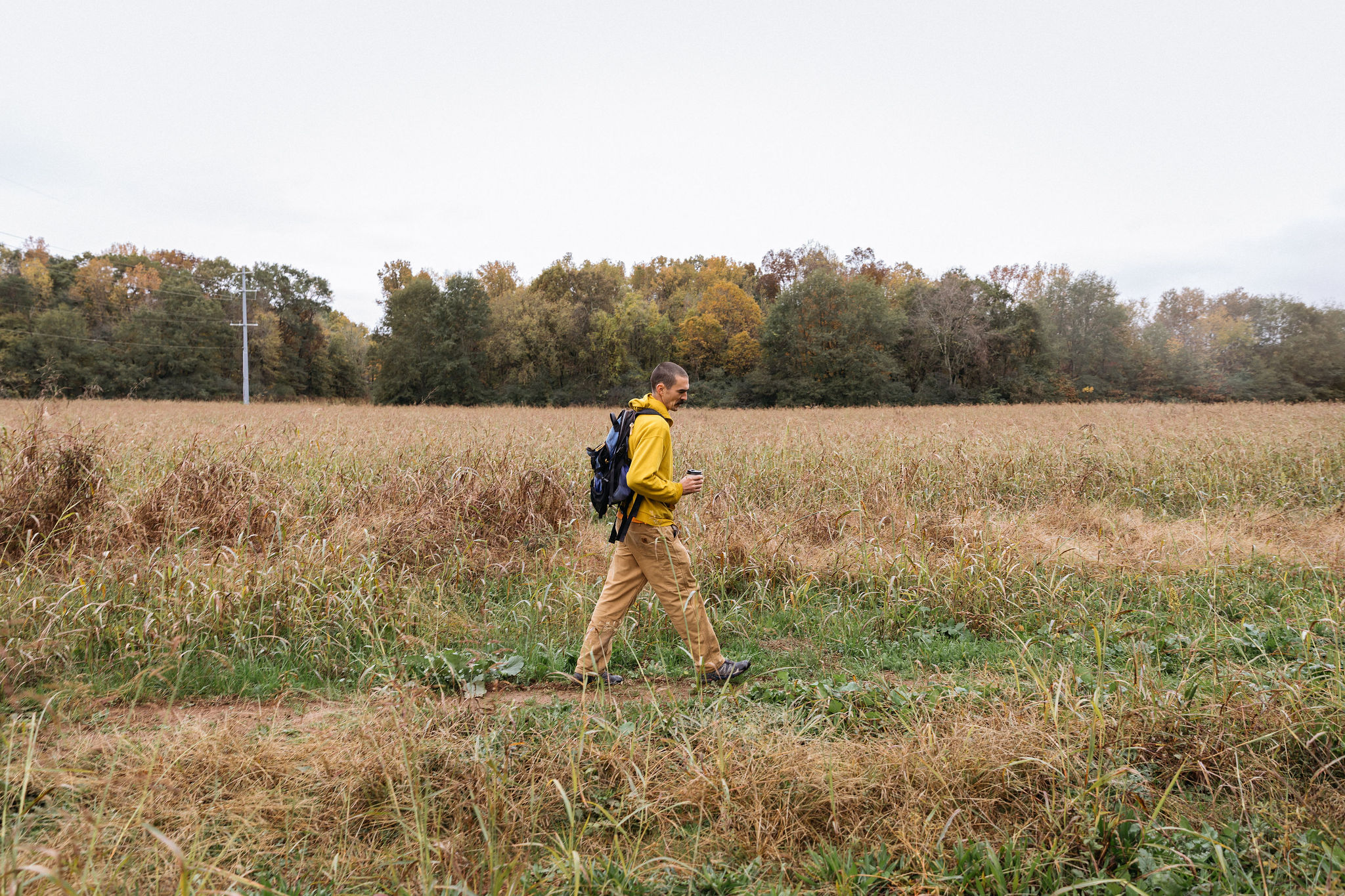
Foraging for the Human Spirit: Mushrooms in the Wild with Logan Lewis
Along the way, we found a part of ourselves.
Food as a verb thanks
for sponsoring this series

A mile or so into the woods, Logan Lewis pauses, mid-step almost, as if his antennae are dialed into some frequency that says:
The good stuff. It's close.
We've been with him and his three dogs — Elvis, Sadie and Lilly, a burgeoning truffle hunter — for nearly an hour, over the river and through the woods, searching through state-managed forested wetlands in Hixson.
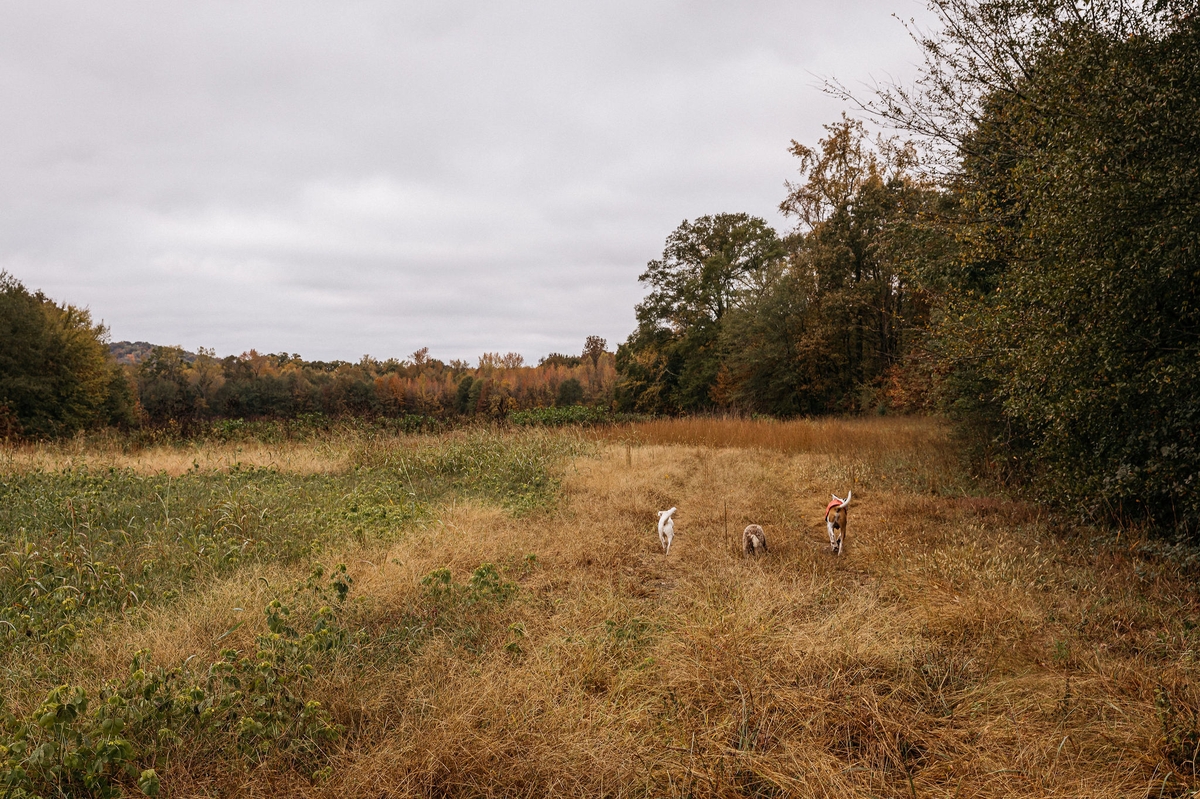
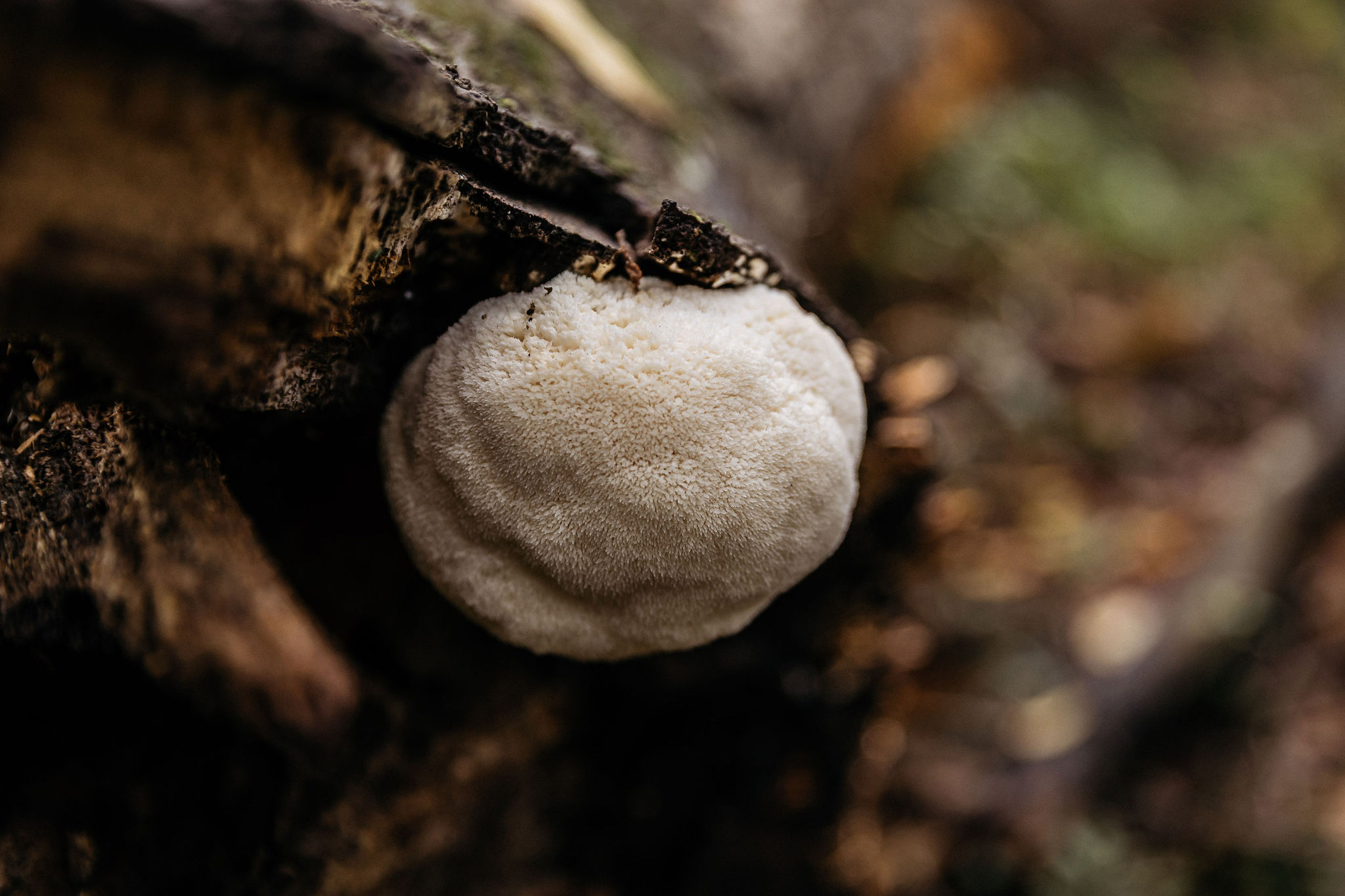
The whole time, we've kept our eyes on the prize. Well, that's not true. We've been looking for the prize, searching, scanning, peering for lion's mane mushroom, the puffy white snowball fungi that grows on trees and tastes like the finest thing this side of sliced bread.
That's when Logan pauses, alert.
"Keep your eyes open," he said. "I see it."
We pause now, too, spines straight, eyes wide.
"It's in your field of vision," he encourages.
Sarah and I both scour the ground, heads-down like bird dogs on a scent. Is it on that log? Near that stump?
Nope.
"Look up," Logan said.

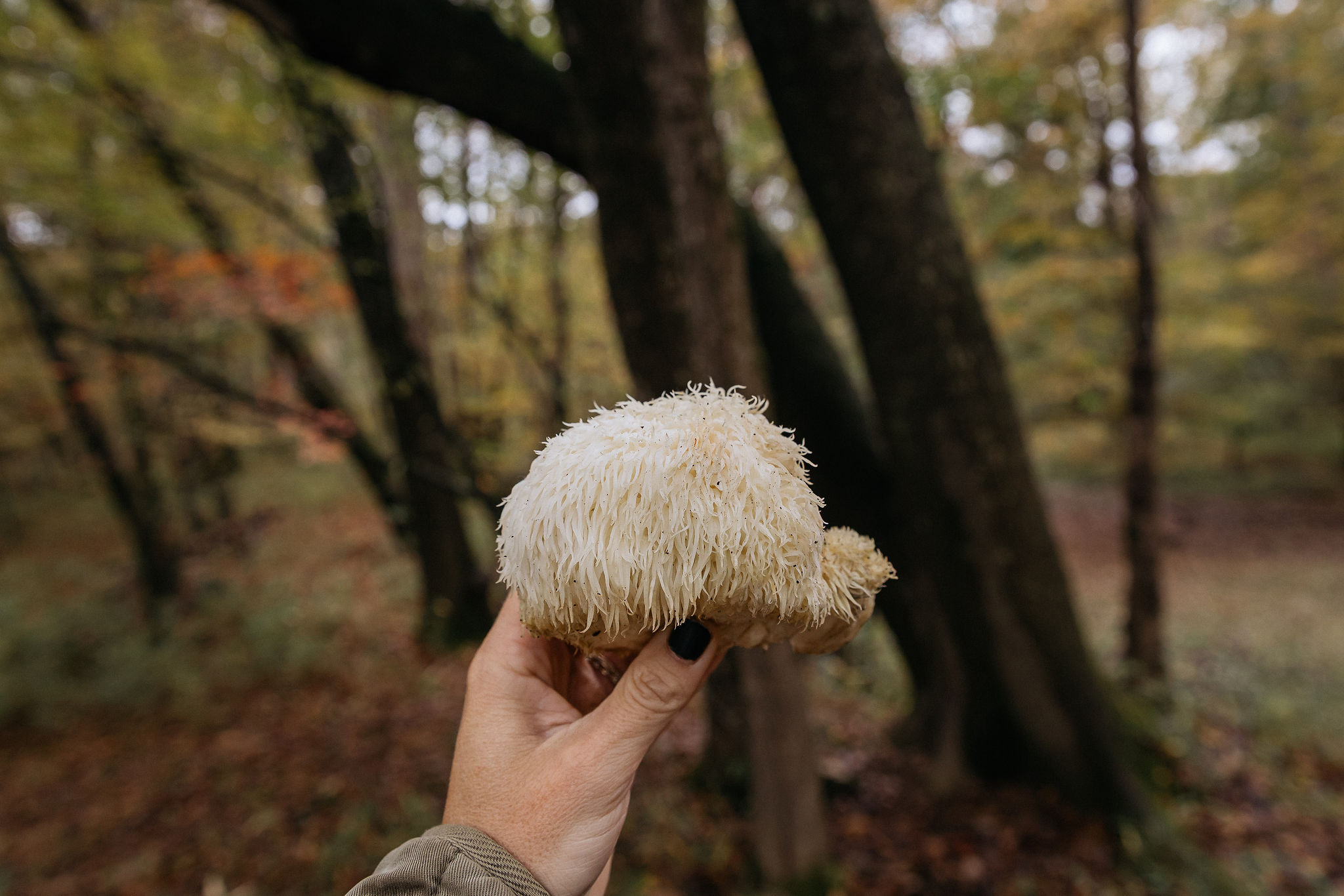
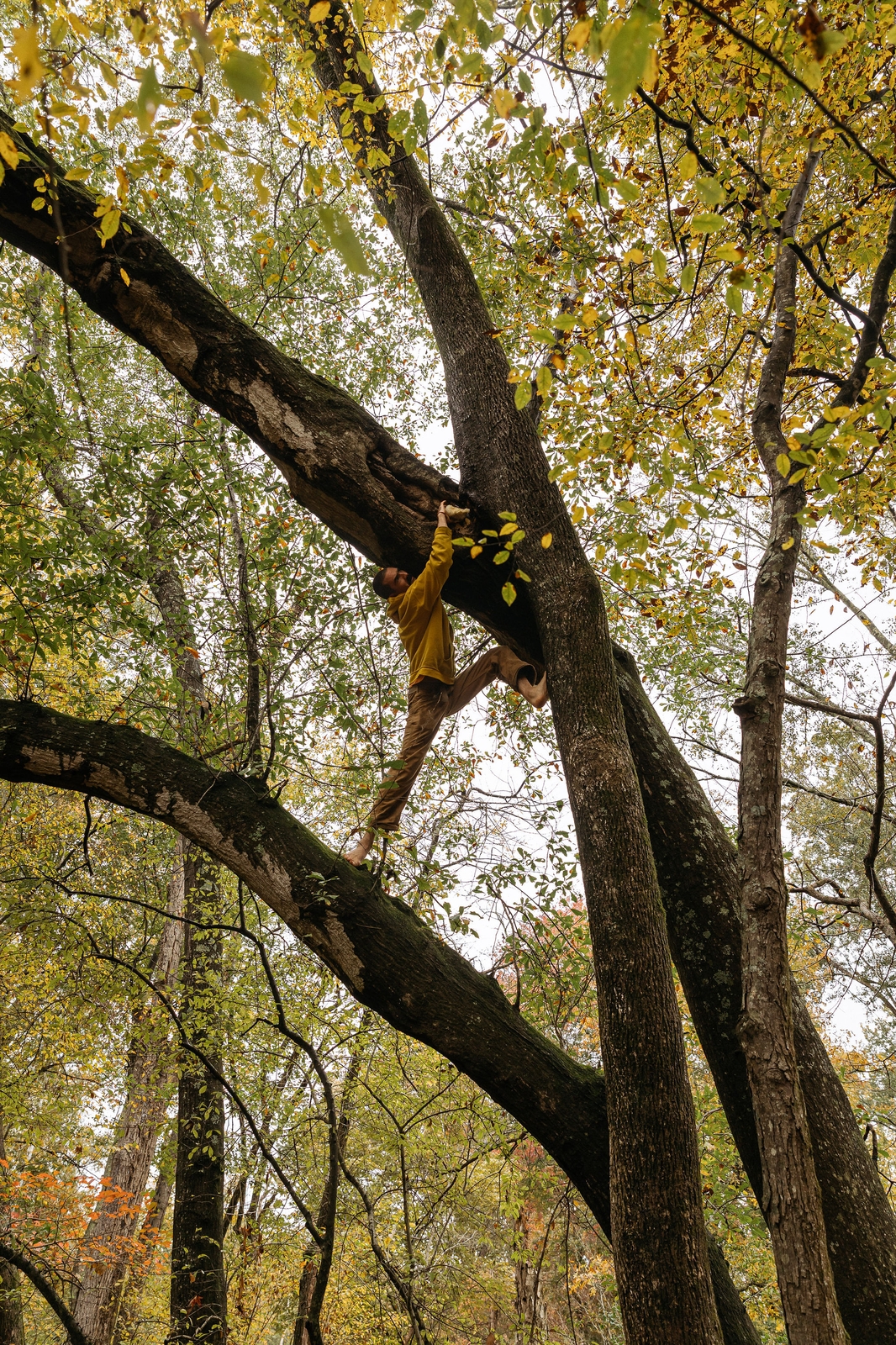
Twenty feet in the air, in the crook of two branches on a water oak, there's the tell-tale white snowball puff.
A lion's mane mushroom.
Sure, we've seen them before, every week at the Main Street Market and with our Sewanee friends from Midway Mushrooms.
But those are grown indoor, with recipes and grow lights and lab-like conditions.
Here? This was wild.
A wild lion's mane.
And that made all the difference.
While we're craning our necks and gawking like tourists, Logan's already at the base of the oak, shoes off ...
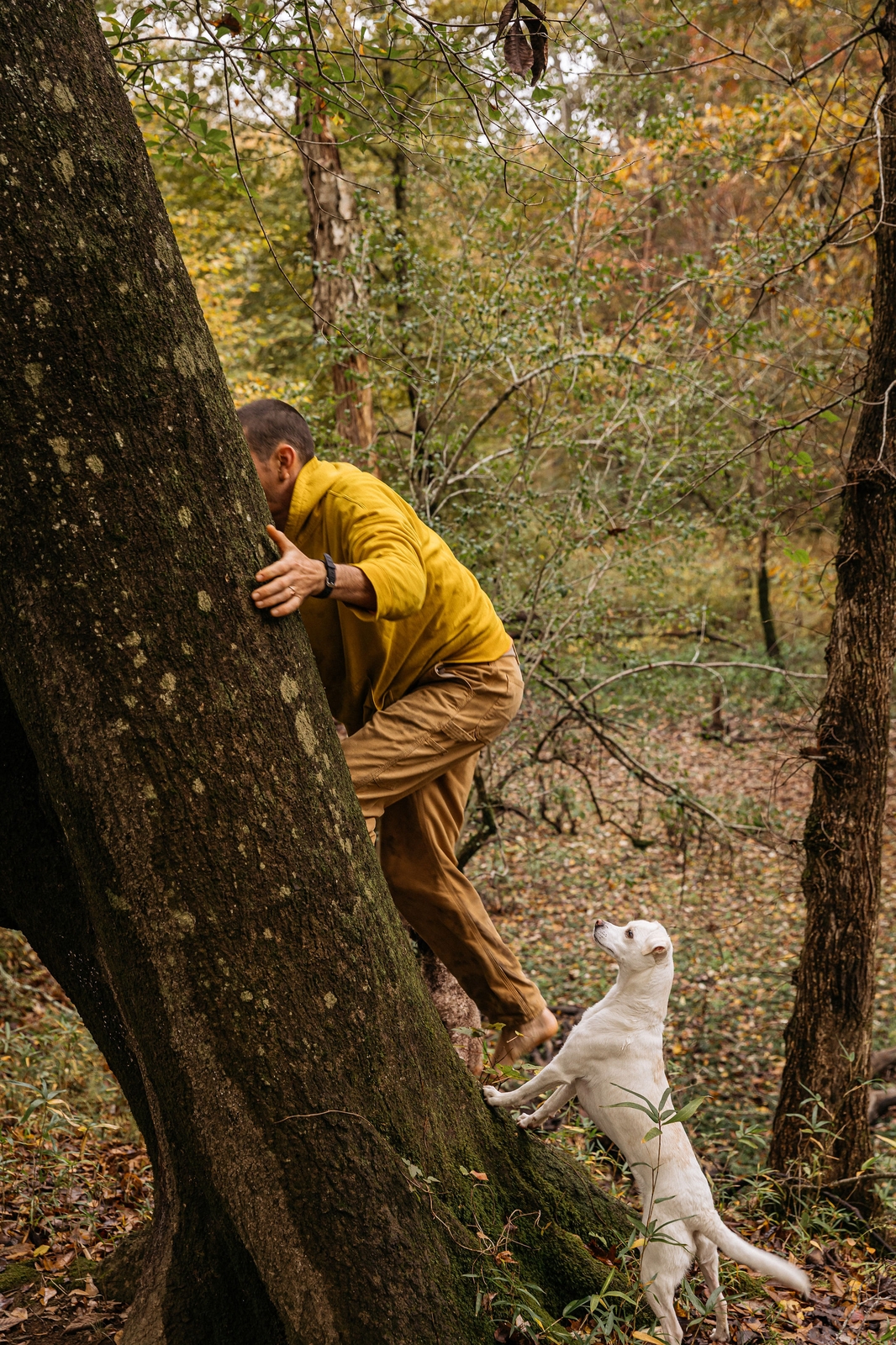
Up he goes.

Higher.
And higher.
He warrior-poses his arms until fingertips touch the wild mushroom, and gently breaks off the main white puff at the stem.

Back to the ground, lickety-split, smiling like he'd beat the band. It was thrilling to watch. We're all goosed with micro-doses of joy. (Watch him climb here.)
"Finding something like this? It's the ultimate dopamine rush," he said. "It makes me so happy. I generally scream for joy."
(A half-hour later, he's got tears in his eyes, he's so happy, as we'll witness something so special that none of us, even Logan, has ever seen.)
Welcome to the world of foraging.
"It really is so rewarding in so many ways," he said. "It teaches you resilience. It teaches you patience."
Each week, Logan and partner Katie Cloud will spend hours roaming the woods — public and private land — searching for, well, the things the rest of us pass by.
Nuts, bark, fruit, foliage, plants, leaves, stems and, most of all, mushrooms.
"There's a constant flow of things to forage," he said.
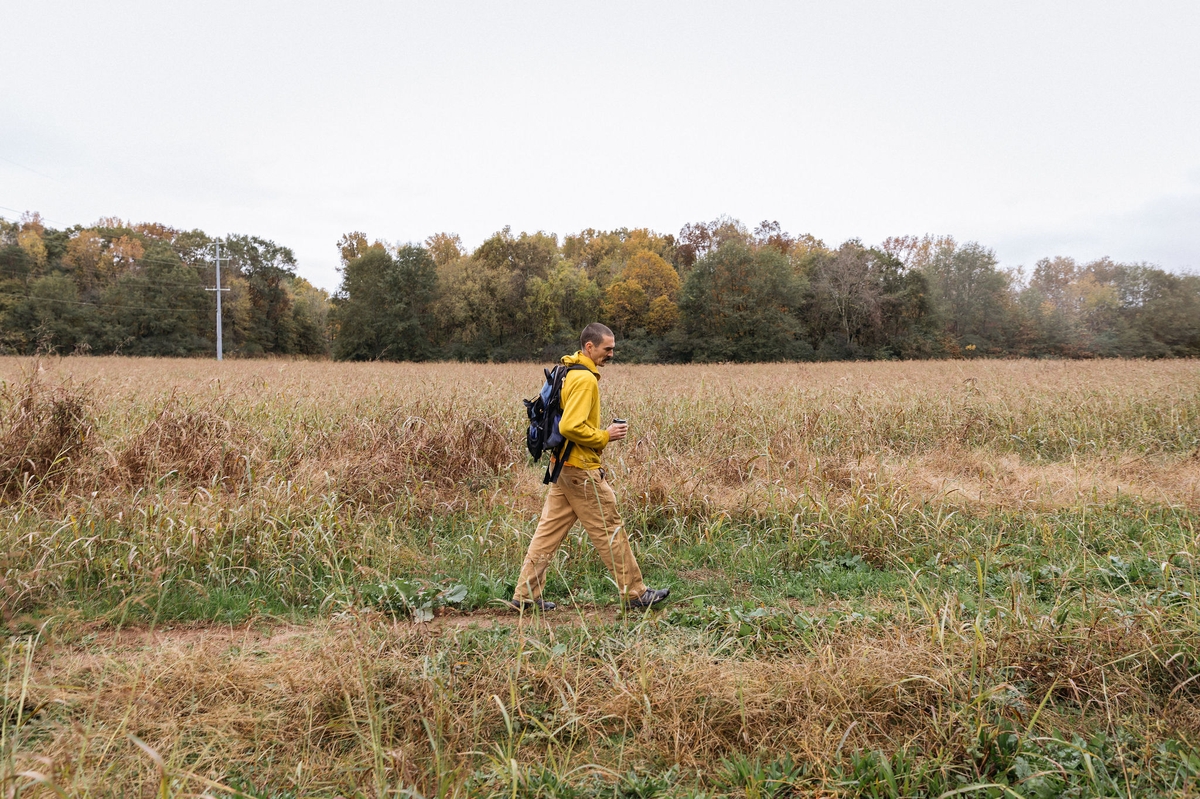
This is foraging: to search for and receive the abundance offered within the natural world.
Simply put: Logan and Katie see what most of us don't. The plant we step past as we walk by? It's dinner. The red berries growing on the vine? No, no, those make you sick, he said. But these?
"Rose hips," he said. "Here, try."
It is like putting on an entirely new set of eyewear.
"It's such a vast, vast world," he said. "So many things you think aren't edible actually are."
This, too, is foraging:
An ongoing fight against the endless numbing of the human spirit. Foraging returns us to this electric, invigorating world of adventure and autonomy. We are meant for greater things than Costco and Lunchables.
"People are diminished. People aren't very vibrant," he said.
"I want to see what the world has to offer."

Logan Lewis grew up in 1990s Chattanooga, a skateboarder in a town that didn't always take kindly to skaters. So, he had to improvise, training his eyes to always look, always on alert, always searching and radaring for the next best place to skate.
It made him the perfect forager.
"I never stop foraging, even when I'm not out here," he said. "It's something hard to turn off."
As a skater, he was always looking for new skate spots. As a forager, the same brain is now searching for edible food.
"Everything I consider potential forage," he said. "Blackberries along a country roadside. A pecan tree in somebody's back yard."
Over the last several years, he's built a network of private land-owning friends who allow him to come forage. More than 3,000 acres of private property.
He's foraged feral asparagus on roadside ditches.
And the 30 pounds of wild elephant garlic he's found at a nearby historic battlefield. The 70 pounds of chanterelle mushrooms foraged in the wild last year.
The 300 pounds of figs he foraged this year.
And 600 pounds of pears.
"All that comes from knocking on people's doors," he said, offering that gentle invitation:
Can we help you pick some of that?
"Ninety-nine percent of the population is not motivated to go outside and pick their own food," he said.
We pause in the fields, just before the forest. There is food, quite literally, right at our feet.
"Going to stop and show ya'll this real quick," he said.
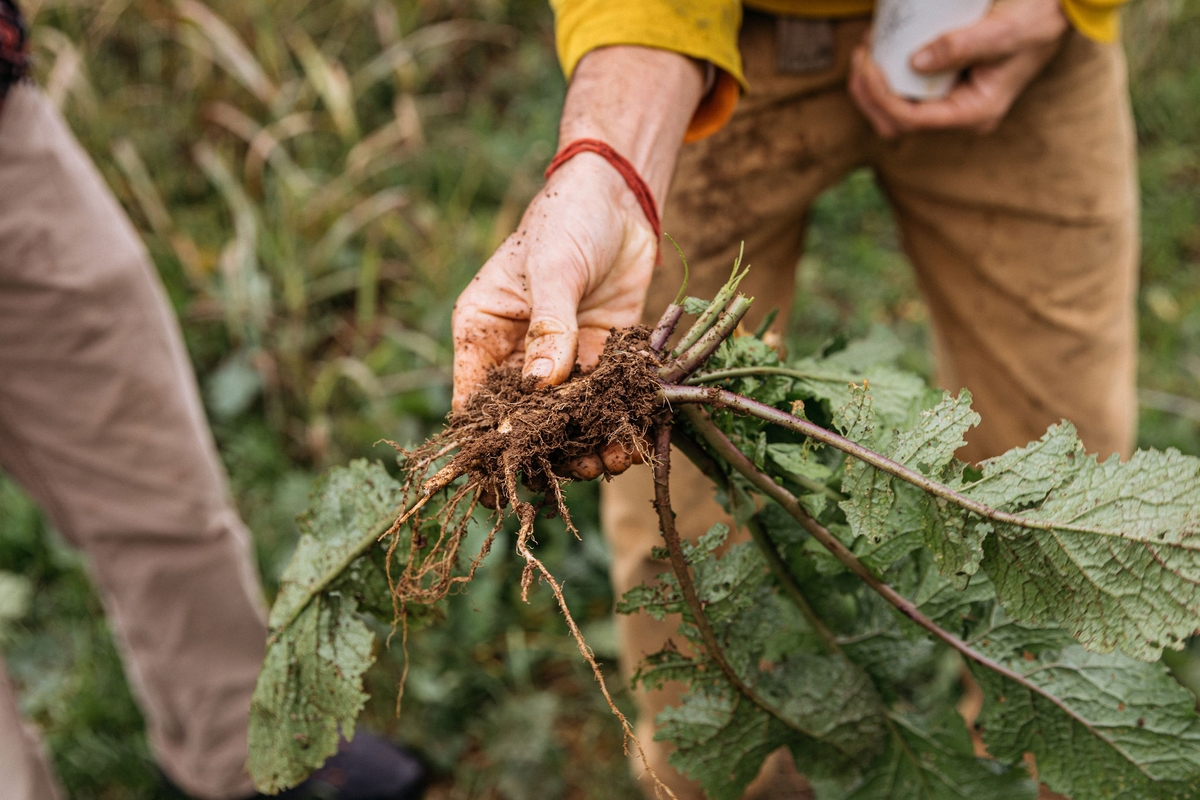
He bends down, yanks up the plant I'd just stepped right over.
"Turnip greens," he said. "That brassica mustardy. Smell this."
Here are some general guidelines for foraging:
"All public land has its own set of rules," Logan said.
Some state parks allow foraging for personal use, but not all. The Tennessee Valley Authority allows personal foraging on its publicly-managed land, but in national parks, you need a permit.
"If you're selling hunting licenses, why not throw in fruits and mushrooms?" Logan said. "You can make money from people who don't want to shoot animals."
Usually, personal foraging equals about a gallon or whatever reasonable amount you can carry in your hands.
"That's what we're doing today," he said.
In 2021, he and Katie launched Stem & Stipe, their foraging business that sells foraged foods — and often mushrooms — to restaurants and at the Main Street Farmers' Market.
(Easy Bistro's Chef Ben Wilt has foraged with Logan here, too. Chef Andrew Millsaps at Old Man Rivers is a good friend, Logan said.)
Stem & Stipe also donates 100s of pounds of food to community fridges.
"Our focus is fungi, fruit and foliage," he said.
It started young; his dad would take him out to pick wild, roadside blackberries. Would point out sassafras root.
Then, he began working in restaurants. Taco Mamasita at 17, then, at 24, the sous chef for Root.
One day, a local forager brought in oyster mushrooms. Not just any oysters.
"They were pristine," Logan said.
Not long after, he was hiking through a blue hole wilderness. Spied something growing on a log.
"They were so beautiful," he said, "and looked exactly like the oysters brought to our restaurant.
"The wheels started turning in my head."
Logan, 33, has been foraging commercially for the last decade.
Goal one?
"Take care of my own food," he said, "and teach others to the point they can do the same."
And goal two?
Well, we realize goal two soon.

After our lion's mane snowball in the tree, we keep hiking, peppering him with questions.
- What are the best conditions for foraging?
"Wet, gray, overcast," he said. "You learn to love those days. They're so much easier on the eyeballs. If you're out in dappled sunshine looking for mushrooms, you've got burnout eyeballs."
- What do you normally find the most?
"Trash," he said.
It's true. We could have filled a garbage bag with trash: cans, bottles, wrappers, red and blue plastic shotgun shells.
"I've removed near 1000 pounds of trash over the eight years of intensive foraging," he said.
- Bet you've seen some pretty special things over the years.
"I've come across an American snapping turtle laying eggs," he said. "I've come within three feet of a sleeping fawn just curled up. She doesn't even know you're there."
There's "a grumpy old heron" he sees often in Hixson.
He's found lion's mane that were "as big as soccer balls."
- Ever eaten the wrong thing and gotten sick?
Yes, he said.
"It was a very cleansing experience," he said. "It came out of both ends."
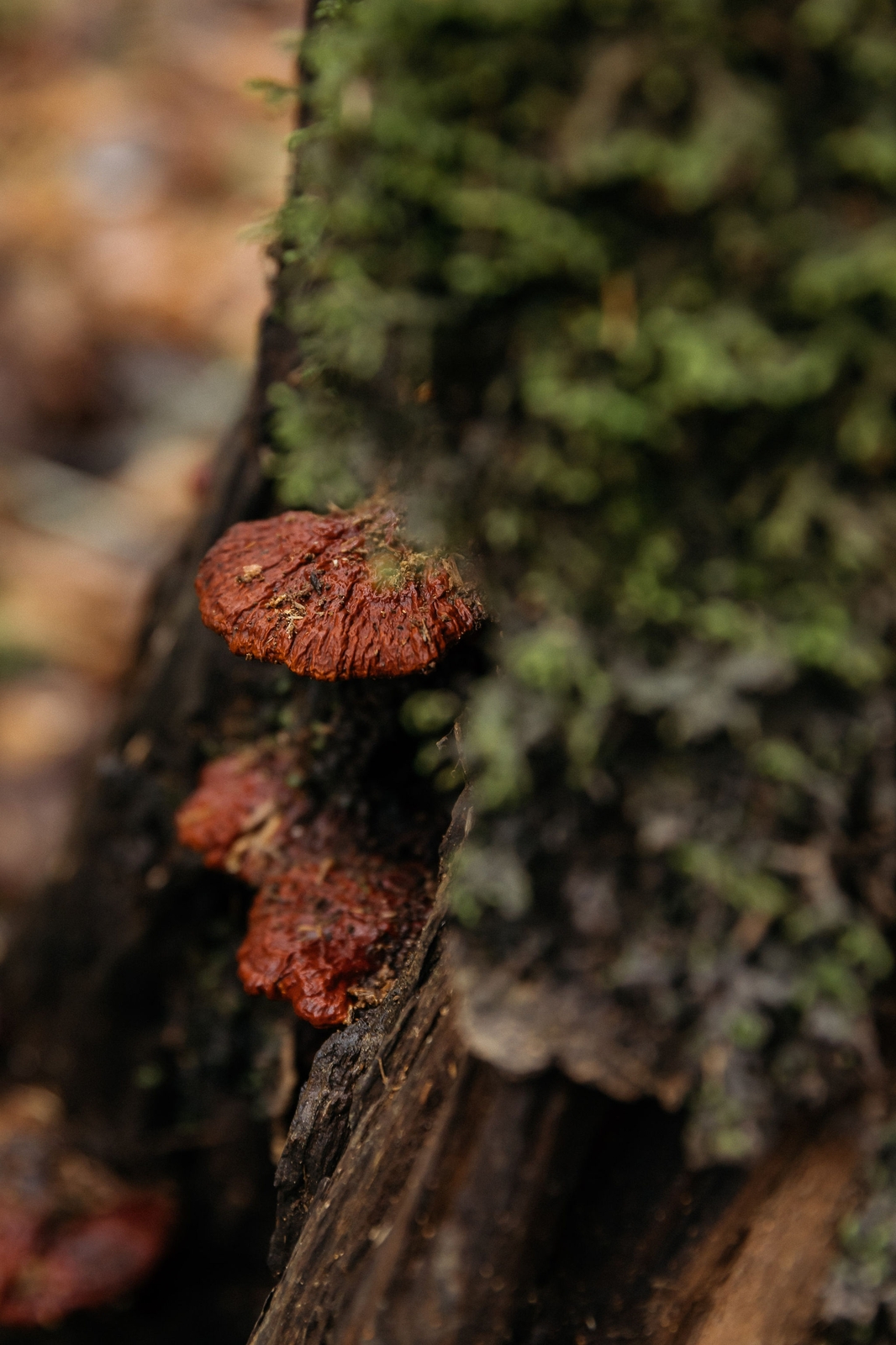
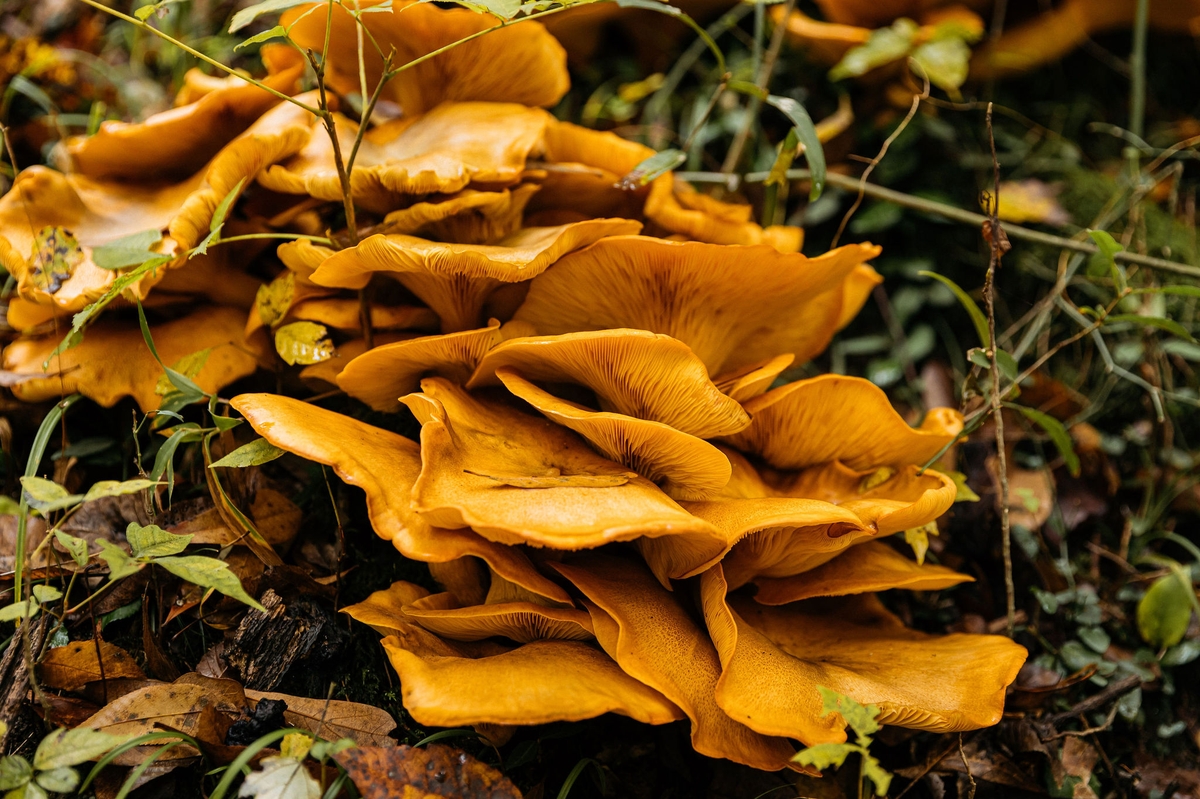
Logan misidentified Jack-o-lanterns as Chantarelles.
"I misidentified and got sick. I was a very young and un-knowledgable forager," he said.
Here are some more general guidelines for foraging:
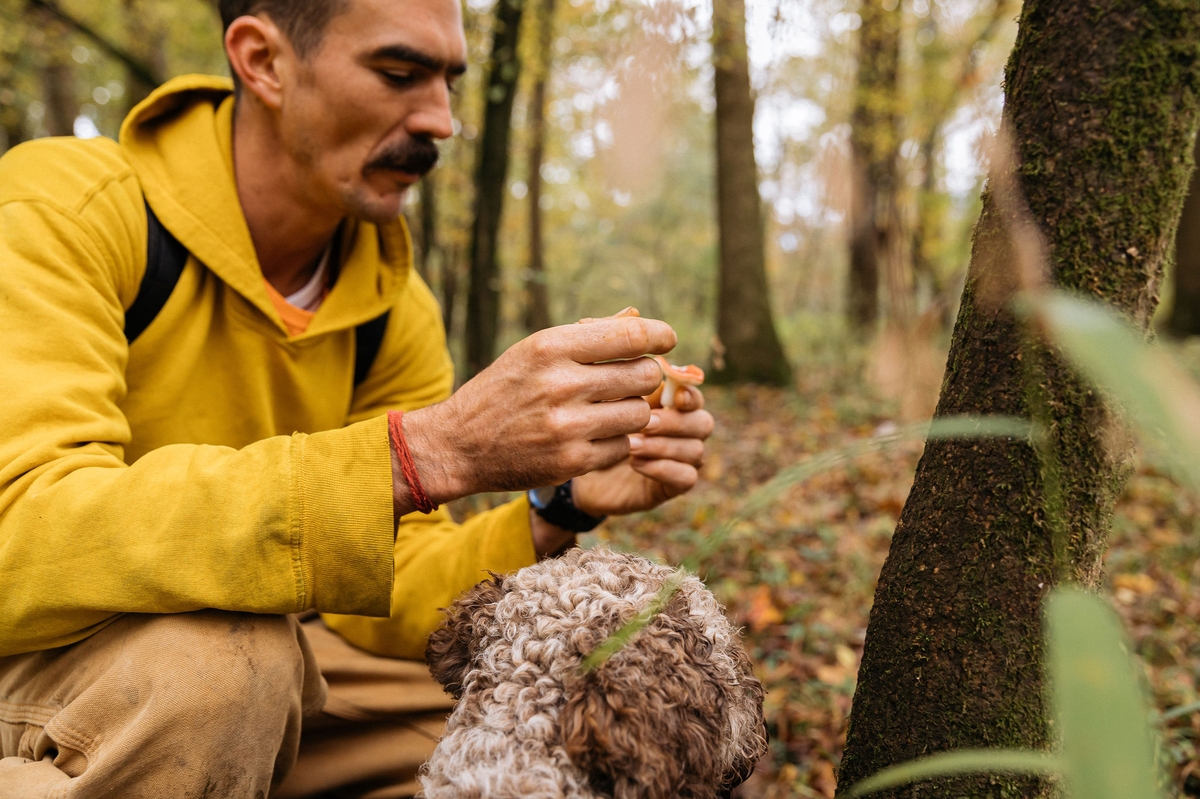
Don't do it casually. Go with an expert. Or better: several experts.
Logan makes it look easy, but only after years of study. He shouts-out the Tennessee Foragers and Mushroom Hunters.
"I have learned so much from the people in that group," he said.
In our Southern woods, there are two well-known deadly toxic mushrooms, he said.
"One of them is known as the Destroying Angel," he said. "The other is common-named Funeral Bells which is a look-alike for the choice edible enoki."
But with knowledge comes freedom.
Watching Logan forage causes my own conditioning to shake and wobble. I've been taught, well, many things about food, like this:
Food only comes from the grocery store.
Food in the wild is dangerous and deadly.
Especially — gasp — mushrooms.
"A fungi phobia," Logan said. Culturally, we've been taught since birth: food comes from inside a store.
Not the wild. Not the woods.
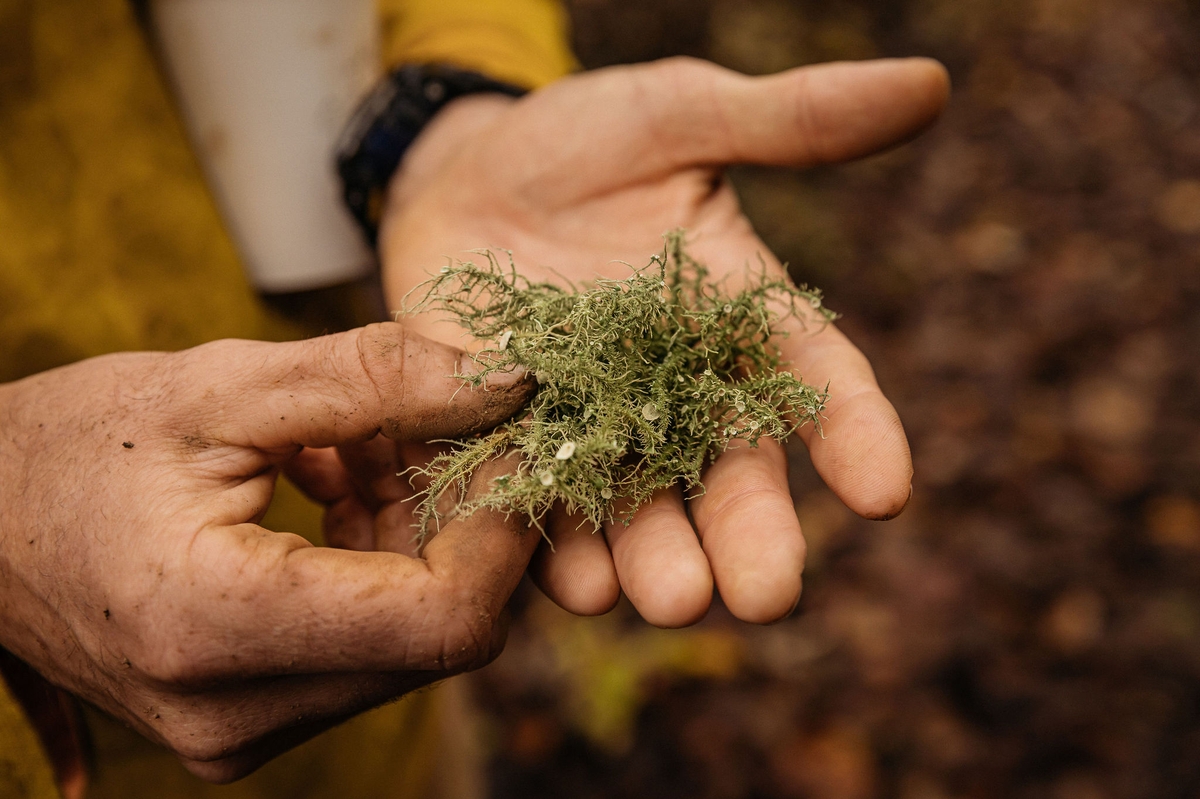
Along the way, we've stopped by various mushrooms. Reishi. Umami. One that Sarah says looks like something out of the Upside Down.
Imagine the freedom and confidence to know what exactly is what. To call things by their true name. It would turn so much Right Side Up.

In 2018, he began a "health journey" in response to eczema and chronic bronchial infections.
This included a new daily diet: juice for breakfast, fruit during the day and only one meal for dinner.
Often, foraged mushrooms are dinner.
Which is good news.
Because, rounding the bend of the creek bank, we just found the motherlode.
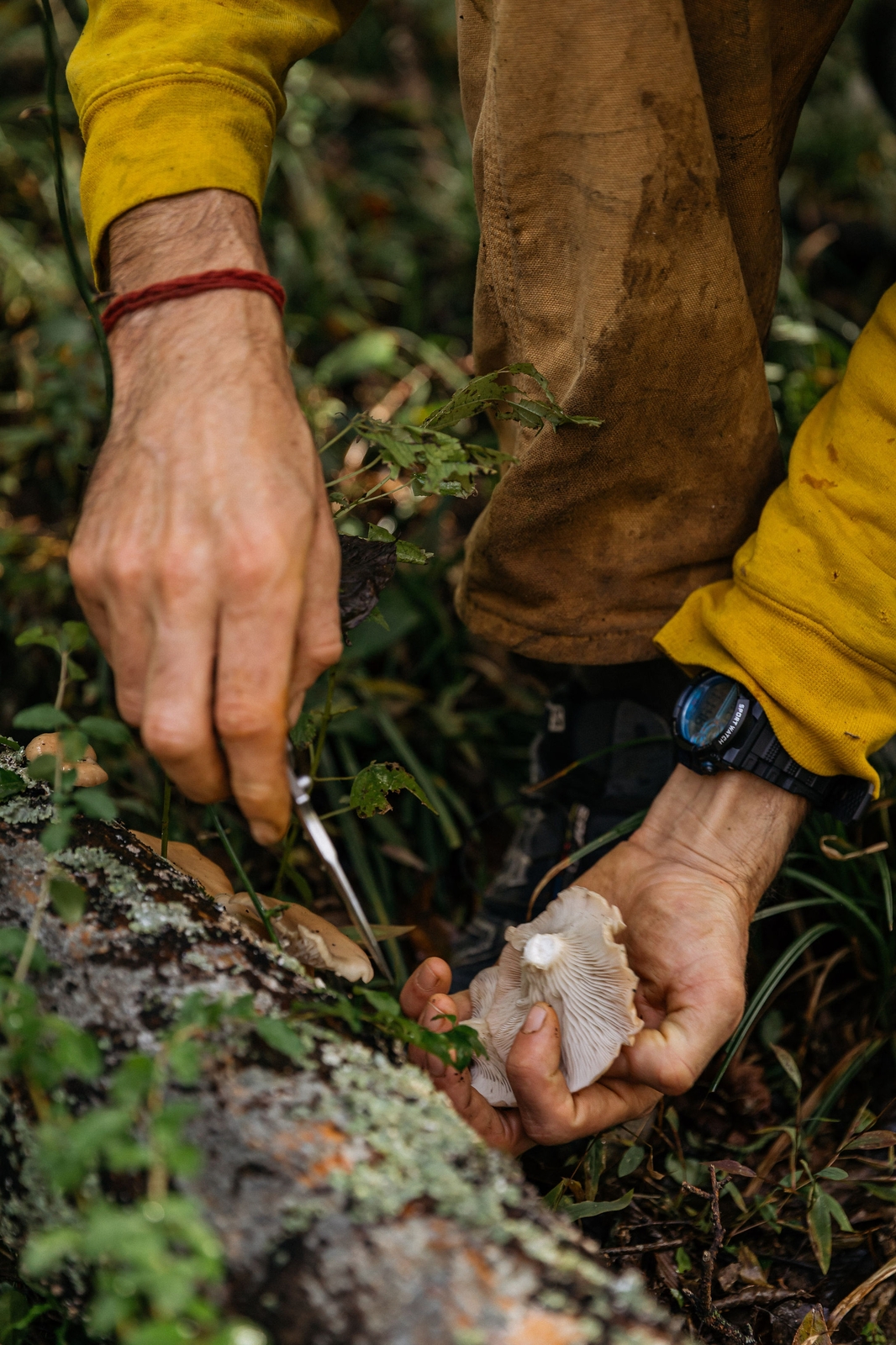
Oyster mushrooms.
"They're just everywhere," he says, laughing with joy.
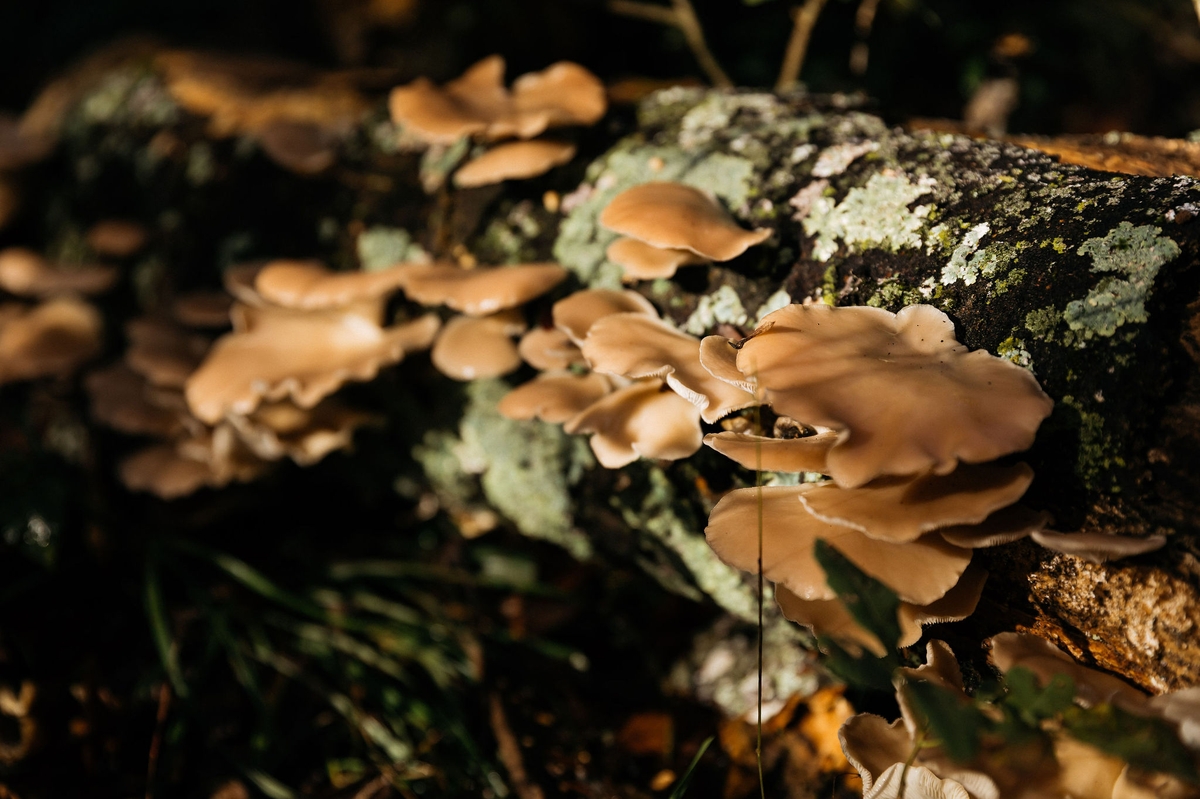
The oysters are on the side of logs. Underneath logs. At the end of logs.
"Look at the size of these," he said, still laughing. "These are super beautiful.
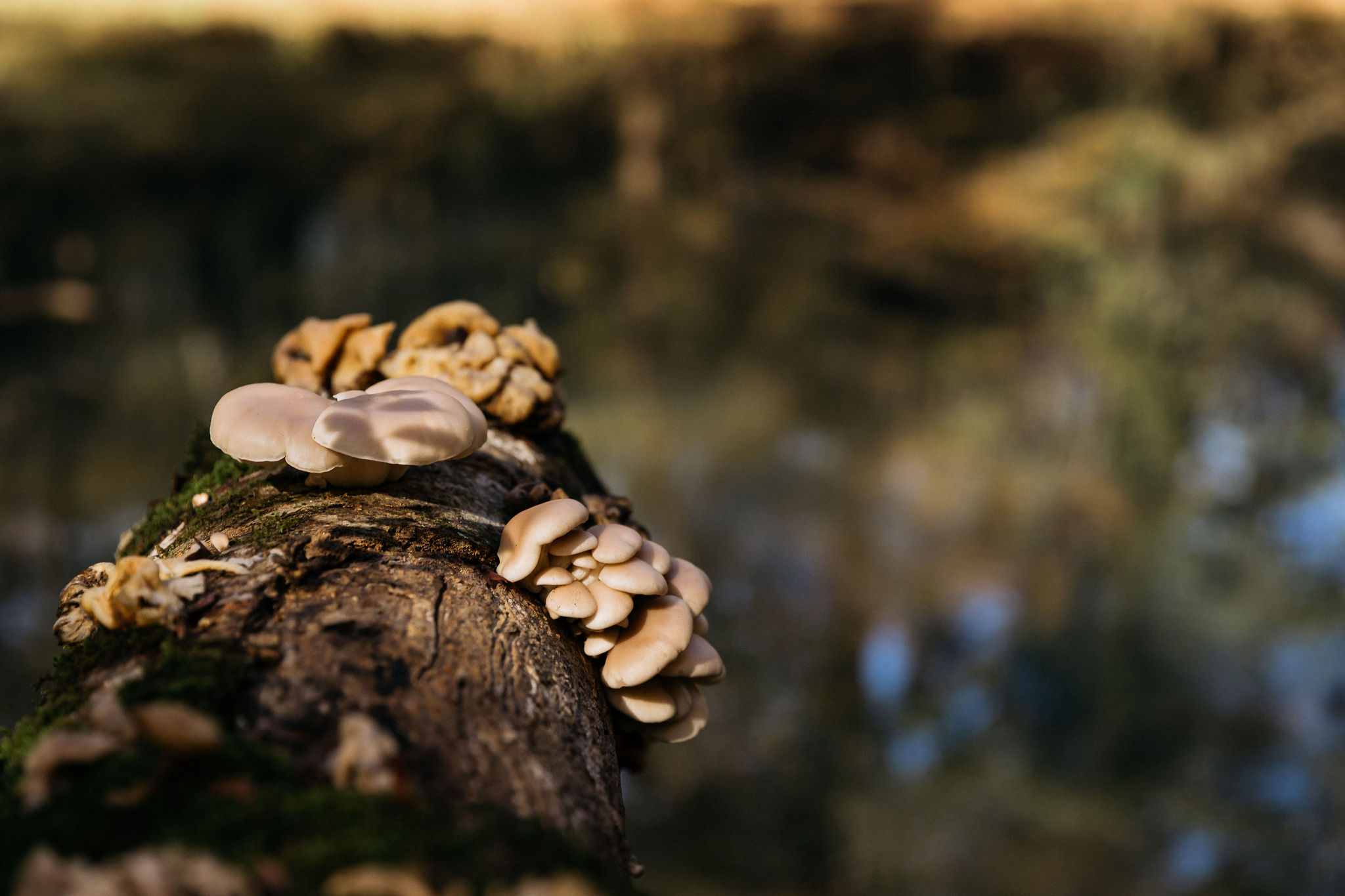
It is unforgettable, encountering food in this way. It pokes and prods and undoes decades of conditioning and supermarket experience:
If I wanted to see this many oyster mushrooms, I'd go to the grocery store.
But here?
They're also growing in the wild.
Food, offered in its original form.
He takes out his knife and cloth bag.
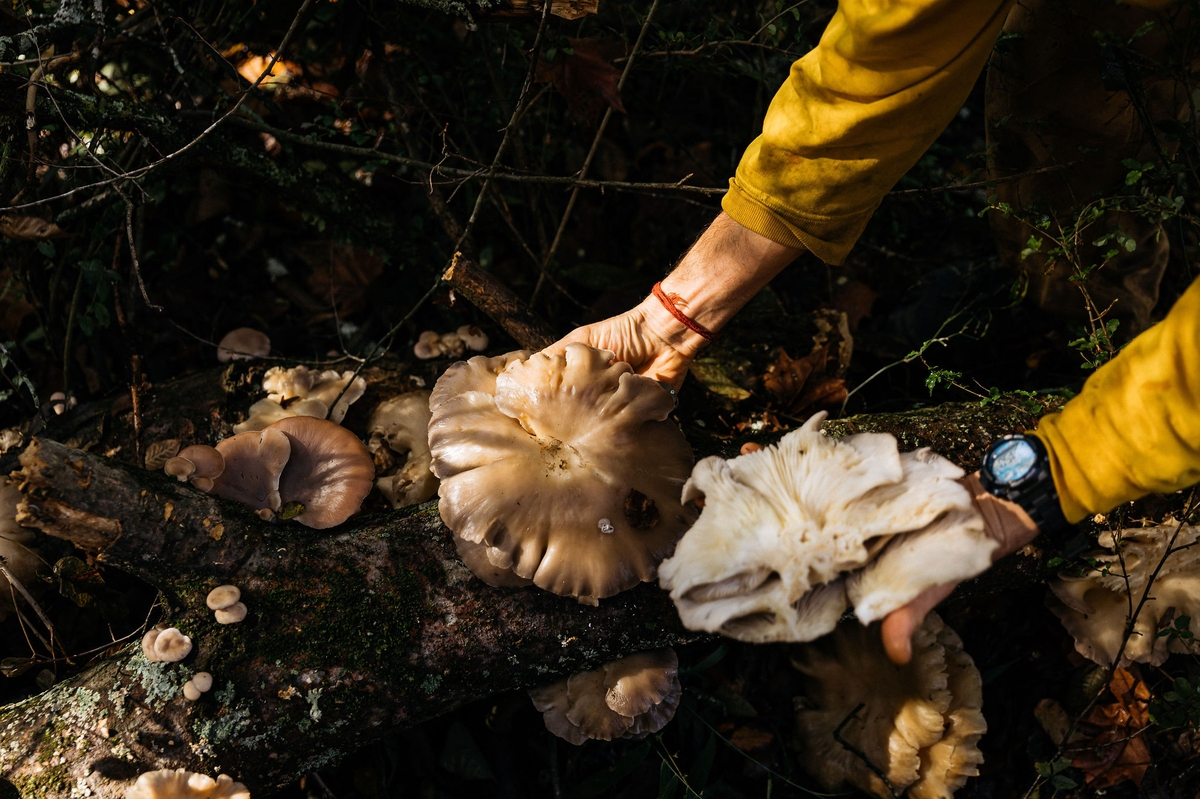
"You cannot over-harvest wild mushrooms," he said. "The more people that do this, the more abundance there will be.
"We try to keep that abundant mindset."
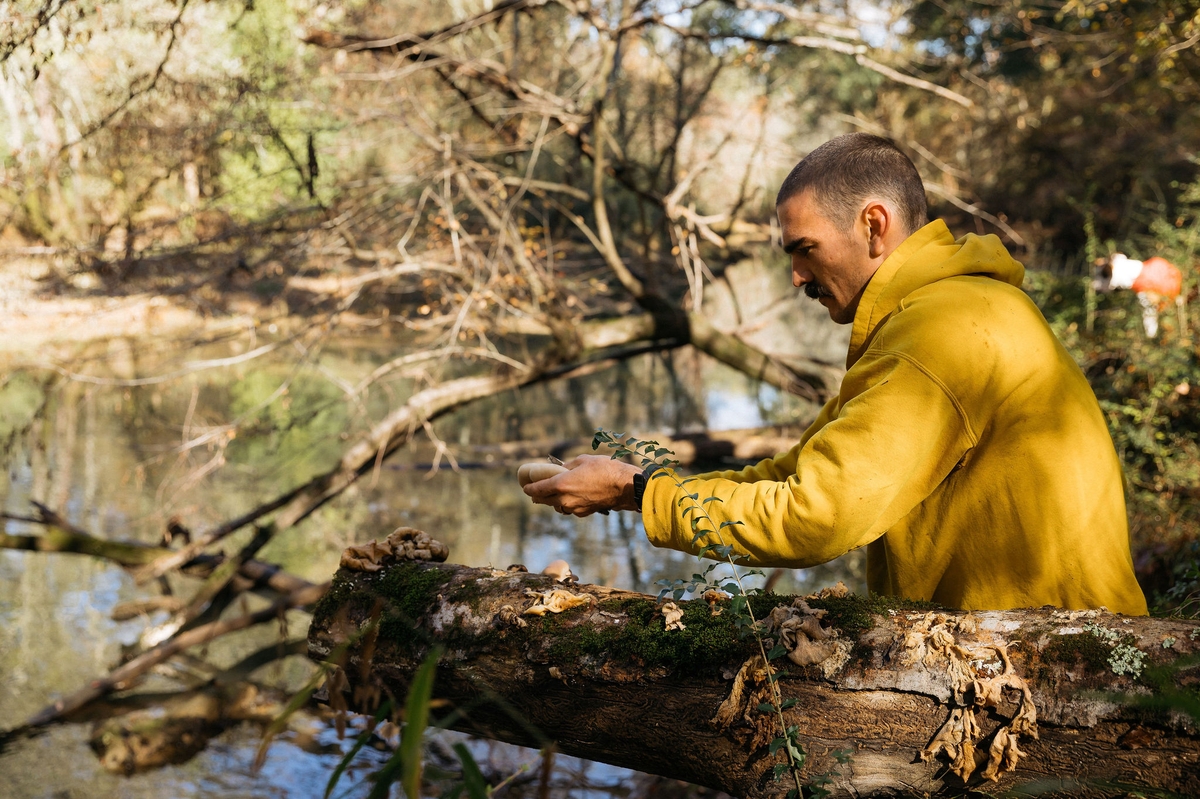
"That's how nature presents itself," he said. "With so much abundance."
He gathers oyster mushrooms, then we start back for the trailhead.
Then, more abundance.
There they are, under the November sun.
Trees with oysters high on their trunk.

And they're releasing spores.
There are the teensiest-tiniest holes in the oyster mushrooms that seem to be off-gassing, releasing even tinier little dots — spores, seeds — into the air.
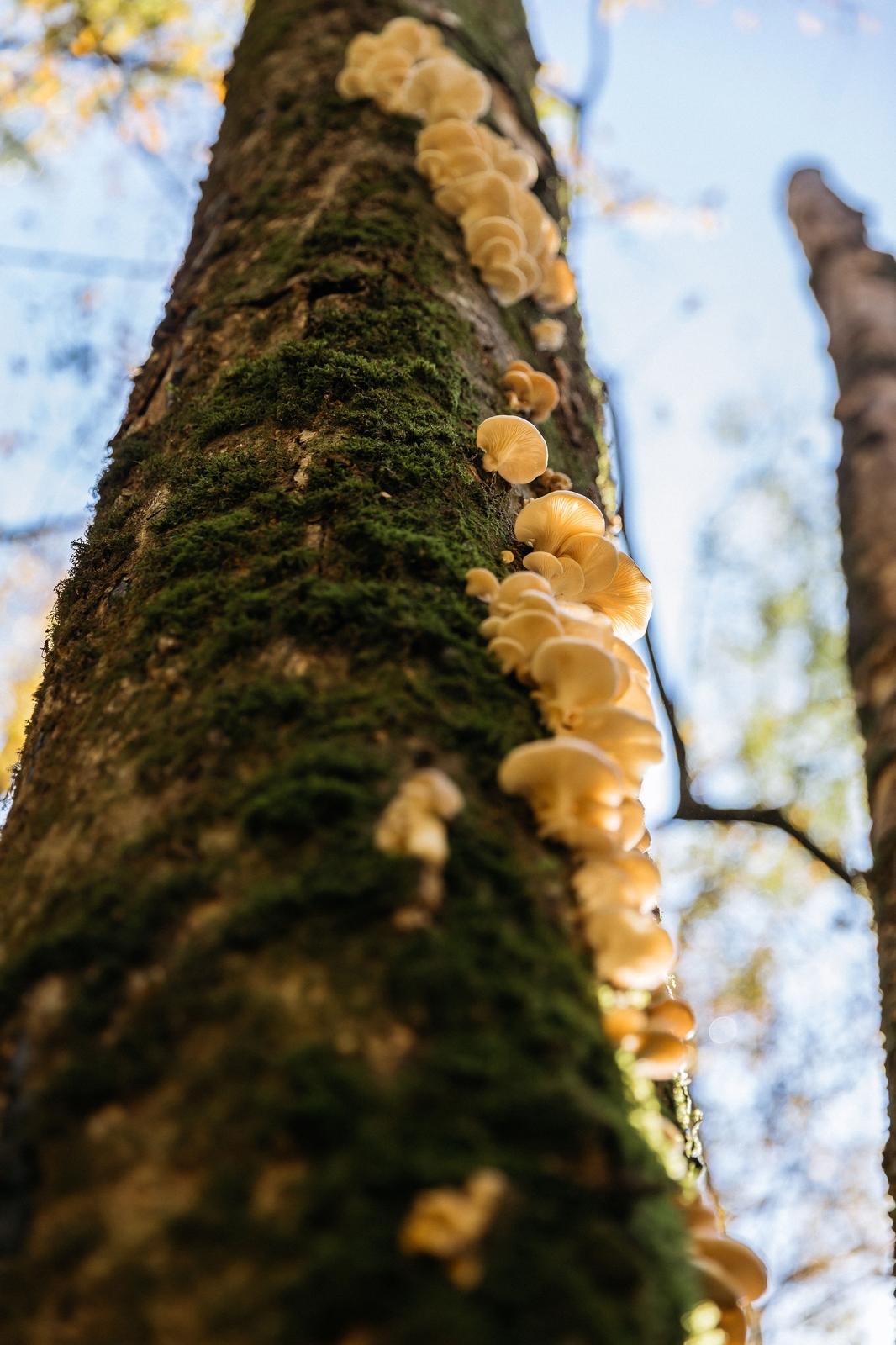
"You can see them sporing in the sunlight," he said, near ecstatic.
(Watch them here.)
Radiant in the sunlight, caught in the wind, the spores are the epitome of abundance.
It feels sacred, as if we've stepped into some fantasy novel scene.
"It's fucking magical," he said. "They're just pumping spores. I've always wanted to see this."
We have found something else foraging.
Awe.
"Millions, probably billions and trillions of spores coming out of them," he said.
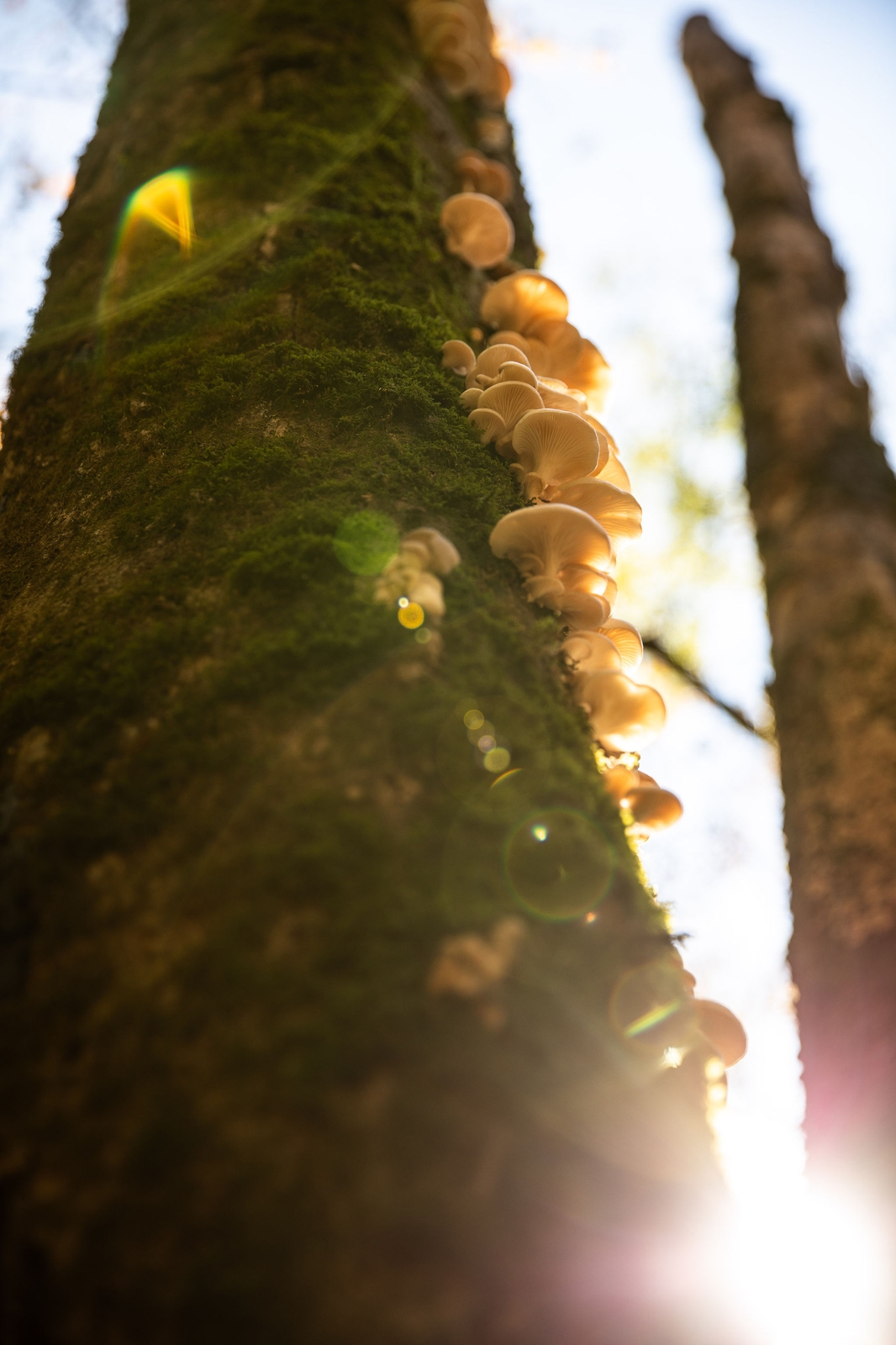
We head back for the car, having returned, like any good adventure, markedly different.
At the end of our morning, we'd foraged a lot more than wild mushrooms.
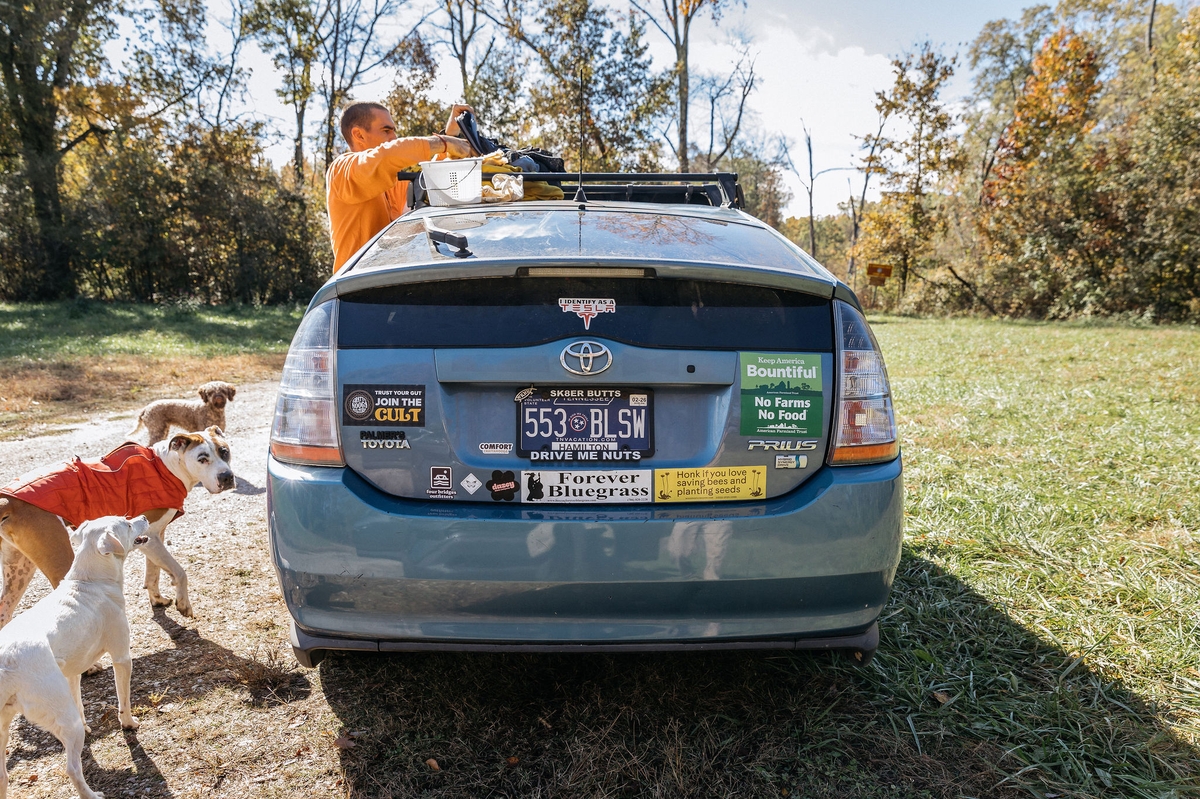
Thus, goal two.
We foraged up a little bit of our lost selves.
"This desire to re-wild our lives," he said.
"And this little blip of an experience that we have in the grand scheme of things is truly remarkable.
"And so the more people that we can inspire to get more involved with their food, the better of the world's gonna be."
The funeral bells will ring for all of us at some point.
But not yet.
Not today.
There is still life left to be foraged.
Why do it, Logan?
"For me?" he said. "The human spirit."
"For me?" he said. "The human spirit."Story ideas, questions, feedback? Interested in partnering with us? Email: david@foodasaverb.com
This story is 100% human generated; no AI chatbot was used in the creation of this content.
A mile or so into the woods, Logan Lewis pauses, mid-step almost, as if his antennae are dialed into some frequency that says:
The good stuff. It's close.
We've been with him and his three dogs — Elvis, Sadie and Lilly, a burgeoning truffle hunter — for nearly an hour, over the river and through the woods, searching through state-managed forested wetlands in Hixson.
The whole time, we've kept our eyes on the prize. Well, that's not true. We've been looking for the prize, searching, scanning, peering for lion's mane mushroom, the puffy white snowball fungi that grows on trees and tastes like the finest thing this side of sliced bread.
That's when Logan pauses, alert.
"Keep your eyes open," he said. "I see it."
We pause now, too, spines straight, eyes wide.
"It's in your field of vision," he encourages.
Sarah and I both scour the ground, heads-down like bird dogs on a scent. Is it on that log? Near that stump?
Nope.
"Look up," Logan said.
Twenty feet in the air, in the crook of two branches on a water oak, there's the tell-tale white snowball puff.
A lion's mane mushroom.
Sure, we've seen them before, every week at the Main Street Market and with our Sewanee friends from Midway Mushrooms.
But those are grown indoor, with recipes and grow lights and lab-like conditions.
Here? This was wild.
A wild lion's mane.
And that made all the difference.
While we're craning our necks and gawking like tourists, Logan's already at the base of the oak, shoes off ...
Up he goes.
Higher.
And higher.
He warrior-poses his arms until fingertips touch the wild mushroom, and gently breaks off the main white puff at the stem.
Back to the ground, lickety-split, smiling like he'd beat the band. It was thrilling to watch. We're all goosed with micro-doses of joy. (Watch him climb here.)
"Finding something like this? It's the ultimate dopamine rush," he said. "It makes me so happy. I generally scream for joy."
(A half-hour later, he's got tears in his eyes, he's so happy, as we'll witness something so special that none of us, even Logan, has ever seen.)
Welcome to the world of foraging.
"It really is so rewarding in so many ways," he said. "It teaches you resilience. It teaches you patience."
Each week, Logan and partner Katie Cloud will spend hours roaming the woods — public and private land — searching for, well, the things the rest of us pass by.
Nuts, bark, fruit, foliage, plants, leaves, stems and, most of all, mushrooms.
"There's a constant flow of things to forage," he said.
This is foraging: to search for and receive the abundance offered within the natural world.
Simply put: Logan and Katie see what most of us don't. The plant we step past as we walk by? It's dinner. The red berries growing on the vine? No, no, those make you sick, he said. But these?
"Rose hips," he said. "Here, try."
It is like putting on an entirely new set of eyewear.
"It's such a vast, vast world," he said. "So many things you think aren't edible actually are."
This, too, is foraging:
An ongoing fight against the endless numbing of the human spirit. Foraging returns us to this electric, invigorating world of adventure and autonomy. We are meant for greater things than Costco and Lunchables.
"People are diminished. People aren't very vibrant," he said.
"I want to see what the world has to offer."
Logan Lewis grew up in 1990s Chattanooga, a skateboarder in a town that didn't always take kindly to skaters. So, he had to improvise, training his eyes to always look, always on alert, always searching and radaring for the next best place to skate.
It made him the perfect forager.
"I never stop foraging, even when I'm not out here," he said. "It's something hard to turn off."
As a skater, he was always looking for new skate spots. As a forager, the same brain is now searching for edible food.
"Everything I consider potential forage," he said. "Blackberries along a country roadside. A pecan tree in somebody's back yard."
Over the last several years, he's built a network of private land-owning friends who allow him to come forage. More than 3,000 acres of private property.
He's foraged feral asparagus on roadside ditches.
And the 30 pounds of wild elephant garlic he's found at a nearby historic battlefield. The 70 pounds of chanterelle mushrooms foraged in the wild last year.
The 300 pounds of figs he foraged this year.
And 600 pounds of pears.
"All that comes from knocking on people's doors," he said, offering that gentle invitation:
Can we help you pick some of that?
"Ninety-nine percent of the population is not motivated to go outside and pick their own food," he said.
We pause in the fields, just before the forest. There is food, quite literally, right at our feet.
"Going to stop and show ya'll this real quick," he said.
He bends down, yanks up the plant I'd just stepped right over.
"Turnip greens," he said. "That brassica mustardy. Smell this."
Here are some general guidelines for foraging:
"All public land has its own set of rules," Logan said.
Some state parks allow foraging for personal use, but not all. The Tennessee Valley Authority allows personal foraging on its publicly-managed land, but in national parks, you need a permit.
"If you're selling hunting licenses, why not throw in fruits and mushrooms?" Logan said. "You can make money from people who don't want to shoot animals."
Usually, personal foraging equals about a gallon or whatever reasonable amount you can carry in your hands.
"That's what we're doing today," he said.
In 2021, he and Katie launched Stem & Stipe, their foraging business that sells foraged foods — and often mushrooms — to restaurants and at the Main Street Farmers' Market.
(Easy Bistro's Chef Ben Wilt has foraged with Logan here, too. Chef Andrew Millsaps at Old Man Rivers is a good friend, Logan said.)
Stem & Stipe also donates 100s of pounds of food to community fridges.
"Our focus is fungi, fruit and foliage," he said.
It started young; his dad would take him out to pick wild, roadside blackberries. Would point out sassafras root.
Then, he began working in restaurants. Taco Mamasita at 17, then, at 24, the sous chef for Root.
One day, a local forager brought in oyster mushrooms. Not just any oysters.
"They were pristine," Logan said.
Not long after, he was hiking through a blue hole wilderness. Spied something growing on a log.
"They were so beautiful," he said, "and looked exactly like the oysters brought to our restaurant.
"The wheels started turning in my head."
Logan, 33, has been foraging commercially for the last decade.
Goal one?
"Take care of my own food," he said, "and teach others to the point they can do the same."
And goal two?
Well, we realize goal two soon.
After our lion's mane snowball in the tree, we keep hiking, peppering him with questions.
- What are the best conditions for foraging?
"Wet, gray, overcast," he said. "You learn to love those days. They're so much easier on the eyeballs. If you're out in dappled sunshine looking for mushrooms, you've got burnout eyeballs."
- What do you normally find the most?
"Trash," he said.
It's true. We could have filled a garbage bag with trash: cans, bottles, wrappers, red and blue plastic shotgun shells.
"I've removed near 1000 pounds of trash over the eight years of intensive foraging," he said.
- Bet you've seen some pretty special things over the years.
"I've come across an American snapping turtle laying eggs," he said. "I've come within three feet of a sleeping fawn just curled up. She doesn't even know you're there."
There's "a grumpy old heron" he sees often in Hixson.
He's found lion's mane that were "as big as soccer balls."
- Ever eaten the wrong thing and gotten sick?
Yes, he said.
"It was a very cleansing experience," he said. "It came out of both ends."
Logan misidentified Jack-o-lanterns as Chantarelles.
"I misidentified and got sick. I was a very young and un-knowledgable forager," he said.
Here are some more general guidelines for foraging:
Don't do it casually. Go with an expert. Or better: several experts.
Logan makes it look easy, but only after years of study. He shouts-out the Tennessee Foragers and Mushroom Hunters.
"I have learned so much from the people in that group," he said.
In our Southern woods, there are two well-known deadly toxic mushrooms, he said.
"One of them is known as the Destroying Angel," he said. "The other is common-named Funeral Bells which is a look-alike for the choice edible enoki."
But with knowledge comes freedom.
Watching Logan forage causes my own conditioning to shake and wobble. I've been taught, well, many things about food, like this:
Food only comes from the grocery store.
Food in the wild is dangerous and deadly.
Especially — gasp — mushrooms.
"A fungi phobia," Logan said. Culturally, we've been taught since birth: food comes from inside a store.
Not the wild. Not the woods.
Along the way, we've stopped by various mushrooms. Reishi. Umami. One that Sarah says looks like something out of the Upside Down.
Imagine the freedom and confidence to know what exactly is what. To call things by their true name. It would turn so much Right Side Up.
In 2018, he began a "health journey" in response to eczema and chronic bronchial infections.
This included a new daily diet: juice for breakfast, fruit during the day and only one meal for dinner.
Often, foraged mushrooms are dinner.
Which is good news.
Because, rounding the bend of the creek bank, we just found the motherlode.
Oyster mushrooms.
"They're just everywhere," he says, laughing with joy.
The oysters are on the side of logs. Underneath logs. At the end of logs.
"Look at the size of these," he said, still laughing. "These are super beautiful.
It is unforgettable, encountering food in this way. It pokes and prods and undoes decades of conditioning and supermarket experience:
If I wanted to see this many oyster mushrooms, I'd go to the grocery store.
But here?
They're also growing in the wild.
Food, offered in its original form.
He takes out his knife and cloth bag.
"You cannot over-harvest wild mushrooms," he said. "The more people that do this, the more abundance there will be.
"We try to keep that abundant mindset."
"That's how nature presents itself," he said. "With so much abundance."
He gathers oyster mushrooms, then we start back for the trailhead.
Then, more abundance.
There they are, under the November sun.
Trees with oysters high on their trunk.
And they're releasing spores.
There are the teensiest-tiniest holes in the oyster mushrooms that seem to be off-gassing, releasing even tinier little dots — spores, seeds — into the air.
"You can see them sporing in the sunlight," he said, near ecstatic.
(Watch them here.)
Radiant in the sunlight, caught in the wind, the spores are the epitome of abundance.
It feels sacred, as if we've stepped into some fantasy novel scene.
"It's fucking magical," he said. "They're just pumping spores. I've always wanted to see this."
We have found something else foraging.
Awe.
"Millions, probably billions and trillions of spores coming out of them," he said.
We head back for the car, having returned, like any good adventure, markedly different.
At the end of our morning, we'd foraged a lot more than wild mushrooms.
Thus, goal two.
We foraged up a little bit of our lost selves.
"This desire to re-wild our lives," he said.
"And this little blip of an experience that we have in the grand scheme of things is truly remarkable.
"And so the more people that we can inspire to get more involved with their food, the better of the world's gonna be."
The funeral bells will ring for all of us at some point.
But not yet.
Not today.
There is still life left to be foraged.
Why do it, Logan?
"For me?" he said. "The human spirit."
"For me?" he said. "The human spirit."Story ideas, questions, feedback? Interested in partnering with us? Email: david@foodasaverb.com
This story is 100% human generated; no AI chatbot was used in the creation of this content.
Food as a verb thanks our story sponsor:
Food as a Verb Thanks our sustaining partner:
Food as a verb thanks our story sponsor:
Join our table
keep reading