Seeding Ideas in the National Park City (and readers respond!)
The city is asking for 100 new ideas. But are new ideas what we need?
Food as a verb thanks
for sponsoring this series

Last week, over a cortado at Burlaep Coffee, just a block away from a desolate sea of East 11th St. homelessness, David Littlejohn talked about his vision for Chattanooga, North America's first National Park City.
"A 50-year vision," he said.
David's a creative mastermind, founder of Humanaut, responsible for some of the most innovative and hilarious ad campaigns, like Liquid Death and Organic Valley.
He's also been tapped by the city to orchestrate our next-phase as a National Park City.
Yes, we got the award.
But the honeymoon's ending.
Now what?
When we applied to become a National Park City, Chattanooga catalogued dozens of regional groups — land trusts, bike co-ops, the Aquarium — as proof: look, we're already pretty kickass.
The National Park City application had that mirror, mirror, on the wall feel to it.
The award was the mirror responding: yes, you're pretty remarkable, Chattanooga.
Alex and I were part of NPC application; she built the website, I wrote the Journeybook.
From the jump, the imbalance was noticeable. The movement seemed front-loaded. I kept scratching my head: what happens on Day Two?
If we're named National Park City, then what?
Nobody really had a solid answer.
Cue David Littlejohn.
He's leading the push — the city is shifting this effort to Friends of Outdoor Chattanooga, and he hints at this work as the new Chattanooga Venture — that will identify and fund ideas for our future as a National Park City.
At the heart of this?
"Nature," he said. "Nature as part of our everyday life."
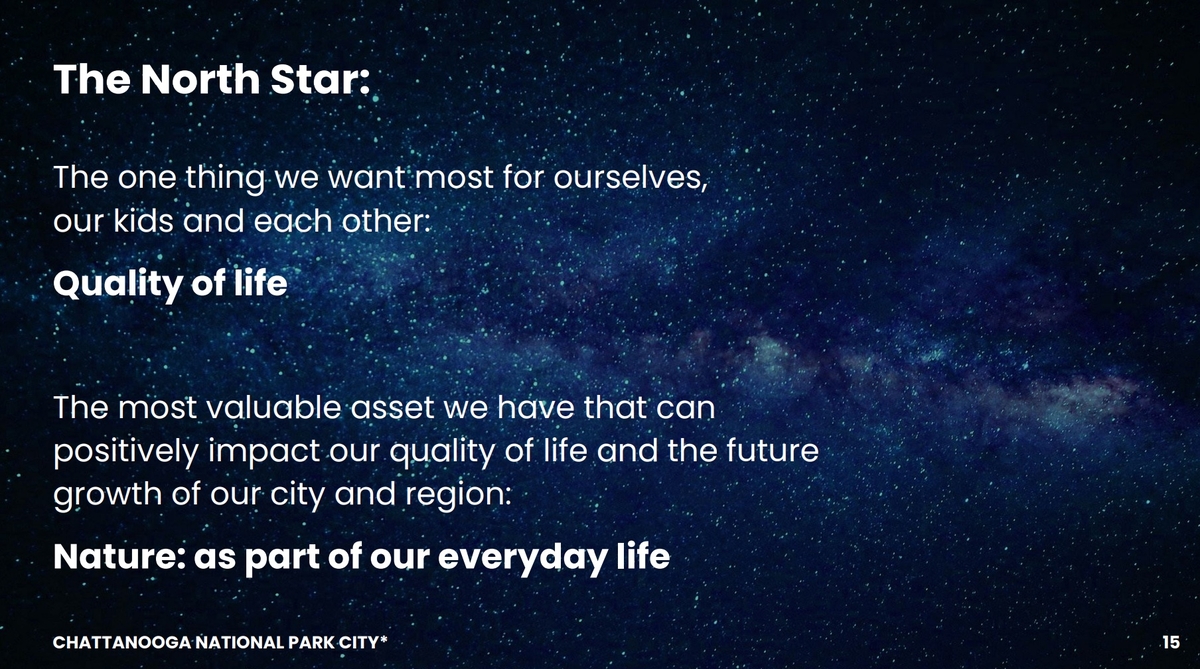
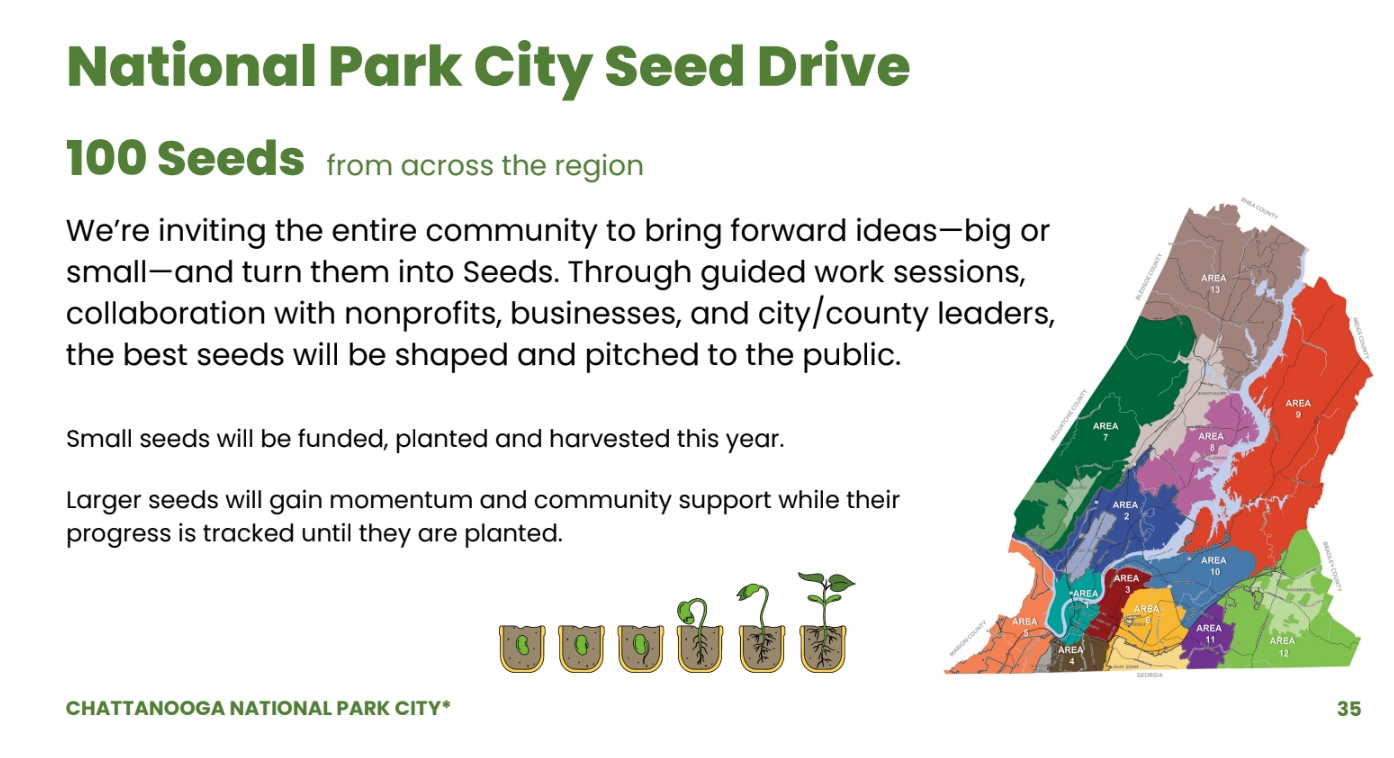
Through a series of town halls and events, David is asking for the best ideas in town.
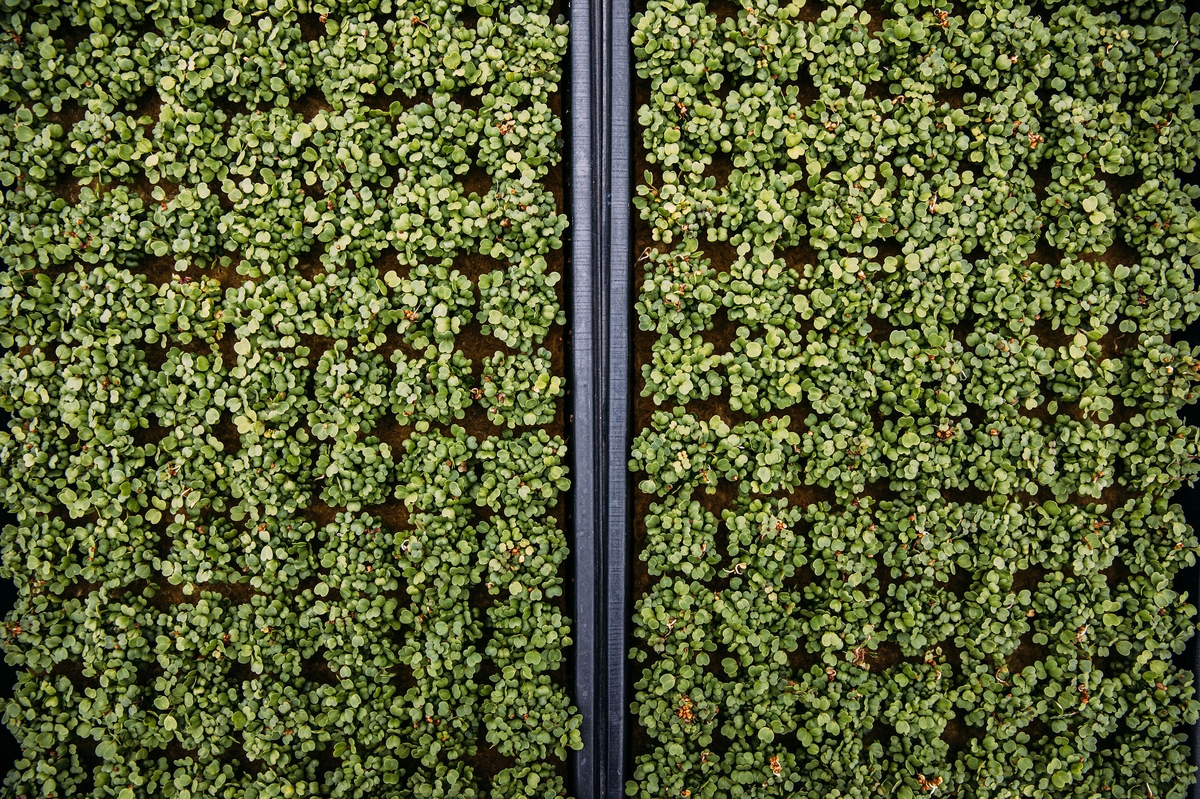
"Seeds," he calls them.
In this Seed Drive, Chattanoogans step forward with their best ideas, or Seeds, seeking funding.
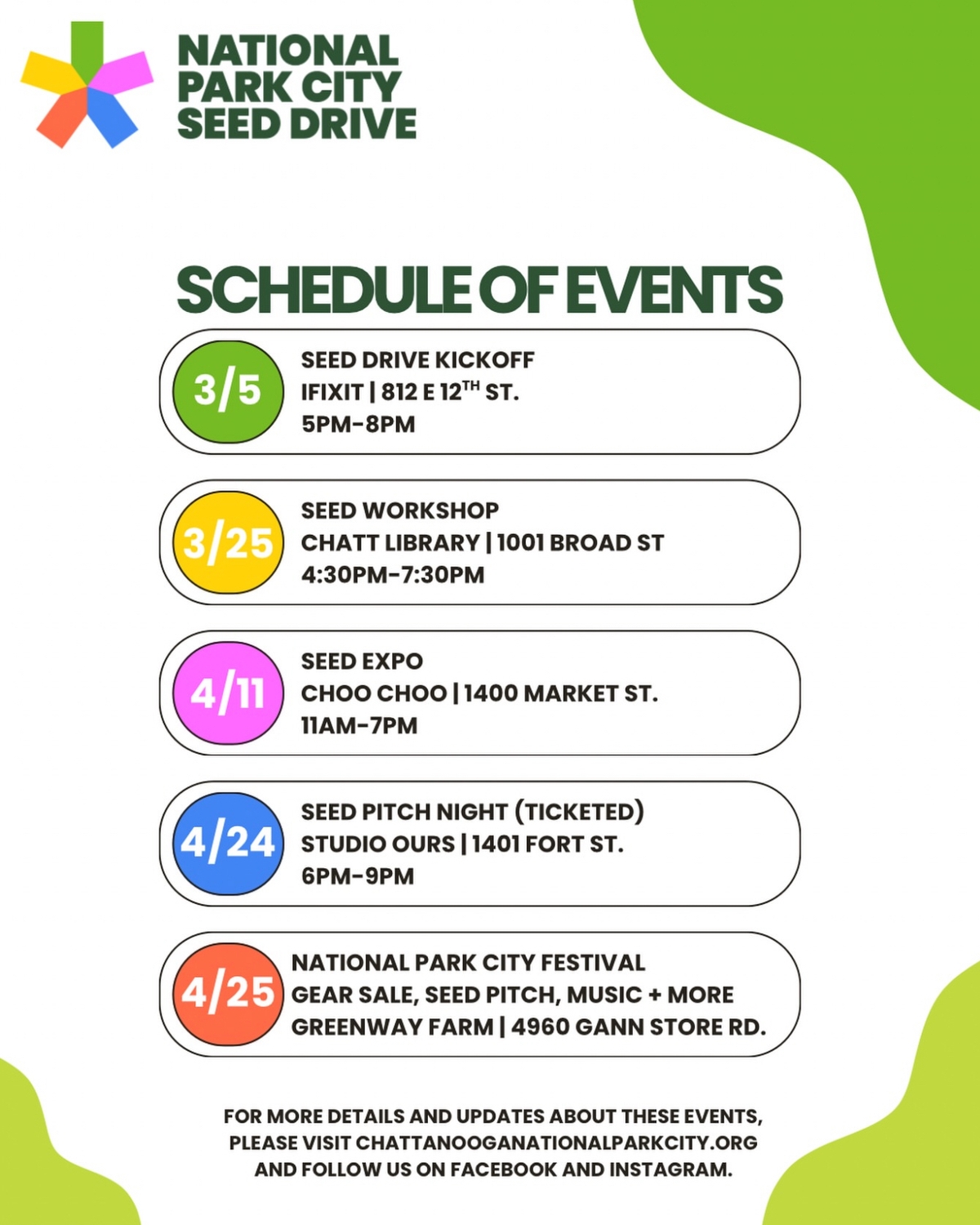
This culminates in a pitch with funders on April 24.
So, back at our cortado meeting, he was asking me to get the word out to farmers and friends of Food as a Verb.
"I hope to activate our local food network," he said. "Food being one of our most important connections to nature every day."
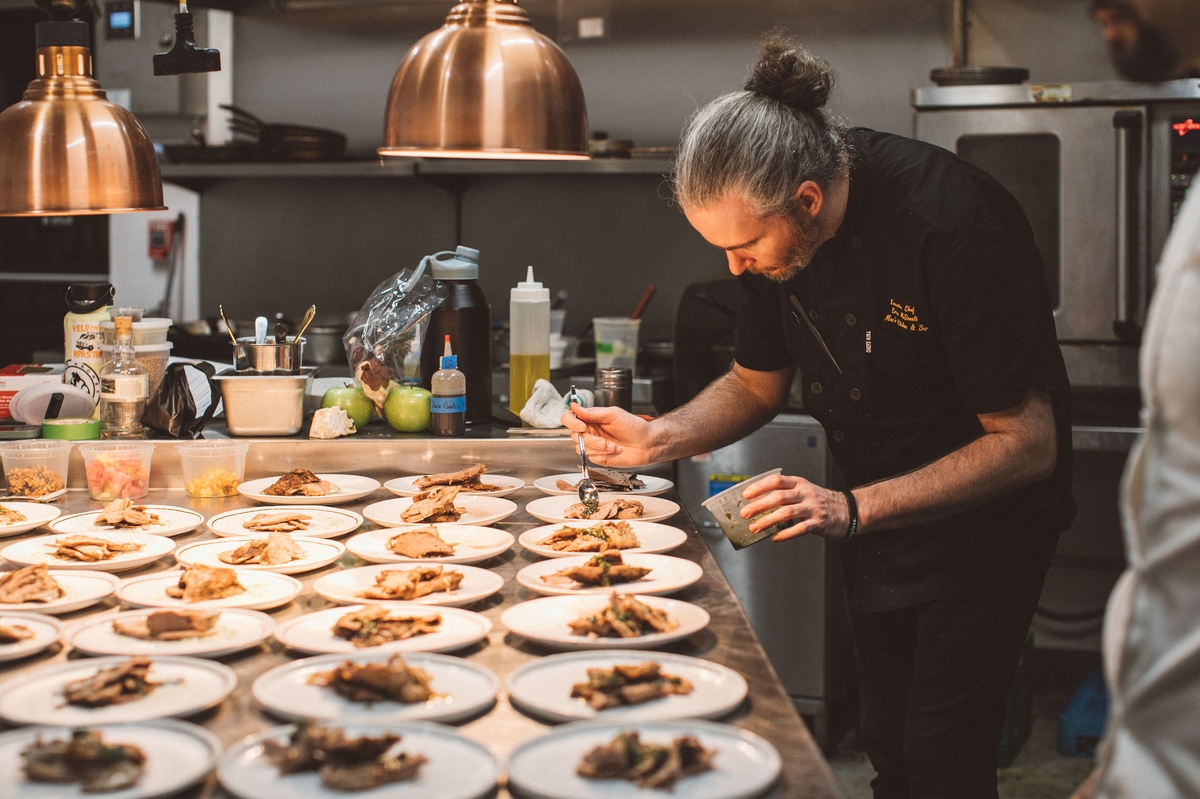
Twenty years ago, I would have been thrilled.
But, in the back of my mind, a seasoned skepticism arose: I've heard this before, so many times, from so many different mayors and initiatives.
Do you have any Seed ideas? David asked.
I paused.
You better order another cortado, my friend.
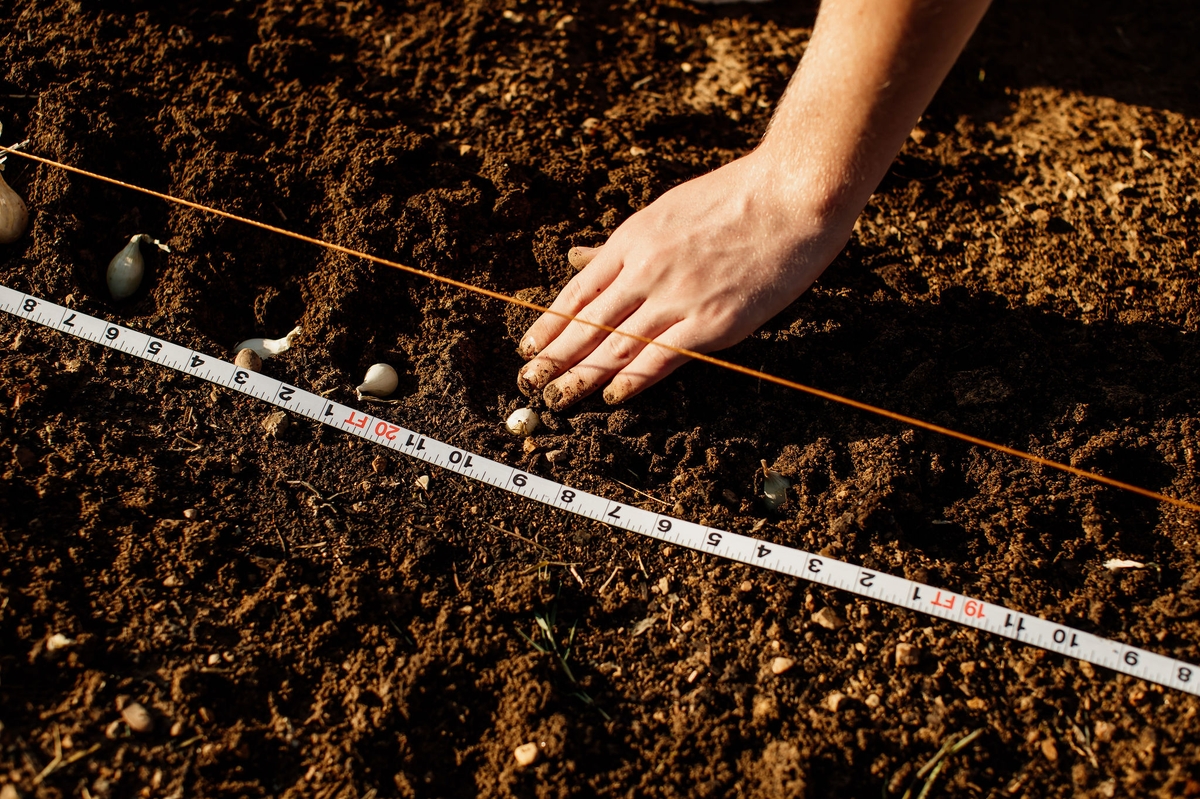
In 2010, The Benwood Foundation invested $1.65 million in local food movements. It was called Gaining Ground.
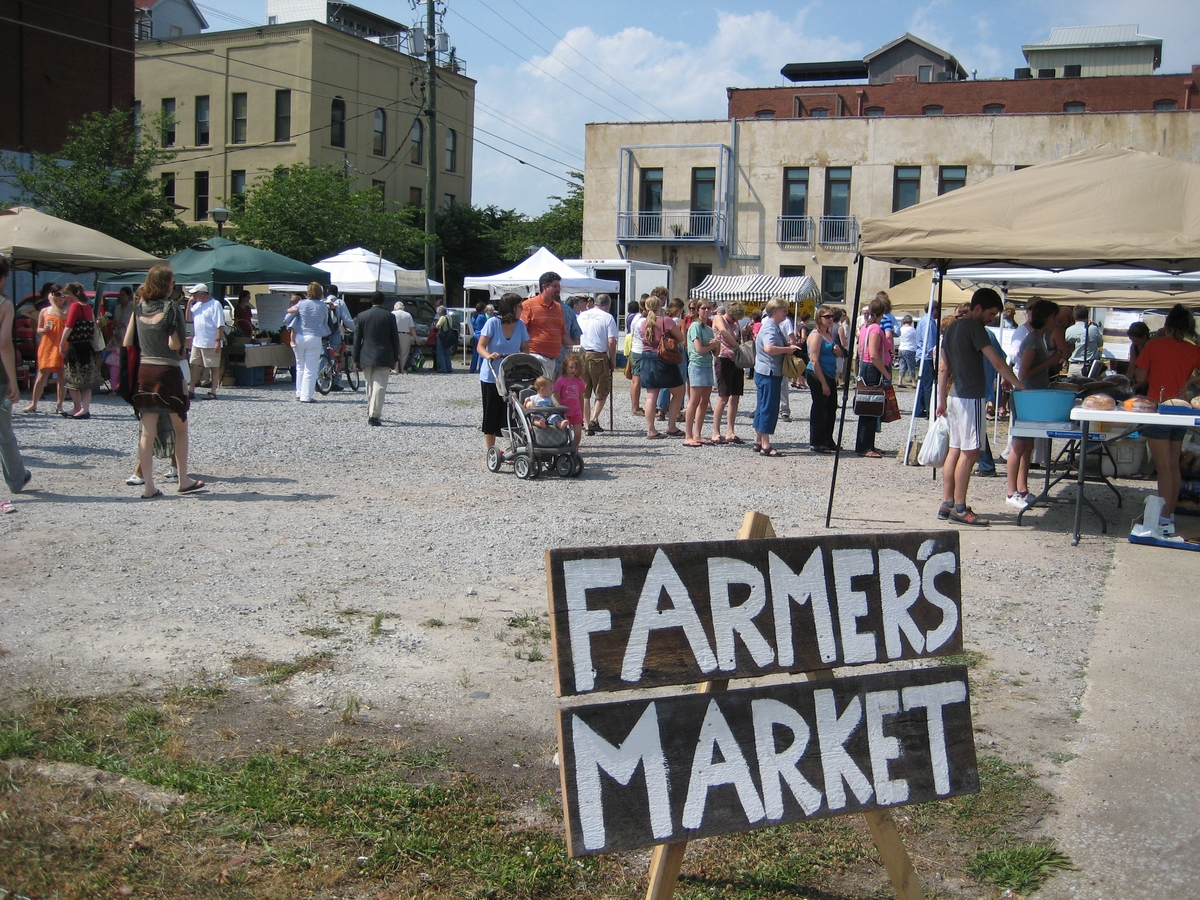
I remember these days well. Padgett Arnold and Trae Moore do, too, and the Keeners, most certainly Jeff Pfitzer. It was energizing and pioneering and included the birth of the early Main Street Farmers Market.
One of the ideas that kept emerging?
We need a centralized food hub.
A place where farmers can drop off produce and meat into a refrigerated space.
A place in the city-center, convenient and easy to reach.
A place offering daily access to chefs, grocers and citizens who can buy food produced from regional growers.
Everybody wins. It's a brilliant, wholesome idea.
And it never happened.
Huntsville has a food hub. North Carolina has eight. Nashville has Nashville Grown.
Knoxville's considering one.
But not Chattanooga.
Another seed? Another idea?
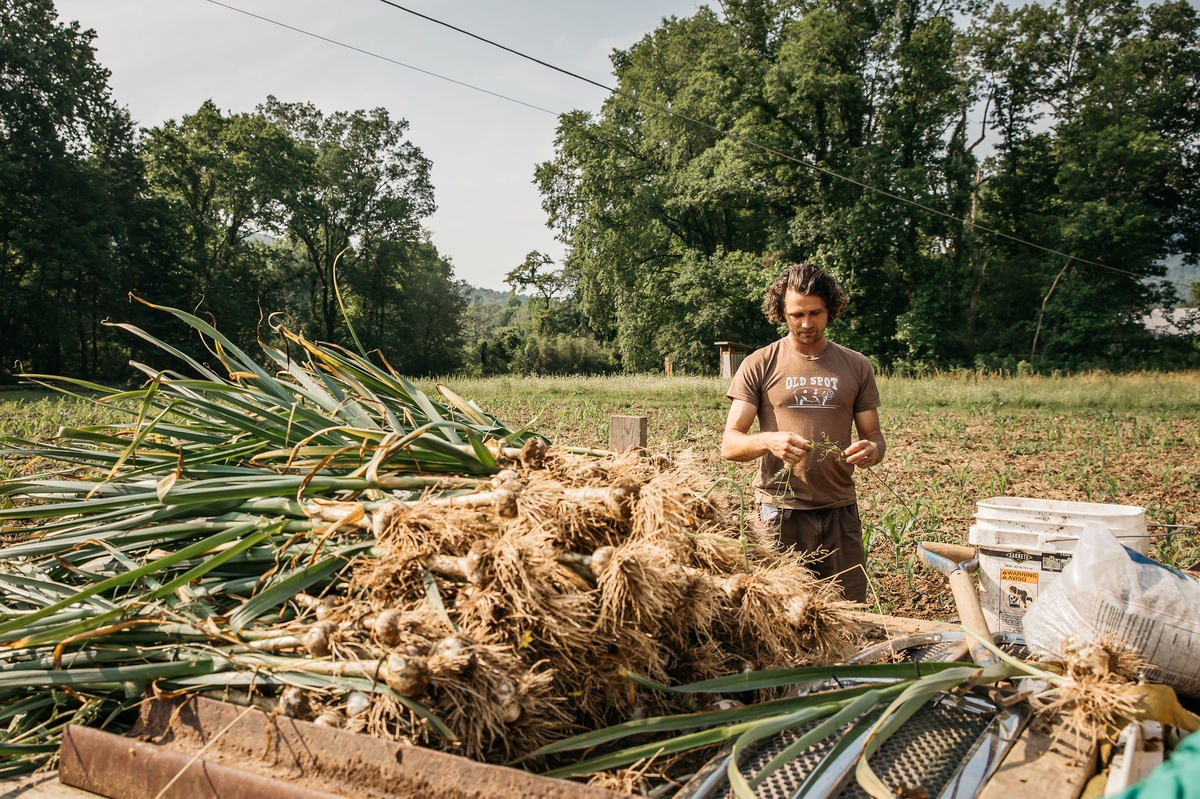
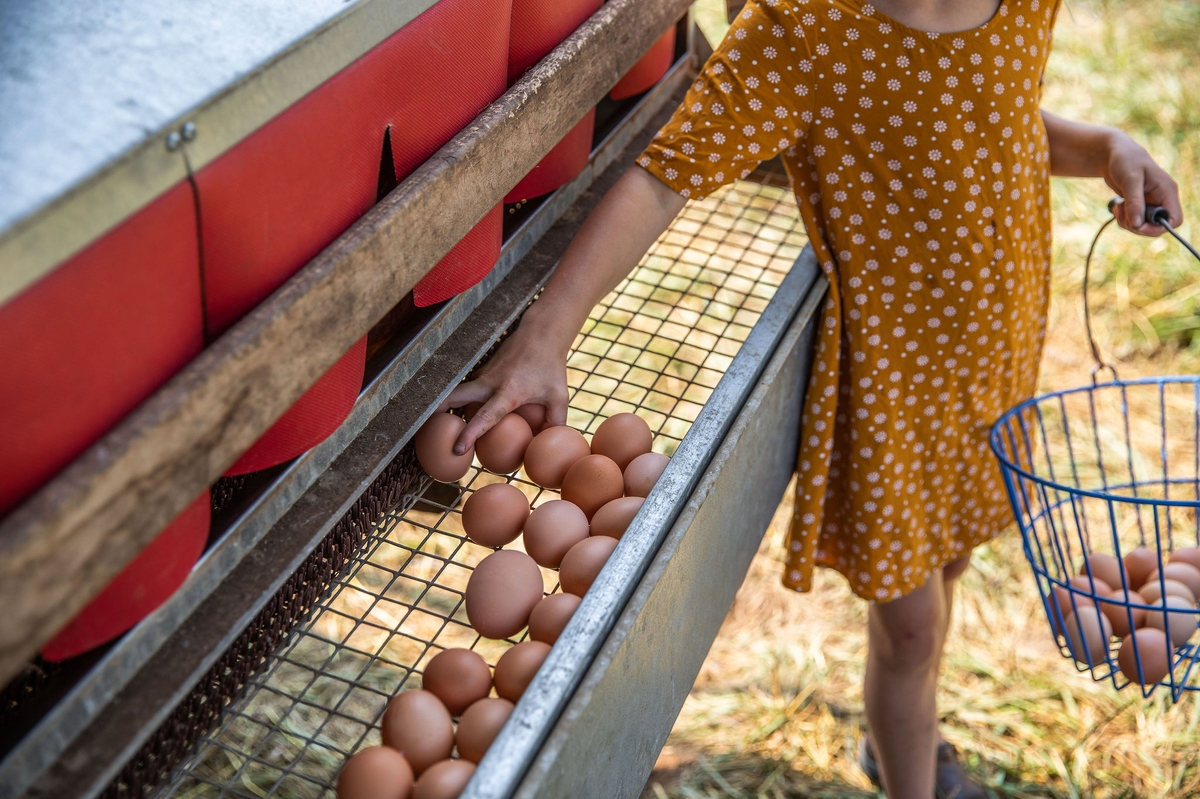
Kelsey Keener has been articulating one of the most beautiful and basic systems: local schools support farmers by increasing the amount of local food purchased and served to schoolchildren.
We have farmers.
We have hungry students desperately needing healthy, locally-grown food.
We need funding.
More seeds, more ideas:
Chattanooga, especially the Chattanooga Food Coalition, has been attempting to get funding for a regional food plan for years. (Knoxville has a plan and a Food Policy Council.)
Yet, present and past city and county leaders seem to forget the role food plays in, well, pretty much everything.
The foundational question remains: how much does our region care about local food, agriculture and access?
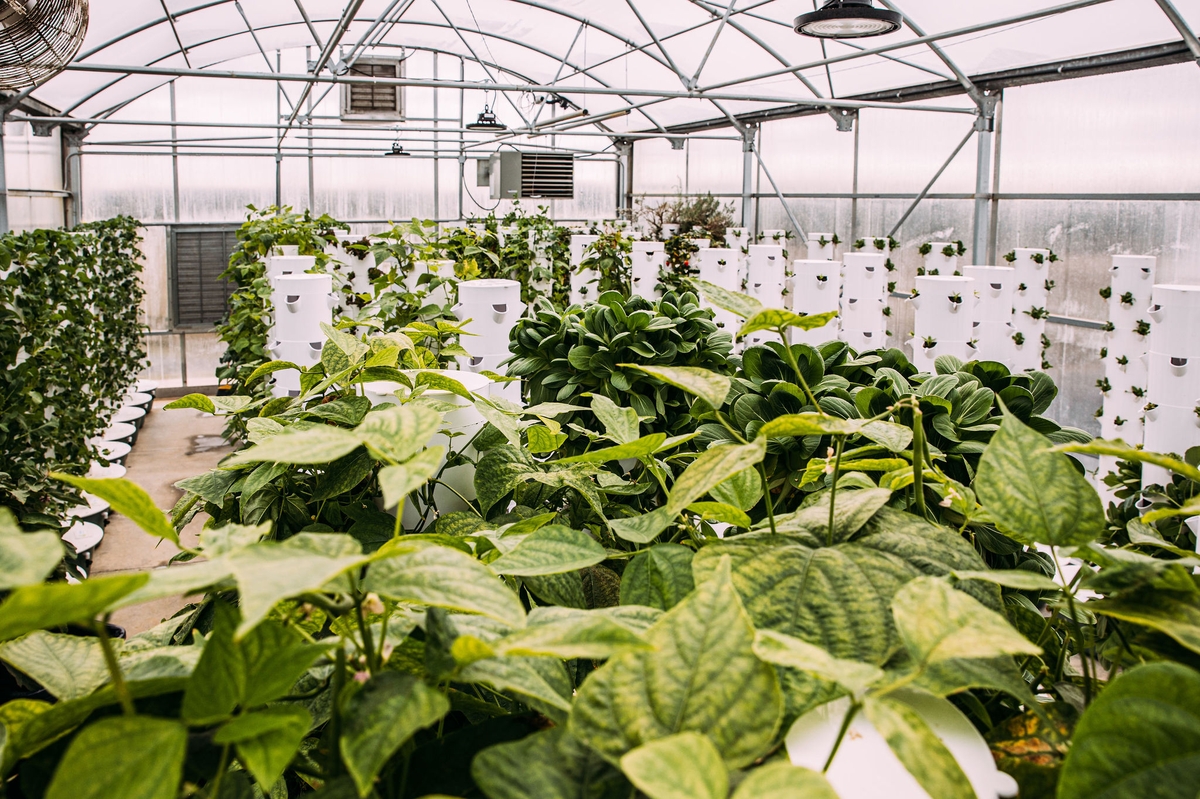
Tara and Brad Smith daydream about a vertical farm in the heart of downtown, allowing tons of food grown without the expansive need for multiple acres.
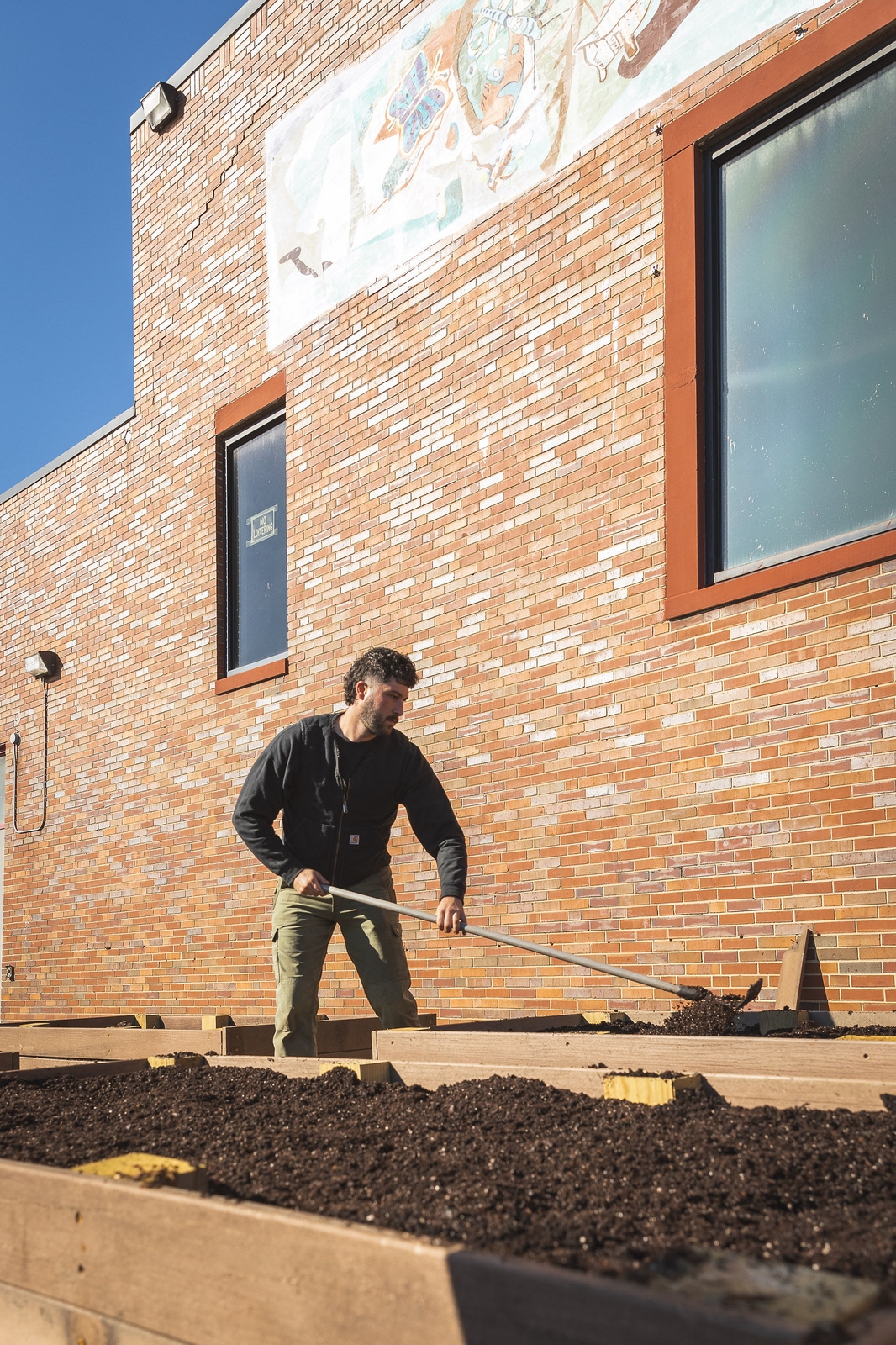
Damon Bartos operates the only urban farm in the city (or region?) that's producing food for Michelin-worthy restaurants and communities plagued by food insecurity.
Ask him what his budget is. Ask him how much financial support there is. Here's a Seed, an Idea for a National Park City:
Make him a middle-class urban farmer who earns a middle-class income. Make him part of the next generation of farmers funded with superstar support.
Want more?
There's a clear need for a true Saturday green market here. (Here's a list of cities. Chef Joe Milenkovic Jr. articulated this so well .... two years ago.)
During NPC days, we kept offering up this idea. City leaders nodded. Department heads smiled. Foundation leaders agreed.
Yet, nothing seemed to happen.
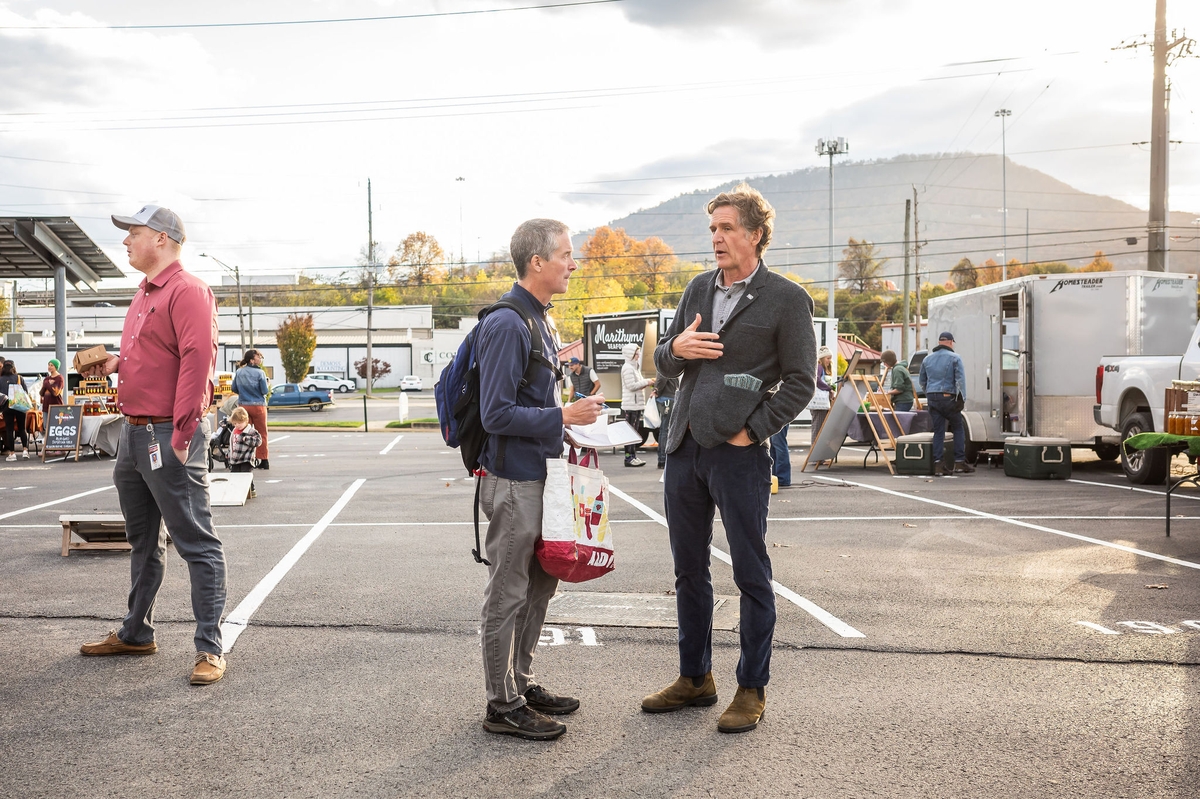
But when the Hi-Lo Market opens this spring, it will have been because of the ongoing grit, pluck and dedication from two ordinary citizens who aren't backed by either government or foundations, but a won't-quit-love for offering a Saturday market in a city that needs it.
I could go on and on. So many seeds, so many ideas.
So, when David Littlejohn and the city ask for Seed ideas, a part of my heart sinks.
Aren't our leaders already listening? Aren't you paying attention to what some folks are saying?
We aren't short on ideas.
We are short on action.
We need a city and county that sees its local foodshed as an integral part — police, fire, education — of its civic infrastructure.
(County farmland's disappearing. Is there a response, Mayor Weston Wamp?)
David Littlejohn, for his part, is trying to change this. And I don't want to be Scrooge to his work. It's herculean, honest and hopeful.
He says there is significant funding available. Or will be.
"We are pushing to get 100 seeds across the region and 100k of funding," he said.
The farmers and growers I know are neck-deep in work. I don't know how feasible this process is for them. Plus, there is the jerk-yank-defeat of gearing up to offer your good idea, only to be met with rejection. (Oh, I know this feeling.) But ... but ... but ... I can't quite hang up the phone on this.
David's a powerhouse. And I smell something in the air that has a scent of momentum, or good timing. And, I don't want to sound spoiled: Chattanooga's the belle of the ball compared to so many other cities, who would love such NPC attention. There's something simply generous about this Seed-idea effort, too.
Most of all, this region is swamped full of civic power. Even if the floor is littered with discarded and deadheaded ideas, there seems to be this Gatsby-ian hope in tomorrow.
Maybe this is the time for a food hub, David said.
Maybe, just maybe, it is.
For more info on how you can present your seed-idea, email David at npc@chattanooga.gov.
Update, as of Sunday, March 1, at 11.35 am. eastern.
Since publishing this story, two readers responded with pertinent feedback. (Apparently, there. was food hub ...?)
See below.
* The first is from a good Food as a Verb friend, Jim Johnson.
I agree almost entirely with what you wrote today in "Seeding Ideas in the National Park City.”
Two points of hope came to mind after I read it.First, I don’t believe that the seeds are limited to new ideas, as you wrote.
My understanding is that old ideas that have lost momentum are also potential seeds. Why come up with a new idea when there are plenty of great old ideas to be reborn or recycled? I believe those would be eligible, too.
My second point of hope is that these ideas don’t depend on the city, the county or, heaven forbid, the federal government. These are ideas that are of the people, by the people and for the people—and are dependent on the people. I am with you 10,000 percent that a centralized food hub. But we can’t count on the government to make it happen. Neither can we hope for a foundation to make it happen, regardless of money poured into it, if the foundation was the driving force behind the idea.
If I recall correctly (which happens less and less these days), Gaining Ground was conceived, organized and run by the Benwood Foundation.I’m a huge fan of Benwood and of amazing people like Jeff Pfitzer and Kristy Huntley, and with their help Benwood positioned Gaining Ground as being a more holistic approach to regional farming and food production and distribution. But, by all appearances, organizations needed to apply for seed money (no pun intended), which Benwood provided.
If we are to have a centralized food hub, the people need to come forward and create it—and ask for money. All the organizations that were part of Gaining Ground could certainly participate, but the food hub should be a separate entity.
My feeling is that Gaining Ground may have been too fragmented to bring about something like a centralized food hub. That’s not a criticism of Benwood or Gaining Ground. According to media reports at the time, Benwood set out to create a "more holistic approach to the local food industry.” Their funding certainly supported that. But I don’t think a foundation should be a driving force behind anything. It needs to be more organic.
The people need to come up with an idea, a vision and an organization behind a centralized food hub. Is it a mixed metaphor to refer to a “grassroots, ground-upward seed?”So my hope for the National Park City Seed Program is that some group of people will come together and create a seed idea along the lines of, “We want to create a centralized food hub.” If they come up with a powerful plan and receive appropriate funding, that’s when I think the magic will happen.
On the topic of seeds, I will likely be involved with the submission of three: 1. An extension of the Riverwalk to Lookout Valley between I-24 and the Tennessee River (see AI image) 2. Converting Old Wauhatchie Pike from its current torn-up condition to a functioning greenway that would connect St. Elmo to Lookout Valley 3. The ChickChatt Greenway, which would extend both the Riverwalk/Virginia Avenue Bikeway and South Chickamauga Creek Green south into Georgia and connecting in Chickamauga, which would create a 55-mile loop. A first step would be along the so-called “TAG Line,” the old rail corridor that extends from St. Elmo to Chickamauga.
* The second is from a reader who said a food hub existed for a period of time at the Chattanooga Area Food Bank.
We had a food hub modeled on South Carolina. It was housed in extra space at CAFB under previous ED from around 2013 until they needed more space. It moved off site and lasted maybe a year until 2017.
Story ideas, questions, feedback? Interested in partnering with us? Email: david@foodasaverb.com
This story is 100% human generated; no AI chatbot was used in the creation of this content.
Last week, over a cortado at Burlaep Coffee, just a block away from a desolate sea of East 11th St. homelessness, David Littlejohn talked about his vision for Chattanooga, North America's first National Park City.
"A 50-year vision," he said.
David's a creative mastermind, founder of Humanaut, responsible for some of the most innovative and hilarious ad campaigns, like Liquid Death and Organic Valley.
He's also been tapped by the city to orchestrate our next-phase as a National Park City.
Yes, we got the award.
But the honeymoon's ending.
Now what?
When we applied to become a National Park City, Chattanooga catalogued dozens of regional groups — land trusts, bike co-ops, the Aquarium — as proof: look, we're already pretty kickass.
The National Park City application had that mirror, mirror, on the wall feel to it.
The award was the mirror responding: yes, you're pretty remarkable, Chattanooga.
Alex and I were part of NPC application; she built the website, I wrote the Journeybook.
From the jump, the imbalance was noticeable. The movement seemed front-loaded. I kept scratching my head: what happens on Day Two?
If we're named National Park City, then what?
Nobody really had a solid answer.
Cue David Littlejohn.
He's leading the push — the city is shifting this effort to Friends of Outdoor Chattanooga, and he hints at this work as the new Chattanooga Venture — that will identify and fund ideas for our future as a National Park City.
At the heart of this?
"Nature," he said. "Nature as part of our everyday life."
Through a series of town halls and events, David is asking for the best ideas in town.
"Seeds," he calls them.
In this Seed Drive, Chattanoogans step forward with their best ideas, or Seeds, seeking funding.
This culminates in a pitch with funders on April 24.
So, back at our cortado meeting, he was asking me to get the word out to farmers and friends of Food as a Verb.
"I hope to activate our local food network," he said. "Food being one of our most important connections to nature every day."
Twenty years ago, I would have been thrilled.
But, in the back of my mind, a seasoned skepticism arose: I've heard this before, so many times, from so many different mayors and initiatives.
Do you have any Seed ideas? David asked.
I paused.
You better order another cortado, my friend.
In 2010, The Benwood Foundation invested $1.65 million in local food movements. It was called Gaining Ground.
I remember these days well. Padgett Arnold and Trae Moore do, too, and the Keeners, most certainly Jeff Pfitzer. It was energizing and pioneering and included the birth of the early Main Street Farmers Market.
One of the ideas that kept emerging?
We need a centralized food hub.
A place where farmers can drop off produce and meat into a refrigerated space.
A place in the city-center, convenient and easy to reach.
A place offering daily access to chefs, grocers and citizens who can buy food produced from regional growers.
Everybody wins. It's a brilliant, wholesome idea.
And it never happened.
Huntsville has a food hub. North Carolina has eight. Nashville has Nashville Grown.
Knoxville's considering one.
But not Chattanooga.
Another seed? Another idea?
Kelsey Keener has been articulating one of the most beautiful and basic systems: local schools support farmers by increasing the amount of local food purchased and served to schoolchildren.
We have farmers.
We have hungry students desperately needing healthy, locally-grown food.
We need funding.
More seeds, more ideas:
Chattanooga, especially the Chattanooga Food Coalition, has been attempting to get funding for a regional food plan for years. (Knoxville has a plan and a Food Policy Council.)
Yet, present and past city and county leaders seem to forget the role food plays in, well, pretty much everything.
The foundational question remains: how much does our region care about local food, agriculture and access?
Tara and Brad Smith daydream about a vertical farm in the heart of downtown, allowing tons of food grown without the expansive need for multiple acres.
Damon Bartos operates the only urban farm in the city (or region?) that's producing food for Michelin-worthy restaurants and communities plagued by food insecurity.
Ask him what his budget is. Ask him how much financial support there is. Here's a Seed, an Idea for a National Park City:
Make him a middle-class urban farmer who earns a middle-class income. Make him part of the next generation of farmers funded with superstar support.
Want more?
There's a clear need for a true Saturday green market here. (Here's a list of cities. Chef Joe Milenkovic Jr. articulated this so well .... two years ago.)
During NPC days, we kept offering up this idea. City leaders nodded. Department heads smiled. Foundation leaders agreed.
Yet, nothing seemed to happen.
But when the Hi-Lo Market opens this spring, it will have been because of the ongoing grit, pluck and dedication from two ordinary citizens who aren't backed by either government or foundations, but a won't-quit-love for offering a Saturday market in a city that needs it.
I could go on and on. So many seeds, so many ideas.
So, when David Littlejohn and the city ask for Seed ideas, a part of my heart sinks.
Aren't our leaders already listening? Aren't you paying attention to what some folks are saying?
We aren't short on ideas.
We are short on action.
We need a city and county that sees its local foodshed as an integral part — police, fire, education — of its civic infrastructure.
(County farmland's disappearing. Is there a response, Mayor Weston Wamp?)
David Littlejohn, for his part, is trying to change this. And I don't want to be Scrooge to his work. It's herculean, honest and hopeful.
He says there is significant funding available. Or will be.
"We are pushing to get 100 seeds across the region and 100k of funding," he said.
The farmers and growers I know are neck-deep in work. I don't know how feasible this process is for them. Plus, there is the jerk-yank-defeat of gearing up to offer your good idea, only to be met with rejection. (Oh, I know this feeling.) But ... but ... but ... I can't quite hang up the phone on this.
David's a powerhouse. And I smell something in the air that has a scent of momentum, or good timing. And, I don't want to sound spoiled: Chattanooga's the belle of the ball compared to so many other cities, who would love such NPC attention. There's something simply generous about this Seed-idea effort, too.
Most of all, this region is swamped full of civic power. Even if the floor is littered with discarded and deadheaded ideas, there seems to be this Gatsby-ian hope in tomorrow.
Maybe this is the time for a food hub, David said.
Maybe, just maybe, it is.
For more info on how you can present your seed-idea, email David at npc@chattanooga.gov.
Update, as of Sunday, March 1, at 11.35 am. eastern.
Since publishing this story, two readers responded with pertinent feedback. (Apparently, there. was food hub ...?)
See below.
* The first is from a good Food as a Verb friend, Jim Johnson.
I agree almost entirely with what you wrote today in "Seeding Ideas in the National Park City.”
Two points of hope came to mind after I read it.First, I don’t believe that the seeds are limited to new ideas, as you wrote.
My understanding is that old ideas that have lost momentum are also potential seeds. Why come up with a new idea when there are plenty of great old ideas to be reborn or recycled? I believe those would be eligible, too.
My second point of hope is that these ideas don’t depend on the city, the county or, heaven forbid, the federal government. These are ideas that are of the people, by the people and for the people—and are dependent on the people. I am with you 10,000 percent that a centralized food hub. But we can’t count on the government to make it happen. Neither can we hope for a foundation to make it happen, regardless of money poured into it, if the foundation was the driving force behind the idea.
If I recall correctly (which happens less and less these days), Gaining Ground was conceived, organized and run by the Benwood Foundation.I’m a huge fan of Benwood and of amazing people like Jeff Pfitzer and Kristy Huntley, and with their help Benwood positioned Gaining Ground as being a more holistic approach to regional farming and food production and distribution. But, by all appearances, organizations needed to apply for seed money (no pun intended), which Benwood provided.
If we are to have a centralized food hub, the people need to come forward and create it—and ask for money. All the organizations that were part of Gaining Ground could certainly participate, but the food hub should be a separate entity.
My feeling is that Gaining Ground may have been too fragmented to bring about something like a centralized food hub. That’s not a criticism of Benwood or Gaining Ground. According to media reports at the time, Benwood set out to create a "more holistic approach to the local food industry.” Their funding certainly supported that. But I don’t think a foundation should be a driving force behind anything. It needs to be more organic.
The people need to come up with an idea, a vision and an organization behind a centralized food hub. Is it a mixed metaphor to refer to a “grassroots, ground-upward seed?”So my hope for the National Park City Seed Program is that some group of people will come together and create a seed idea along the lines of, “We want to create a centralized food hub.” If they come up with a powerful plan and receive appropriate funding, that’s when I think the magic will happen.
On the topic of seeds, I will likely be involved with the submission of three: 1. An extension of the Riverwalk to Lookout Valley between I-24 and the Tennessee River (see AI image) 2. Converting Old Wauhatchie Pike from its current torn-up condition to a functioning greenway that would connect St. Elmo to Lookout Valley 3. The ChickChatt Greenway, which would extend both the Riverwalk/Virginia Avenue Bikeway and South Chickamauga Creek Green south into Georgia and connecting in Chickamauga, which would create a 55-mile loop. A first step would be along the so-called “TAG Line,” the old rail corridor that extends from St. Elmo to Chickamauga.
* The second is from a reader who said a food hub existed for a period of time at the Chattanooga Area Food Bank.
We had a food hub modeled on South Carolina. It was housed in extra space at CAFB under previous ED from around 2013 until they needed more space. It moved off site and lasted maybe a year until 2017.
Story ideas, questions, feedback? Interested in partnering with us? Email: david@foodasaverb.com
This story is 100% human generated; no AI chatbot was used in the creation of this content.
Food as a verb thanks our story sponsor:
Food as a Verb Thanks our sustaining partner:
Food as a verb thanks our story sponsor:
Join our table

keep reading