

Too Much of One, Not Enough of the Other: a Big Spider + Tiny Fish Update
"For every one Joro you see, there are probably thousands more."
Food as a verb thanks
for sponsoring this series

Two summers ago, I saw my first Joro spider. Actually, I saw and experienced it at the same time: my face almost ran right into an epic web spun across a footpath in our backyard, from an oak to a Downtown Abbey-looking bush we have.
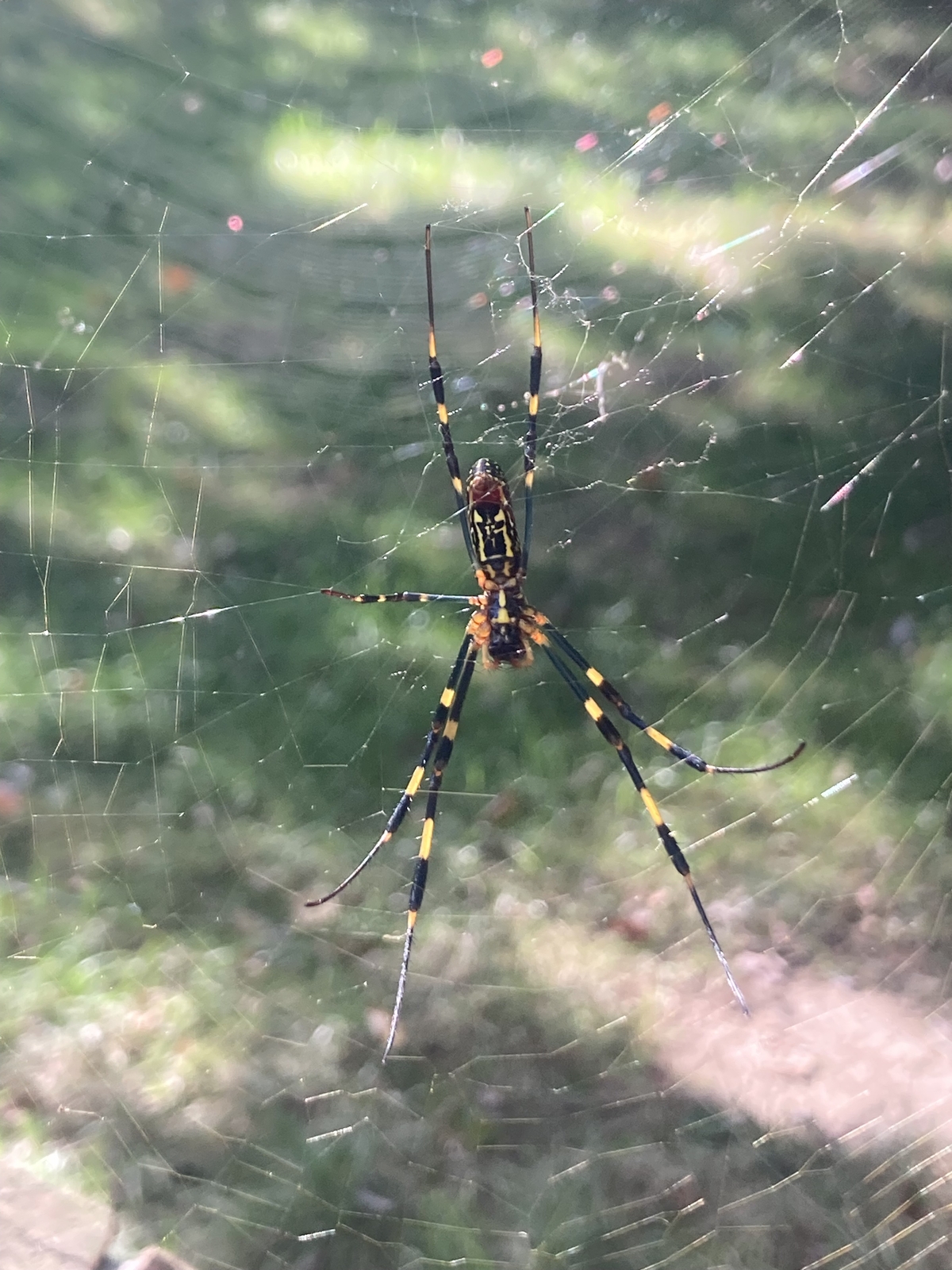
The spider, though, was not Downtown Abbey. It was more Miami Vice: gloriously yellow, neon almost, with flair and finesse.
Whoa, I said. Who are you?
I'd never seen a Tennessee spider like this one.
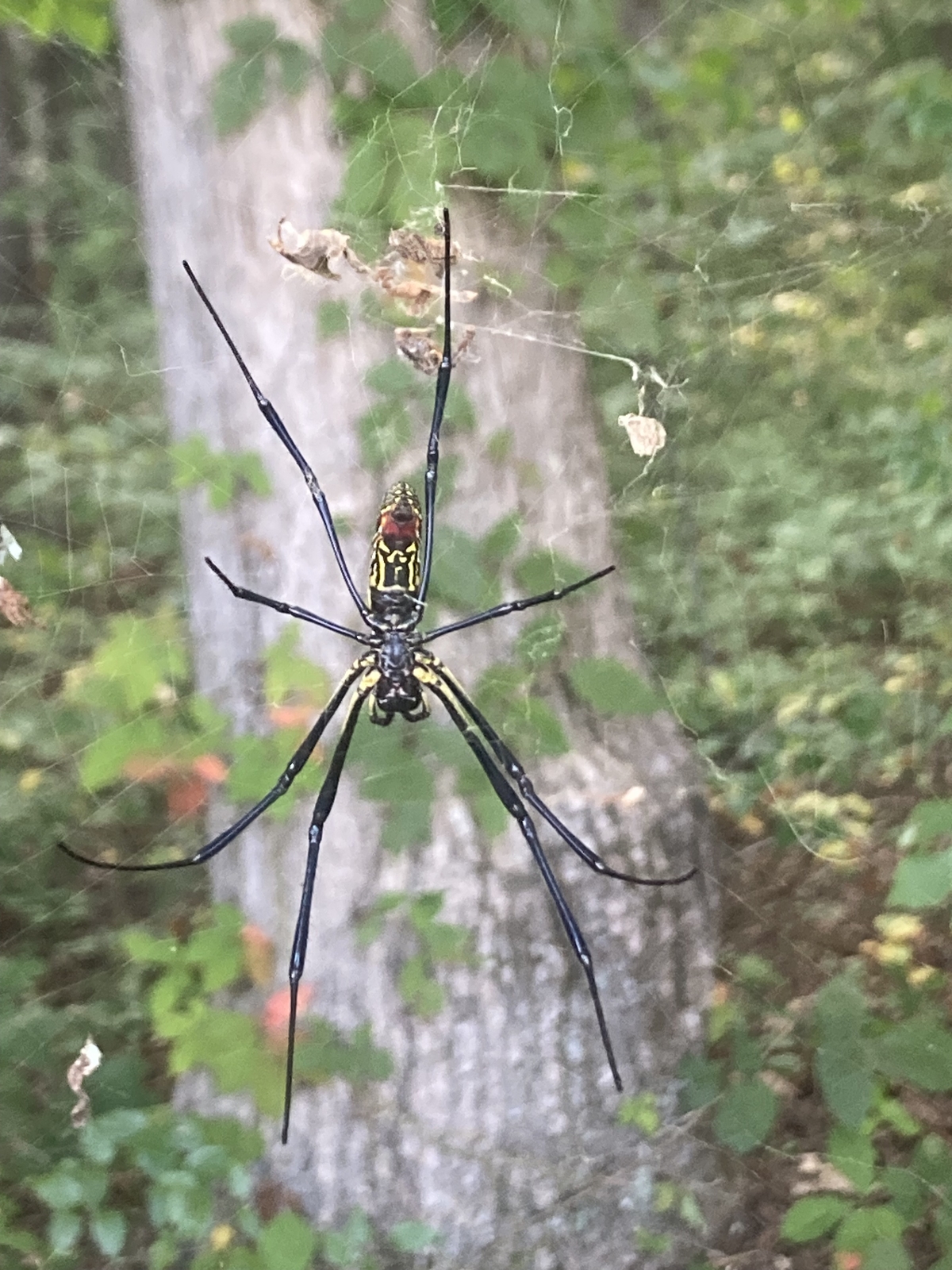
Fast forward two years: it's the only spider I seem to see.
What was it Ben Franklin said about tilapia and out-of-town company?
"Guests, like fish, begin to smell after three days," he wrote.
This spider has begun to stink. It has definitely overstayed its welcome.
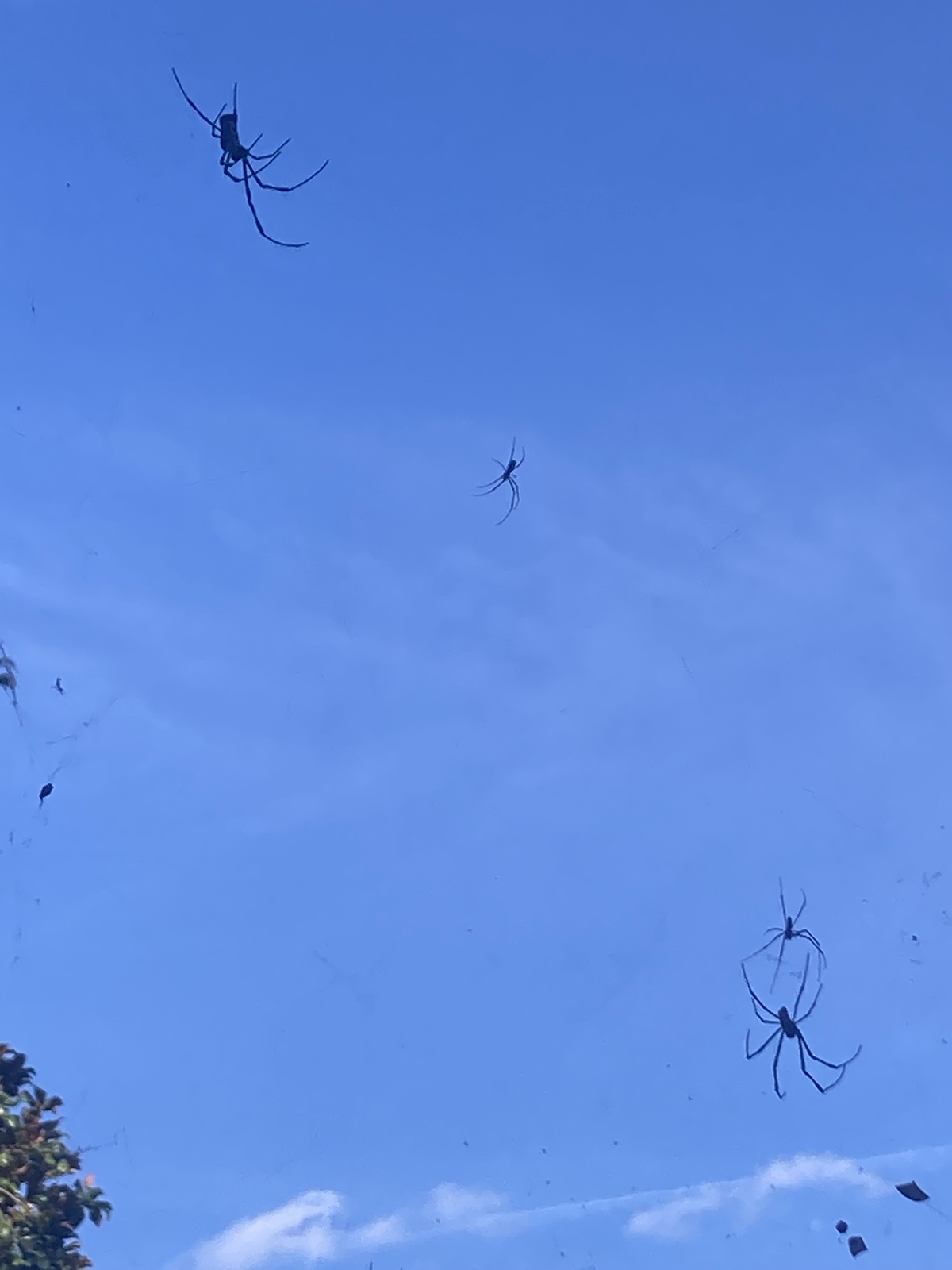
This summer, the Joro spider feels pervasive. Dozens of webs fill our yard. I walk into them all the time; plus, their webs seem stronger, more tensile, and stay wrapped on me like New Year's confetti. It has become the kudzu arachnid, the Kardashian spider: elegant, annoying ... and everywhere.
On a recent walk through the neighborhood, I counted how many Joro spider webs I could spot.
It was just a half-mile or so.
And one side of the road.
I counted 73 webs.
Not spiders.
But webs.
They were even webbed up from telephone lines to the bushes below, suspended like acrobats.
Like Jake Paul, the Joro was small and now seems everywhere. Fiercely yellow, taking up more than its fair share of the barstool.
According to Japanese folklore, the jorogumo is a spider that shapeshifts into an entrancing woman who can breath fire.
"She seeks men to seduce, whom she then binds in her silk and devours," declares Wikipedia.
College stories aside, I've realized this is my experience today: I get devoured by their webs almost every time I work in the yard. I've begun to wonder: is this Joro harming, you know, the spiders that have been here forever?
Joro landed in Georgia about a decade or so ago; folks think it hitchhiked on a shipping container.
I called my friend Tish Gailmard, Learning and Engagement Specialist for Reflection Riding. Known her for years. Give me a list of badass and brilliant Chattanoogans, and Tish is near the top.
For decades, Tish has devoted herself to the protection and preservation of wild places and animals. Part of the team that reintroduced the red wolves back to the Southeast, she also writes a monthly column for the Mountain Mirror, which is one of the most important, informed and environmentally-focused regional columns I know.

"Very young Joro spiderlings, about sesame seed-size, release some silk and hitch a ride on the wind, literally being blown wherever the wind takes them. They travel slowly this way and somewhat short distances while hitchhiking gets them farther distances at faster rates," she wrote last year.
Joro, you're just a hitchhiking hippie. The Blowin' in the Wind spider has a high metabolism, which lets it survive the winter quite well.
And, big point: their venom can't hurt us, or our pets.
Tish spoke with Dr. Andy Davis at University of Georgia's School of Ecology, who said the spiders have "a shy and docile demeanor."
"For every one Joro you see, there are probably thousands more," he told her.
Great. And most of them are in my yard. The other day, scraping webs from my face and neck, I'd had enough. Broom in hand, I went Thanos on them, wiping down every Joro I could find.
Tish says this probably wasn't helpful.
"Joro spiders are considered a low-level threat," she wrote, citing research that shows a Joro population doesn't lead to a decrease in native populations.
"Humans will most likely not be able to stop the spread of the Joro," she said. "Just like coyotes, we need to learn to live with them. Maybe the Joro will fill a niche, have a neutral impact or possibly even prodice a lost ecological function ... they may also be prey for other species like lizards, frogs, bats and some wasps."
"It's not necessarily to kill these spiders. Enjoy the beauty of these architects and their unique webs," she said.
Just don't get seduced.
Now, an update:
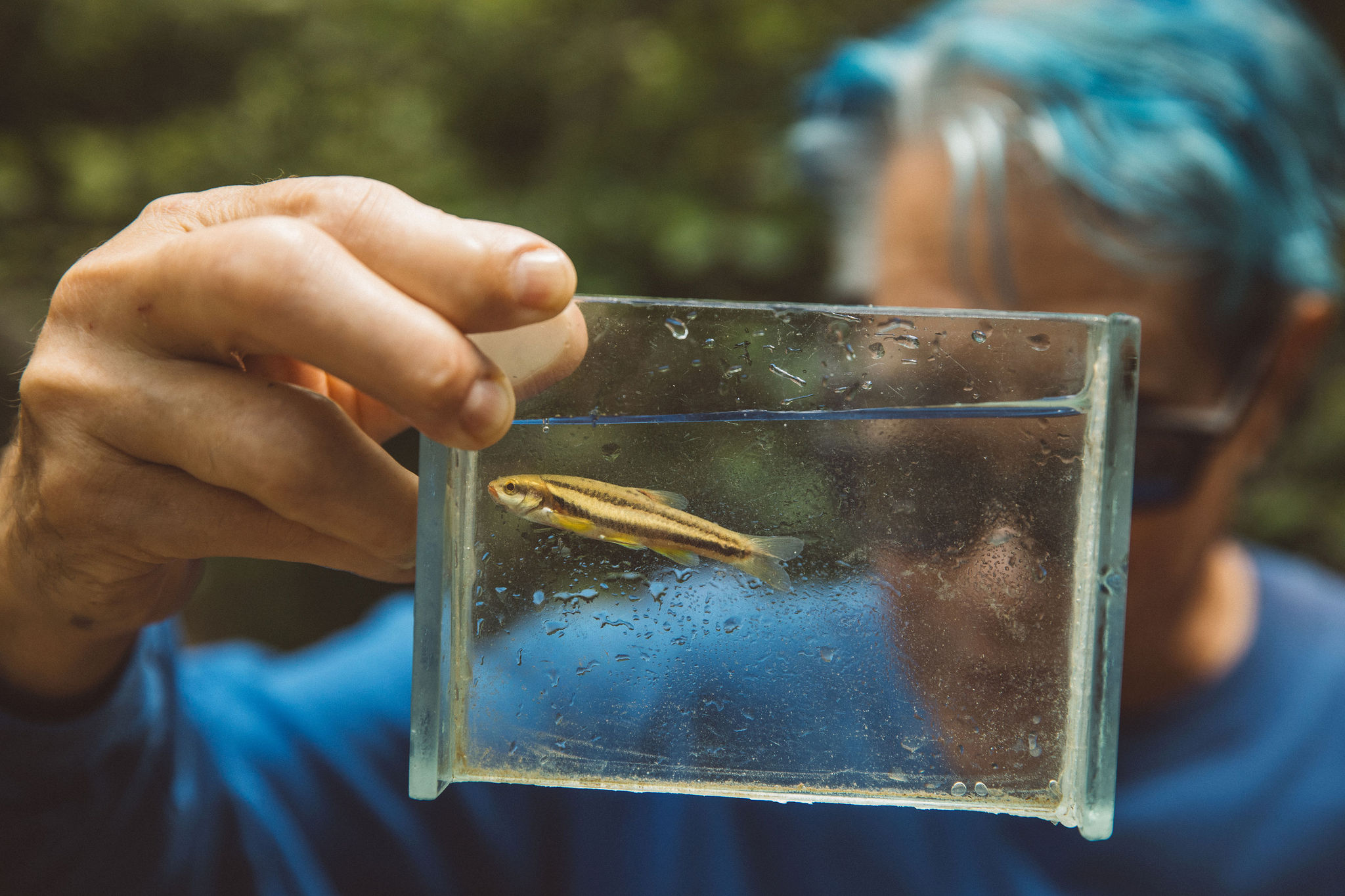
One year ago, we hiked into a remote creek down dirt roads onto of Walden's Ridge to hunt for the tiniest, vulnerable fish population: the laurel dace.
With us: the Tennessee Aquarium scientists.
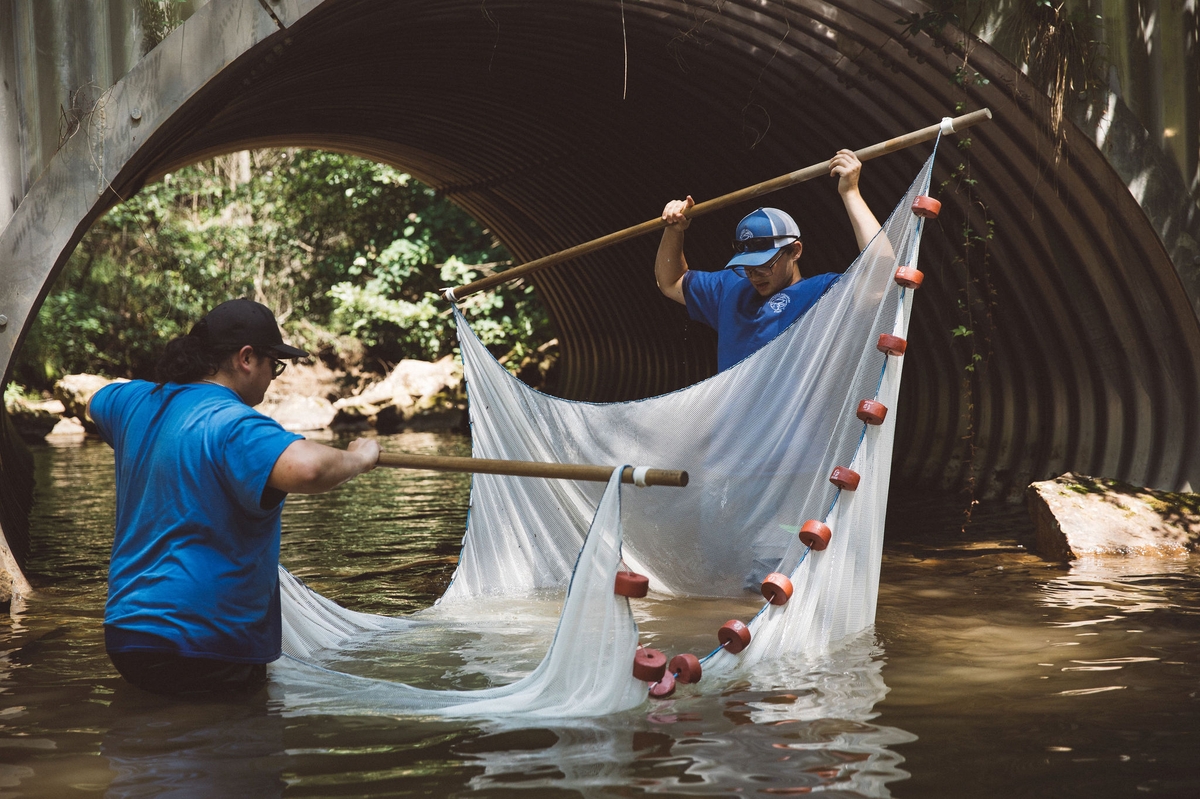
The tiny laurel dace are among the nation's most vulnerable and endangered fish.
There in the creek, we found them.
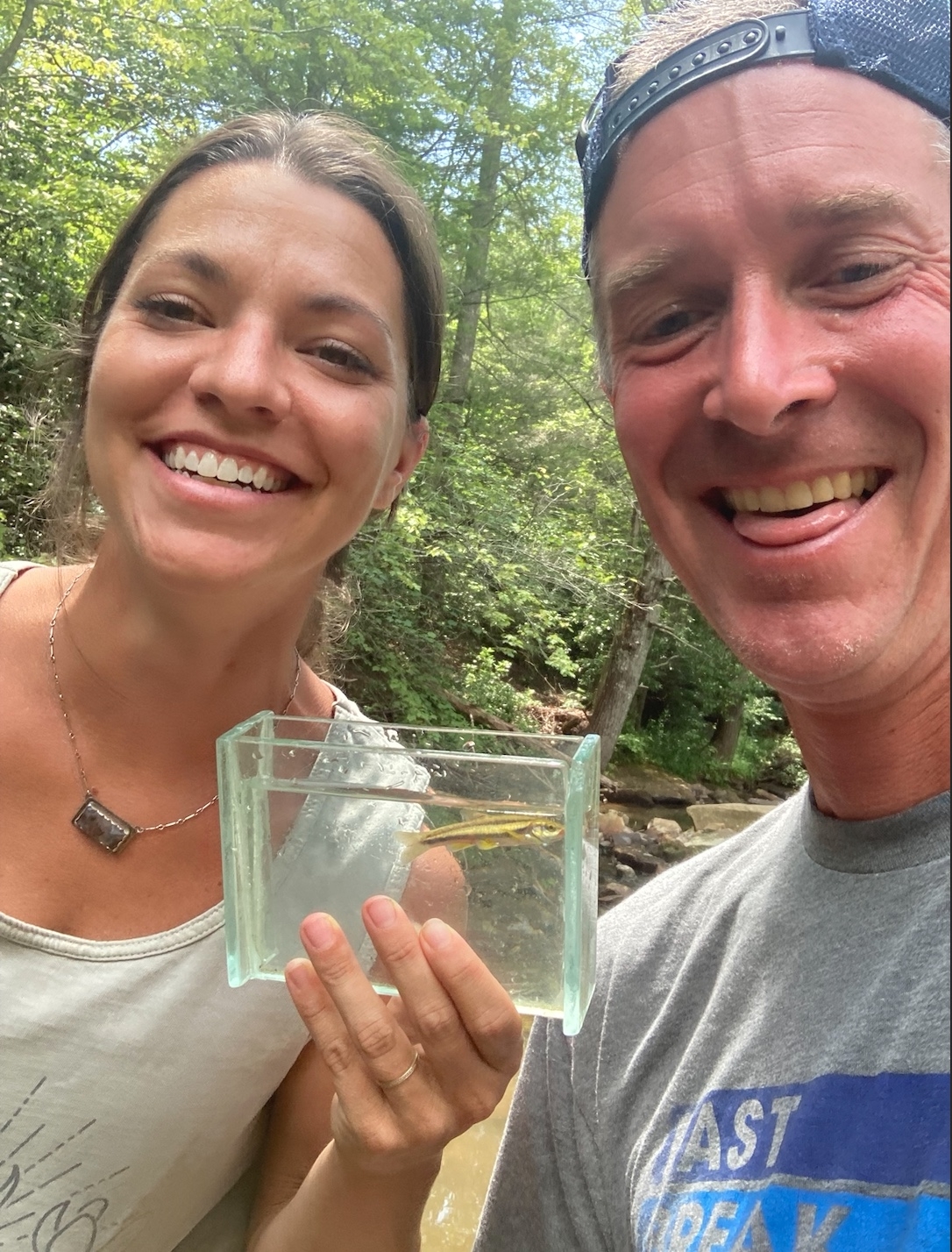
The laurel dace population was — and is — highly threatened. Invasive species, devastating run-off which clouds up the water, top-land clear cutting ... all these are destroying the feeding and breeding ability of the laurel dace.
That tiny fish? We could have counted its numbers.
We published a big story about the little fish, and all the ways the groups big and small are working together to help.
At the Tennessee Aquarium, they've protected arc populations of laurel dace, both breeding them and studying them.
Today, we have an update.
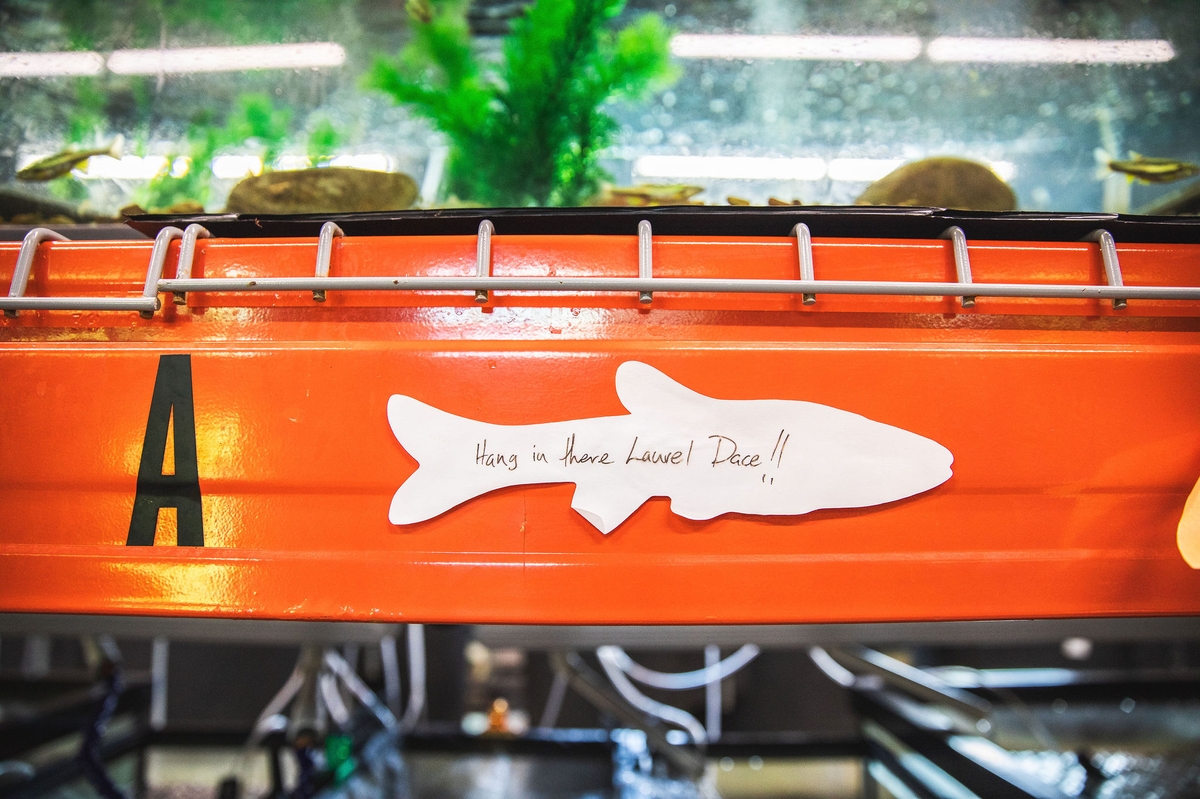
Last month, I'd stopped by the Tennessee Aquarium Conservation Institute on Baylor School's campus to say hi with some local land trust leaders. The Aquarium's reintroduction biologist Teresa Israel walked us by the laurel dace tanks.
"We are still holding two populations: Bumbee Creek and Youngs Creek," she wrote in an email.
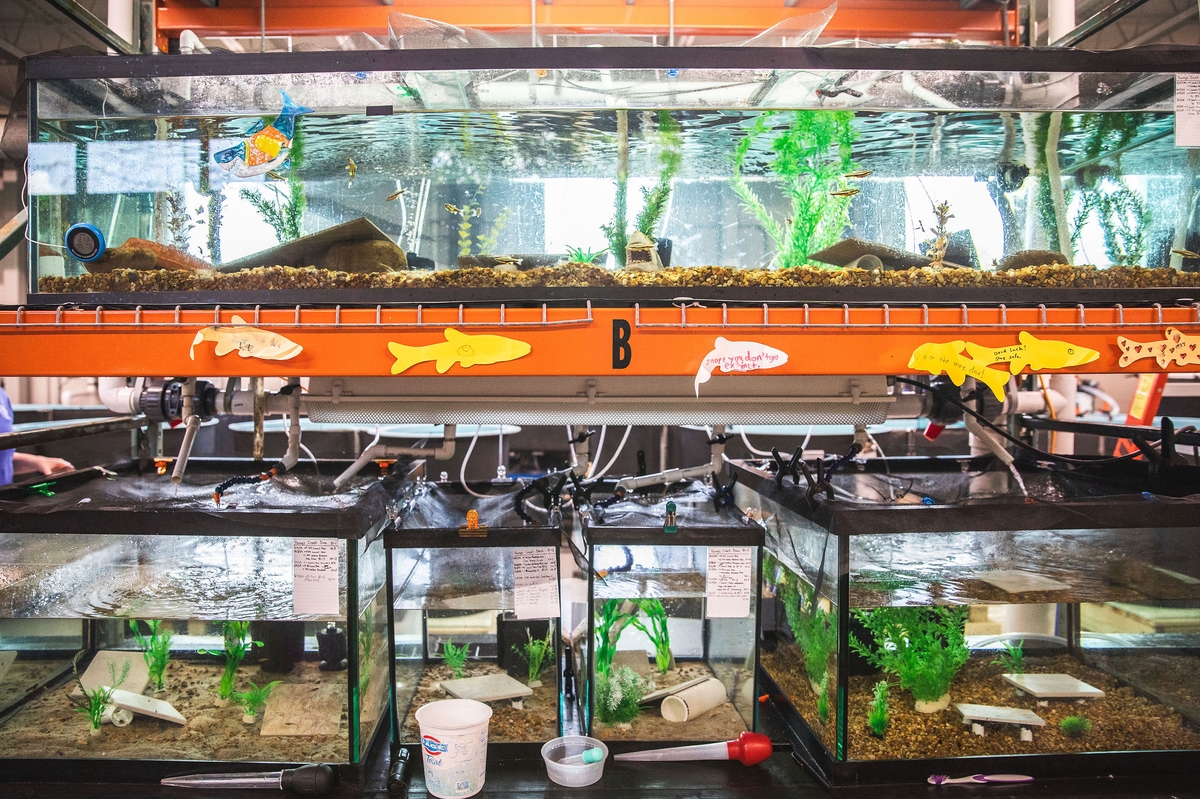
Here's Teresa:
The Bumbee Creek fish are in our care as an Assurance Population.
In the spawning season of 2025 we raised around 50 offspring from our broodstock adults collected during the drought rescue of 2024.
This year we supplemented our broodstock with some Laurel Dace from a different section of Bumbee Creek to increase our genetic diversity. In the spawning season of 2026 we have raised around 250 offspring from the Bumbee Creek broodstock.
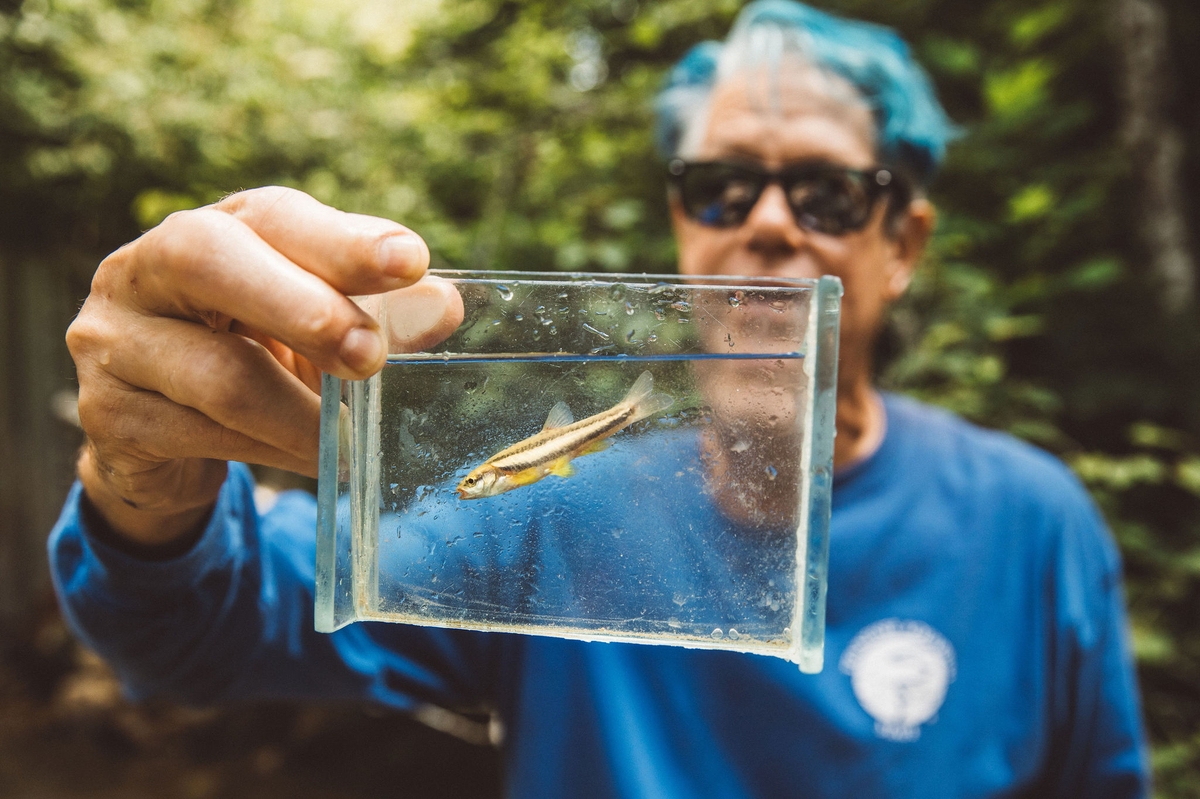
The Youngs Creek Laurel Dace are also an Assurance Population, but due to their low numbers in the wild we hope they can also be a source for reintroduction.
In the spawning season of 2025 we raised around 150 offspring from the broodstock collected during the drought rescue of 2024.
This broodstock is the entire adult population that our team was able to collect from the section of Youngs Creek we have access to.
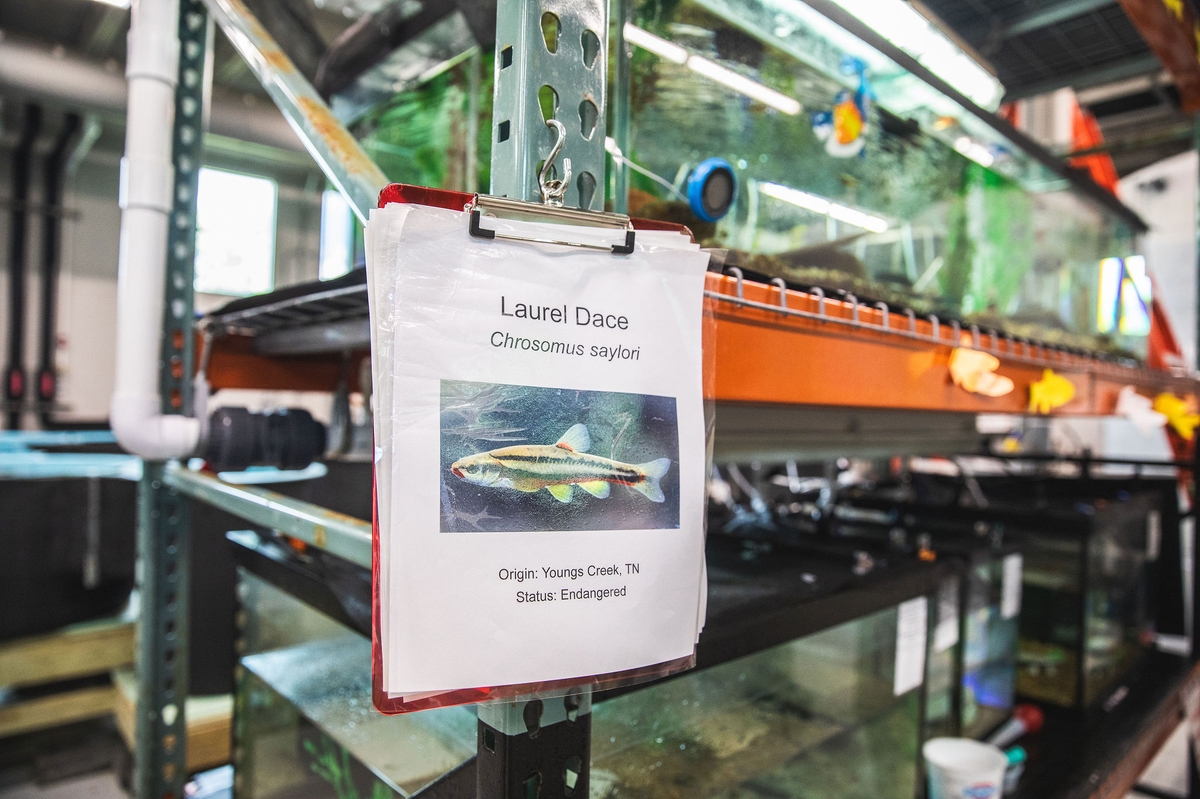
The numbers were very low and these fish are also heavily infested with the Yellow Grub parasites.
We were not totally sure if they would spawn since their bodies were in very poor condition, but were pleasantly surprised with the offspring we were able to raise in 2025.
The 2026 spawning season exceeded our expectations for the Youngs Creek population and we are currently raising around 600-700 offspring.
Tennessee Aquarium staff will be working hard this fall to try and collect any remaining adults from Youngs Creek to add to the genetics in our broodstock. Working alongside our TWRA and USFWS partners we hope to be able to reintroduce a portion of the Youngs Creek offspring from 2025 and 2026 back into Youngs Creek this fall.
Story ideas, questions, feedback? Interested in partnering with us? Email: david@foodasaverb.com
This story is 100% human generated; no AI chatbot was used in the creation of this content.
food as a verb thanks our sustaining partner:
food as a verb thanks our story sponsor:
Reflection Riding
Two summers ago, I saw my first Joro spider. Actually, I saw and experienced it at the same time: my face almost ran right into an epic web spun across a footpath in our backyard, from an oak to a Downtown Abbey-looking bush we have.
The spider, though, was not Downtown Abbey. It was more Miami Vice: gloriously yellow, neon almost, with flair and finesse.
Whoa, I said. Who are you?
I'd never seen a Tennessee spider like this one.
Fast forward two years: it's the only spider I seem to see.
What was it Ben Franklin said about tilapia and out-of-town company?
"Guests, like fish, begin to smell after three days," he wrote.
This spider has begun to stink. It has definitely overstayed its welcome.
This summer, the Joro spider feels pervasive. Dozens of webs fill our yard. I walk into them all the time; plus, their webs seem stronger, more tensile, and stay wrapped on me like New Year's confetti. It has become the kudzu arachnid, the Kardashian spider: elegant, annoying ... and everywhere.
On a recent walk through the neighborhood, I counted how many Joro spider webs I could spot.
It was just a half-mile or so.
And one side of the road.
I counted 73 webs.
Not spiders.
But webs.
They were even webbed up from telephone lines to the bushes below, suspended like acrobats.
Like Jake Paul, the Joro was small and now seems everywhere. Fiercely yellow, taking up more than its fair share of the barstool.
According to Japanese folklore, the jorogumo is a spider that shapeshifts into an entrancing woman who can breath fire.
"She seeks men to seduce, whom she then binds in her silk and devours," declares Wikipedia.
College stories aside, I've realized this is my experience today: I get devoured by their webs almost every time I work in the yard. I've begun to wonder: is this Joro harming, you know, the spiders that have been here forever?
Joro landed in Georgia about a decade or so ago; folks think it hitchhiked on a shipping container.
I called my friend Tish Gailmard, Learning and Engagement Specialist for Reflection Riding. Known her for years. Give me a list of badass and brilliant Chattanoogans, and Tish is near the top.
For decades, Tish has devoted herself to the protection and preservation of wild places and animals. Part of the team that reintroduced the red wolves back to the Southeast, she also writes a monthly column for the Mountain Mirror, which is one of the most important, informed and environmentally-focused regional columns I know.
"Very young Joro spiderlings, about sesame seed-size, release some silk and hitch a ride on the wind, literally being blown wherever the wind takes them. They travel slowly this way and somewhat short distances while hitchhiking gets them farther distances at faster rates," she wrote last year.
Joro, you're just a hitchhiking hippie. The Blowin' in the Wind spider has a high metabolism, which lets it survive the winter quite well.
And, big point: their venom can't hurt us, or our pets.
Tish spoke with Dr. Andy Davis at University of Georgia's School of Ecology, who said the spiders have "a shy and docile demeanor."
"For every one Joro you see, there are probably thousands more," he told her.
Great. And most of them are in my yard. The other day, scraping webs from my face and neck, I'd had enough. Broom in hand, I went Thanos on them, wiping down every Joro I could find.
Tish says this probably wasn't helpful.
"Joro spiders are considered a low-level threat," she wrote, citing research that shows a Joro population doesn't lead to a decrease in native populations.
"Humans will most likely not be able to stop the spread of the Joro," she said. "Just like coyotes, we need to learn to live with them. Maybe the Joro will fill a niche, have a neutral impact or possibly even prodice a lost ecological function ... they may also be prey for other species like lizards, frogs, bats and some wasps."
"It's not necessarily to kill these spiders. Enjoy the beauty of these architects and their unique webs," she said.
Just don't get seduced.
Now, an update:
One year ago, we hiked into a remote creek down dirt roads onto of Walden's Ridge to hunt for the tiniest, vulnerable fish population: the laurel dace.
With us: the Tennessee Aquarium scientists.
The tiny laurel dace are among the nation's most vulnerable and endangered fish.
There in the creek, we found them.
The laurel dace population was — and is — highly threatened. Invasive species, devastating run-off which clouds up the water, top-land clear cutting ... all these are destroying the feeding and breeding ability of the laurel dace.
That tiny fish? We could have counted its numbers.
We published a big story about the little fish, and all the ways the groups big and small are working together to help.
At the Tennessee Aquarium, they've protected arc populations of laurel dace, both breeding them and studying them.
Today, we have an update.
Last month, I'd stopped by the Tennessee Aquarium Conservation Institute on Baylor School's campus to say hi with some local land trust leaders. The Aquarium's reintroduction biologist Teresa Israel walked us by the laurel dace tanks.
"We are still holding two populations: Bumbee Creek and Youngs Creek," she wrote in an email.
Here's Teresa:
The Bumbee Creek fish are in our care as an Assurance Population.
In the spawning season of 2025 we raised around 50 offspring from our broodstock adults collected during the drought rescue of 2024.
This year we supplemented our broodstock with some Laurel Dace from a different section of Bumbee Creek to increase our genetic diversity. In the spawning season of 2026 we have raised around 250 offspring from the Bumbee Creek broodstock.
The Youngs Creek Laurel Dace are also an Assurance Population, but due to their low numbers in the wild we hope they can also be a source for reintroduction.
In the spawning season of 2025 we raised around 150 offspring from the broodstock collected during the drought rescue of 2024.
This broodstock is the entire adult population that our team was able to collect from the section of Youngs Creek we have access to.
The numbers were very low and these fish are also heavily infested with the Yellow Grub parasites.
We were not totally sure if they would spawn since their bodies were in very poor condition, but were pleasantly surprised with the offspring we were able to raise in 2025.
The 2026 spawning season exceeded our expectations for the Youngs Creek population and we are currently raising around 600-700 offspring.
Tennessee Aquarium staff will be working hard this fall to try and collect any remaining adults from Youngs Creek to add to the genetics in our broodstock. Working alongside our TWRA and USFWS partners we hope to be able to reintroduce a portion of the Youngs Creek offspring from 2025 and 2026 back into Youngs Creek this fall.
Story ideas, questions, feedback? Interested in partnering with us? Email: david@foodasaverb.com
This story is 100% human generated; no AI chatbot was used in the creation of this content.
Food as a verb thanks our story sponsor:
Food as a Verb Thanks our sustaining partner:
Food as a verb thanks our story sponsor:
Join our table

keep reading










.png)